Startup India – 4 Years, 370000+ Users & 27000+ Startups

Narendra Modi’s Digital India brought many prospects under its wing & Startup India was one of them.

Welcome to our series Digital India, where we talk about various initiatives taken by the government to transform India into a digitally sustainable nation.

In case you haven’t read our previous blogs we will leave a link down below.

India’s UPI BHIM – Bharat Interface for Money

Make In India – $286 Billion FDI Inflow!

PM Modi’s Big Plan Digital India – At A Glance

This campaign was first announced by Indian Prime Minister, Narendra Modi during his 15 August 2015 address from the Red Fort, in New Delhi.

To understand the whole concept of Startup India we need to get what is it & why it was formed.

What is Startup India?

According to their website “Startup India is a flagship initiative of the Government of India, intended to build a strong eco-system for nurturing innovation and Startups in the country that will drive sustainable economic growth and generate large scale employment opportunities.”

The government presented Startup India as a gift to “young people” in our country who wants to set up an innovative new business.

The whole scheme was based on three main pillars:

  1. Simplification and Handholding.
  2. Funding Support and Incentives.
  3. Industry-Academia Partnership and Incubation.

What are the main objectives of Startup India?

Narendra Modi wanted to initiate Startup India not just to promote the IT or digital world, but it was a planned effort to assist new minds who want to do entrepreneurship to enhance the innovation & ultimately economic growth of the country.

Some of its primary objectives are:

  • To reduce the regulatory burden on Startups thereby allowing them to focus on their core business.
  • To create a single point of contact for the entire Startup ecosystem and enable knowledge exchange and access to funding.
  • To serve as a single platform for Startups for interacting with Government and Regulatory Institutions for all business needs and information exchange among various stakeholders.
  • To promote awareness and adoption of IPRs by Startups.
  • To facilitate them in protecting and commercializing the IPRs.
  • To provide an equal platform to Startups (in the manufacturing sector) vis-à-vis the experienced entrepreneurs/ companies in public procurement.
  • To make it easier for Startups with operations.

What initiatives are taken by the government under Startup India?

To make the program a success the Ministry of Human Resource Development and the Department of Science and Technology have agreed to partner in an initiative to set up over 75 such startup support hubs in NITs, IITs, IISERs & NIPERs.

Recently, the Reserve Bank of India is taking steps to improve the ease of business in India & thus contributing to help the growth of startups in the country.

Even some of the stats in the country has steadily contributed to Startup India.

Like Kerela, who has initiated a government startup nodal agency called “Kerala Startup Mission” (KSUM). This organization particularly supports the startup ecosystem by means of different components such as Infrastructure, Human Capital Development, Funding, Governance, Public-Private Partnership, Global collaborations, Scaling Existing and Establishing New startup ventures.

Some of the promotional strategies of Startup India

A pivotal component for the growth of Startups is regular communication and collaboration within the Startup community, both national as well as international.

Entrepreneurship cannot be done alone. To further the cause of this initiative, the Government proposed start-up fests at both the national & international level.

Odisha was one of the first states to have a two-day start-up conclave in Bubhaneshwar in 2016.

Through these fests, the startups can showcase their ideas and work with a larger audience comprising of potential investors, mentors and fellow Startups.

The launch of AIM & SETU program

To further promote the cause, the government actually came up with another sub-schemes for new entrepreneurs.

Under AIM or Atal Innovation Mission, new entrepreneurs will get supported and mentored to become successful entrepreneurs.

Also, along with mentoring these schemes will

  • Organize Institution of Innovation Awards (3 per state/UT) and 3 National level awards
  • Provide support to State Innovation councils for awareness creation and organizing state level workshops/conferences
  • Launch Grand Innovation Challenge Awards for finding ultra-low-cost solutions to India’s pressing and intractable problems

The National Startup Awards

Every year the government organizes National Startup Awards, a competitive platform where startups from all over India compete with each other for a grand prize of 50 lacs. The competition has 6 challenges where they select 6 winners, each will get 50 lacs along with other benefits.

Investments

In terms of investments, one of the major investors is SoftBank, headquartered in Japan, who invested around $2 billion dollars into Indian startups.

Moreover, the firm has pledged to invest another $10 billion. Can you imagine the potential growth India can achieve with this amount of steady flow of investments?

Even Google declared to launch a startup, based on the highest amount of votes in which the top three startups will be allowed to join the next Google Launchpad Week. The final winner would win a prize of $ 100,000 in Google cloud credits.

The Result:

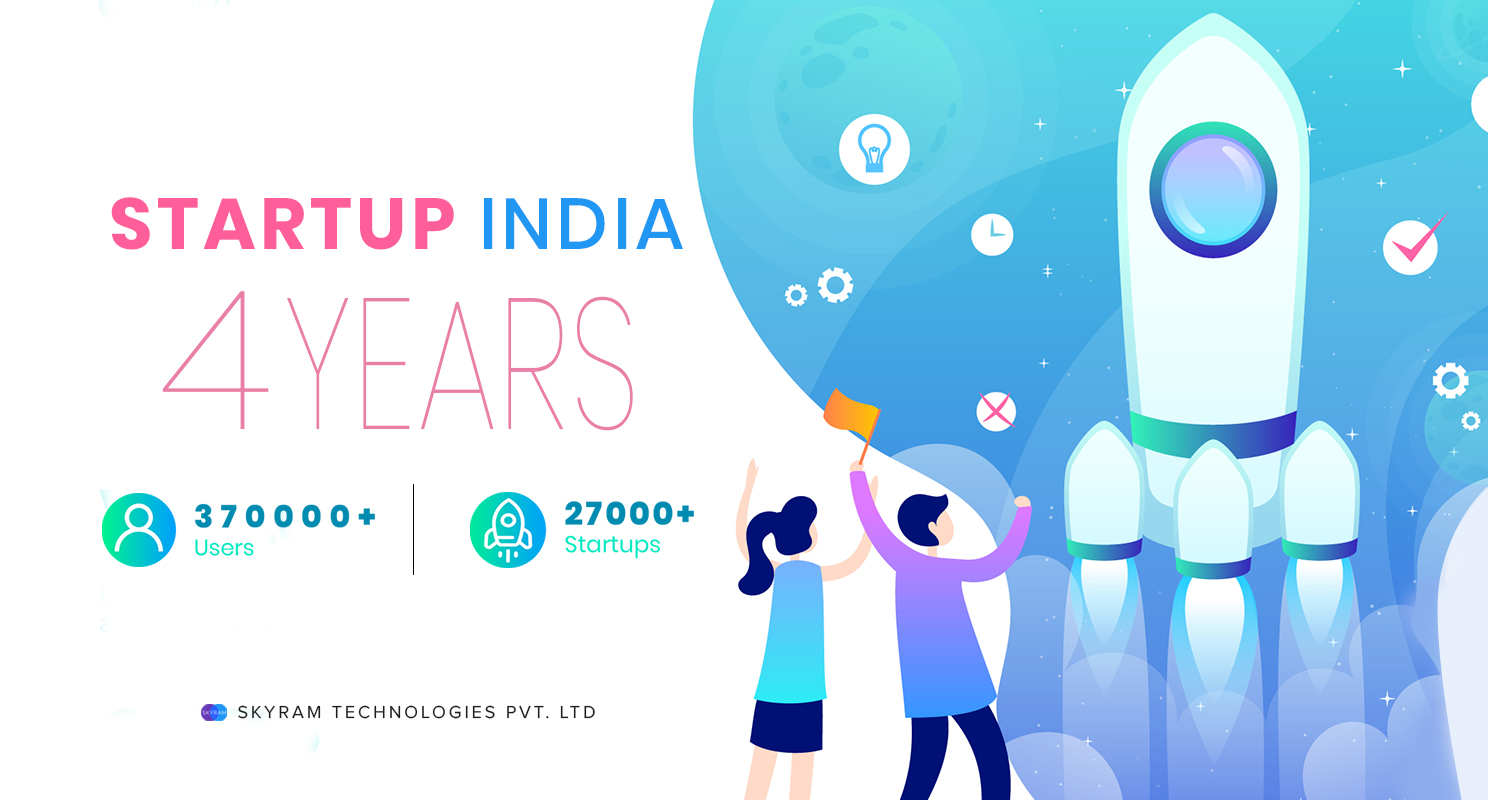
Startup India has been active for 4 years now, with almost 370000+ Users. This initiative also gave rise to around 27000+ Startups already with many others to go in the future.

A lot could be done under this initiative if done successfully.

One of the vital things about any start-up is its branding. A proper branding can be extremely essential & could win you a suitable funding.

Want some help regarding the digital branding of your startup?

Contact us at Skyram Technologies. We will provide you with a proper digital guideline that will help your business take the next big step! Contact us here!

If you want to enter the National Startup Awards here is the link: Startup India.

And for our other blogs on Digital India read here!
Neuromarketing – Everything You Need To Know

So we have talked about consumer behavior in our previous blogs.

We focused on the consumer’s journey, their behavior pattern & how marketers use them.

However, in today’s world personalization plays a fundamental feature for any good customer experience.

And that’s where neuromarketing comes into play.

What is Neuromarketing?

It is basically a study of customer behavior & how it affects the buying pattern of a target audience.

Now, it may seem like a very normal way of marketing right?

Understanding who your target audience is, study their behavior & then adopt a strategy around it.

Well, you are right…to an extent.

Neuromarketing is all that but with more precision.

It is revolved around the idea that all human feelings, thoughts, & actions—even consciousness itself—are just the products of neural activity in the brain.

A comprehensive study of neuromarketing must include how it is used by organizations to promote their marketing efforts & its real impact in the modern marketing arena.

This type of marketing has now become quite popular, but it is not a new concept. It was introduced way back in 2002.

How does it work?

Neuromarketing is a complex subject that involves various tools.

Researchers here try to analyze neural activity & examined brain activity when consumers viewed advertisements or examined products.

There are basically two methods of tracking brain activity of the potential customers- functional magnetic resonance imaging (fMRI), & electroencephalography (EEG).

fMRI involves using a powerful magnet that will track the receptor’s blood flow when subjected to various images & videos.

There is a deep part of our brain, popularly known as “pleasure center” & the method allows examiners to get into the part, cueing marketers how people are responding to their work for real!

As fascinating as it may sound, this kind of experiment takes a lot of funding.

Equipment is very expensive to operate (up to $1,000 per machine per hour) & subjects must lie completely still in a large machine.

Now, there is another way- EEG.

It is much cheaper & is done by a cap of electrodes attached to the sample’s scalp.

These electrodes measure electrical waves produced by the brain and allow researchers to track instinctual emotions such as anger, excitement, sorrow, and lust through fluctuations of activity.

But one main downside of EEG is that it does not really allow examiners to go into the “pleasure center” of the brain.

How can brands use neuromarketing?

One of the reasons why neuromarketing is growing in popularity in recent years is consumer behavior is changing rapidly. With so many unique marketing strategies adopted by the marketers, it is becoming impossible to figure out one specific way.

Nevertheless, there are a few factors which are work with neuromarketing.

The Color Psychology

Colors have always affected customer behavior in a vital way. Look at the infographic by Kissmetrics.

Color Psychology
Color Psychology

A proper color palette can increase brand recognition by 80% which means people trust the brand if used the right blend of color.

The Face Direction

So it has been examined that if there is a face of a person in an ad copy, it should be placed in a certain way to attract the viewers.

Look at this photo:

Neuromarketing
Image from neuroscience marketing

We can see that in the first photo, the viewers only see the face of the baby.

Now look at this one:

Neuromarketing
Image from neuroscience marketing

Here the attention of the viewer is on the ad copy.

Through eye-tracking technology, we can see that certain elements in an ad copy can influence consumers a lot.

The Right Fonts

Humans tend to choose an option that offers more comfort and ease. That’s a basic human psyche.

That’s why using simple fonts attracts people more than complex fonts.

A study by Norbert Schwarz and Hyunjin Song conducted an experiment that included 20 students who were given a task. The instructions were written in two different types of fonts: Arial, 12pt, and Brush, 12pt. The result of the survey concluded that the participants were able to read more easily the instructions written in Arial font than the Brush font.

However, the role of complex fonts come into play if you want to grab people’s attention to a very specific section.

The aim of complicated fonts is to grab attention, not to make it difficult for your users!

Importance of Audio Branding

Remember the classic old jingle from Nirma detergent? Or the famous ‘I’m Lovin’ It’ ad?

I am sure every one of us can recognize these brands just by their jingle. That’s how important role audio branding can play!

Audio plays an instrumental part in triggering the right mood in the audience and creating a sense of connection with a brand.

A great melody can stand-out from the crowd & target the right audience.

What are some of the examples of Neuromarketing?

Neuromarketing is being used in a massive ay by some well-known brands.

Now, obviously, it can’t be determined for sure that whether a brand has used some of the above technologies for the purpose but the way it was executed, it looked by neuromarketing.

Moosejaw

Moosejaw a sister company of Walmart, it is basically an outdoor recreation apparel company.

Moosejaw
Moosejaw

Now, what is unique is their Twitter account. The brand has a great sense of humor & likes to engage with its audience through that.

They use the humanizing factor to target their leads.

Airbnb

According to a study by Harvard Business Review (HBR), the emotional connection is a more influential factor in attracting leads than customer satisfaction.

Airbnb used this to its fullest when they launched their “We Accept” campaign in 2017 at the Super Bowl.

The ad shared the message of diversity & acceptance irrespective of caste or ethnicity which became one of the most popular talking points in Super Bowl, given the tumultuous year it was.

Starbucks

Reciprocation is the act of giving back something to someone who has done you a favor. It is an acknowledgment.

Starbucks
Starbucks

Starbucks was quick to notice this psychological trait of humans and started a campaign to attract more leads.

They encouraged people to share the hashtag “#Tweetacoffee” to one of their friends. In return, the company offered a free cup of coffee to the friend. The campaign resonated with its audience and helped the company generate $180,000 in sales.

H&M

We have already talked about the importance of influencer marketing & how it is growing vastly. If you haven’t read that, there will be a link below.

Humans have a tendency to trust industry experts. We have an innate trait to trust the advice of an authority in an industry.

H&M partnered with blogger Julie Sariñana and model Ela Velden to showcase their outfits on Instagram. The campaign was intended to spread the publicity through word of mouth & it worked out pretty well.

Neuromarketing can be a difficult process. The amount of analysis & research that goes into a single campaign requires some experts who know what to do. But it is the most effective & growing trend in the marketing industry.

Want to get on with this trend? Contact us at Skyram Technologies & let us help you to create a successful digital marketing campaign. Connect with us here!

For our blogs on marketing read here!

Tech News – Google Update, 5G, Windows 7’s End & More…

Hey!

Welcome to another installment of Tech News.

I know it has been some time since we uploaded the last installment, but we are back with some pretty big news from the tech world.

So buckle up, here comes all the recent update.

Google Assistant will soon be able to read webpages to you

Google is making things easier every day!

Recently announced during CES 2020 that Google Assistant will soon be able to read webpages to its readers.

So all you need to do is load up in a particular site on your android phone & then say “Hey Google, read it” or “Hey Google, read this page.” Google Assistant will read everything to you!

The feature is said to roll out this year but it will be exclusively for Android phones.

Read the full story here.

The brand new Xiaomi Black Shark 3 5G is likely to be the first smartphone with 16GB RAM

Xiaomi is doing it BIG!

Their Black Shark 3 5G will be the first smartphone to make use of 16GB RAM.

The Black Shark 3 is expected to be the successor of Xiaomi Black Shark 2 Pro, which was powered by the Qualcomm Snapdragon 855 Plus chipset and housed a 4,000mAh battery.

Read the full story here.

Windows 7 goes out of support along with the P.C era

Windows 7 is said to be going out of support which means no more bug fixes or updates for the millions who are still using the operating system, which was first launched in 2009.

The success of Windows 7 was a major breakthrough for the PC and for Windows. It has been much loved by PC users and admins in the last decade.

Now, with Windows 7 going out of the market, it is inevitable that personal computers won’t be used as much by normal people.

For more news, read here.

India lost $1.3 billion due to 4,196 hours in 2019 because of no internet

India was the third worst-hit economy worldwide after crisis-hit.

A UK-based tech research firm Top10Vpn, recently found that India lost around $ 1.3 billion for 4,196 hours of internet blackouts in India in 2019.

The economic impact is likely to be higher, the study says, given that the study only assessed large region-wide blackouts and India’s smaller and more localized shutdowns weren’t included.

Read the whole story here.

Airtel’s Wifi Calling made available in India for more than 100 phones

Airtel’s Wifi calling has reached a landmark of one million users, according to the company.

Airtel has rolled its service out to all parts of the country now and the service can be accessed by Airtel mobile customers over any Home or Public Wi-Fi network, making indoor service experience seamless.

There is no extra charge for making calls via Airtel Wi-Fi Calling and customers. Also, customers won’t be needing any extra sim or app to start the new feature.

Read here for further details.

Instagram unveils new Boomerang features

Instagram introduced news Boomerang features this Saturday.

These three new features have new options to share Boomerang Stories: SlowMo, Echo, and Duo, along with a new few feature to trim their length.

The new filters are available in the Boomerang composer located in the Instagram Stories camera.

The company said,” Your Instagram camera gives you ways to express yourself and easily share what you’re doing, thinking or feeling with your friends. Boomerang is an iconic part of that, and one of the most beloved camera formats….”

Read here for further details.

Panasonic to introduced world’s first UHD HDR VR glasses

Panasonic is now trying to revitalize the VR scene at CES 2020 with the announcement of 4K glasses that even support HDR.

The size of the headset was a major issue for wider VR adoption. But Panasonic is trying to tackle this issue by making the new glasses almost as light as a regular pair of shades.

The displays in the headset developed in collaboration with Kopin are the most advanced micro-OLED panels to date.

Read here for more details.

Intel has revealed its first gaming GPU

Intel has revealed its first gaming GPU in twenty years, the DG1 SDV. This model is for the developers, challenging Nvidia and AMD’s GPU.

Intel’s live demos at CEShave been good, but probably not the best because of the card’s pre-release status.

The public release version may run at reasonable clock speeds on optimized software, it should perform like the GeForce GTX 1650.

For further details read here.

That’s it for this week.

Did we miss out on any major news? Write to us in the comment section.

And for our previous Tech News, you can read here!

India’s UPI BHIM – Bharat Interface for Money

Named after the architect of our Indian Constitution Dr. B.R Ambedkar, BHIM is a mobile payment app based on UPI or Unified Payment Interface.

BHIM was a scheme designed by the government under the grand Digital India movement. It was made to make transactions, payments & ultimately business easier.

By now, you must have heard about BHIM, but as promised, that in this series, we will be discussing all the popular schemes by the government under Digital India. In case you haven’t read our earlier blogs, it will be linked below.

Now, let’s start with the basics.

What is BHIM?

BHIM is a UPI digital payments solution app developed by the National Payments Corporation of India (NPCI), the head organization for all retail payment systems in India.

BHIM App
BHIM App

With the help of this app, you can easily make direct bank-to-bank payments instantly, and collect money using just a mobile number or payment address. It allows person-to-person money transfers, scheduled money collection, and transactions to be done through a smartphone.

What does BHIM app do?

One of the greatest benefits of BHIM app is that the UPI transactions are combined to a single app, which means you don’t need to download multiple UPI-linked banking apps to make transactions.

Apart from the basic transactions, you can also check their account balance and switch between accounts in case you have 2 or 3 bank accounts.

There’s also the option of creating your own QR (Quick Response) code for a fixed amount of money, which the merchant can scan to make the deduction.

Now, you may ask, what exactly is the connection between BHIM & UPI?

What is UPI & how it is used?

UPI is a payment system that facilitates instant fund transfer between two bank accounts on a mobile platform, without requiring any detail of the beneficiary’s bank account.

When BHIM was launched in 2016, UPI was making major breakthroughs in the industry.

Now, nearly all the money transactions on apps like Paytm, PhonePe, BHIM are done through UPI. According to reports, more than 3 billion transactions took place on the UPI platform in 2018, and 620 million transactions were made in December 2018 alone!

UPI has emerged as the second most common method of digital payment in India.

NPCI has confirmed that by 2023, there will be 60 billion UPI transactions annually, accounting for more than 50 percent of India’s digital payments transactions.

How does BHIM work?

Let’s say you are an account holder at ICICI bank.

Now, the BHIM app has many options for various banks it has tie-ups with. It will let you choose your preferred bank after it has verified your mobile number. You get an SMS, so it’s best to use the same number as the one that’s linked to the bank account.

After this, you need to set a 4-digit code or pin just as you would set your ATM pin code. Remember to pick something you won’t forget easily because you’ll need the code every time you open the app.

After the selection of your bank is complete, if your UPI is activated, you can start your transactions!

BHIM supports numerous banks including Andhra Bank, Axis Bank, Bank of Baroda, Bank of Maharashtra, Canara Bank, Catholic Syrian Bank, Central Bank of India, DCB Bank, Dena Bank, Federal Bank, HDFC Bank, ICICI Bank, IDBI Bank, IDFC Bank, Indian Bank, Indian Overseas Bank, IndusInd Bank, Karnataka Bank, Karur Vysya Bank, Kotak Mahindra Bank, Union Bank of India, United Bank of India & others. The list goes on!

What are some of the benefits on BHIM?

Apart from being a unique payment transaction system, there are benefits of using BHIM which makes it a little different.

  • BHIM has options to transfer via IFSC and MMID as well for non-UPI banks.
  • Language- the app currently supports 16 languages & in the near future it is expected to run in 22 languages.
  • There are no fees for transactions from Rs. 1 to Rs. 10,000.
  • Transactions on BHIM are nearly instantaneous and can be done 24/7 including weekends and bank holidays.

What was BHIM contribution to UPI’s popularity?

As I said earlier, BHIM was launched when UPI was trying to have a breakthrough in the market.

BHIM created a repel effect for UPI. Within 15 months, transactions on UPI— among India’s latest digital payment platforms— raced to 105 million in November from 92,000 in August 2016.

UPI Growth
UPI Growth

One company made use of UPI at its best which is Tez which is now Google Pay.

What are some of the drawbacks of BHIM?

Although the timing was perfect, BHIM couldn’t be as popular as apps like Google Pay, PhonePe, Paytm and Mobikwik.

Tez, now Google Pay, took the benefit of UPI the most. The app offered lots of incentives to win customers, digital scratch cards for inviting others to join and transact on it, for sending and receiving money, for paying to the few merchants it has on the platform. It was like a lottery.

Also, some apps enabled other features like PhonePe offers payment of credit card bills or buying of gold through UPI.

Bhim
BHIM

Nonetheless, it is undeniable that BHIM has opened up a new forum in creating India a completely self-sufficient digital ecosystem. Big brands like Amazon are using BHIM UPI for its Amazon Pay.

So there is a big hope for BHIM!

Given that BHIM targets first-time digital payment users, the simplicity of the design is its stand-out feature. It does what it aims to do – keeping things simple.

Want to create your own app? Contact us at Skyram Technologies.

Our experts will guide you towards creating the most user-friendly app for your business!

Contact us here!

And for our previous blogs on Digital India, read here!

Blockchain Technology In India – Review

Blockchain technology– the word is stirring the financial sector of the word lately!

A concept which has become so popular by now, that people are trying to implement its benefits in identity, world trade, real estate, smart appliances & whatnot.

We have already discussed the prospects of blockchain & its current use in the world, in one of our blogs, a few months ago. In case you haven’t read it, we will link it down below.

USE OF BLOCKCHAIN TECHNOLOGY IN PRESENT AND FUTURE

But today, obviously we are talking about blockchain technology, but we are focusing on India specifically.

Recently, India is making some impressive advancements in technology & is gradually embracing this technology!

Recently, according to Blockchain Report 2019 by NASSCOM, the adoption of blockchain technology in India is experiencing rapid growth and investments in blockchain-based projects have touched over $20 billion across various industries.

So it is high time we talk about our country’s take on this fascinating technology!

But before that, for those of you are unaware, let’s understand what blockchain technology is.

What is Blockchain Technology?

The Blockchain is an encrypted, distributed database that records data. In other words, it is a digital ledger of any transactions, contracts – that needs to be independently recorded.

Think of a situation.

Imagine that you are in a group chat having a conversation with say 20 friends.

Now, each time any member sends a message a new record of data gets created. The message is time-stamped, tamper-resistant and is accessible to everyone in that definite chat group.

A blockchain is basically a chain of blocks, and more precisely digital information about a transaction, in this case, a message, stored in a public database, here the chat group.

Now, these data of money is managed by a combination of computers or cellphones, instead of a single entity.

One of the most amazing features of this technology is that digital ledger is accessible through thousands of computer systems but is compelled to be kept in a single place.

So basically, if you are transferring money through blockchain, it can be easily done without any interference from a third party.

What are the advantages of Blockchain Technology?

Many industries are getting significant benefits from blockchain technology, some of them are:

More transparency

Because blockchain technology uses a distributed ledger, the data is more accurate, consistent & transparent when pushed through the paper-heavy process.

Improved Security

The information here stored across a network of computers instead of on a single server makes it very difficult for hackers to compromise the transaction data.

Enhanced efficiency

By automated process of blockchain, all the transactions can be done faster & more efficiently.

Cost reduction

In blockchain, you don’t need as many third parties. You just have to trust the data on the blockchain which will inevitably reduce the cost of trade completion.

How India is adopting Blockchain Technology?

Currently, India ranks 6th in the world for blockchain patent approvals, clearly indicating that there is a strong interest here.

NITI Aayog

Union government policy think-tank, NITI Aayog hosted an International Blockchain Congress in 2018, the biggest blockchain conference in Asia. It was alongside the state governments of Telangana and Goa, bringing in ideas about blockchain adoption to India.

Banks of India

In 2018, the Reserve Bank of India set up a unit of individuals to research and supervise new technologies around blockchain app development.

This evaluation was carried out in partnership with MonetaGo, a New York-based cryptocurrency firm, domestic banks and other financial institutions.

Eventually, banks like SBI, Axis, HDFC, & ICICI are implementing blockchain for their KYC and trade finance procedures.

Life Insurance Companies

Do you know that inherent inefficiency in the claim management system leads up to Rs.10,000 crores per year, in the Insurance Industry?

Imagine what a great benefit will blockchain be to mitigate these issues?

Due to this, Cognizant has partnered with insurance providers such as ICICI Prudential Life Insurance, SBI Life Insurance, HDFC Life, Kotak Life and more to develop a secure data-sharing solution built on Corda blockchain platform.

TCS

Tata Consultancy Services (TCS) has recently partnered up with Microsoft and R3 (an enterprise blockchain software firm), to advocate the adoption of blockchain across industries.

They are said to build five platforms of Blockchain Technology, which will include track and trace, digital identity, asset monetization, assets in common, and tokenization.

What are the challenges of Blockchain development in India?

While India is & has a tremendous prospect of developing blockchain, there are various issues faced by the developers, due to which the country is still in its infancy stage.

  • There is a massive lack of regulation and compliance. Once the Indian government implements the clearly defined regulation on blockchain and Distributed Ledger Technology, their adoption will become faster.
  • The awareness is an important factor. Due to the technology still being considered new and the fact that there is a lack of awareness about it means that many potential vendors are not at the adoption point yet.
  • In most public blockchain-based applications, it is still not clear who incurs the cost of network maintenance as well as validation of transactions.
  • Indian tax and RBI authorities don’t have a favorable opinion about cryptocurrencies. Unless this hate affair of Indian authorities ends with cryptocurrencies and ICOs, startup initiated blockchain projects can’t be executed.

What are the prospects available in India in terms of Blockchain Technology?

According to a London-based blockchain consulting firm, Dappros currently India stands at second position in the count of Blockchain Developers (with nearly 19,627 developers), second to the US with 44,979 Blockchain Developers, in the world.

With the almost 20,000 blockchain developers situated in India, the country can become a leader where the blockchain is concerned.

India has a huge population, there is a rise in data, especially in Government offices. With this growth, there is a threat of cyber attacks, corruption. Also, the issue of illegal immigration; undeclared income and property are some of the hazards that have spread their roots intricately in the system, everything can be taken care of with this single technology.

Hurdles are inevitable. To welcome such a massive technology we need to keep an open mind, trust technology & educate the people.

Want some implement Blockchain Technology in your business?

Contact us at Skyram Technologies. Our expert set of developers will guide you through everything in order to execute the technology.

Also, for our other blog on blockchain, read here!

Make In India – $286 Billion FDI Inflow!

One of the most popular campaigns under Digital India program, Make In India (MII) is a campaign launched by the government to draw in organizations from around the globe to manufacture and invest in India.

Earlier, we have already given you an introduction regarding our new series- Digital India At A Glance, where we promised to discuss the most popular schemes more comprehensively.

If you haven’t read the blog, I would suggest you do it before reading this one. It will give you a picture of our idea behind the series!

Now, let’s talk about Make In India, shall we?

What is Make In India (MII)?

Now, MII was one of the more earlier schemes launched by Modi Government. The campaign concentrates on facilitating job creation, enforcement to the tertiary and secondary sector, boosting the national economy. The motive behind the campaign was to make India a self- reliant nation while ensuring that the Indian economy gets international recognition.

You can imagine it as a modern swadeshi movement covering almost 25 sectors of the Indian economy including automobiles, biotechnology, construction, IT, chemicals, defense, media, thermal, textiles & others.

What are the objectives of Make In India?

To initiate skill improvement projects for the people of the rural areas & also underprivileged citizens from urban areas.

Opening over 200 centers for training all over India spanning two years.

People between the ages of 15 and 35 would get excellent preparation in jobs like welding, painting, nursing to help the elderly.

Initiating the “Invest India” unit & making it accessible to everyone.

What is the “Invest India” unit?

It is another sub-scheme under the MII project, where the mission is to make working together in India simple, endorsement forms more straightforward and determine the issues in getting administrative clearances within 48-72 hours. The goal is to get the clearances more quickly, through a group of people who would be available to answer every one of the inquiries.

Why do we need to Make In India?

This revival of Indian manufacturing tries to cast the nation as a formidable powerhouse, which is itself a great way to establish a nation’s economic dominance in the international market.

Here are some of the basic advantages of MII campaign:

Employment opportunities

The aim of MII was to create a self-reliant nation, so creating more industries will inevitably create more & more job opportunities for people.

Presently, India has a high 8% or more unemployment rate which means around fifty-five million more jobs requirement. As said earlier MII is working with 25 sectors which means it will create opportunities for people everywhere!

Expanding GDP

The service and Industrial sectors’ contribution to our economy’s GDP has extensively improved in the past half-decade. But the Agricultural sector which holds of the nation’s employable citizens yet makes up for only 14% of the GDP.

By 2014, the Agriculture sector held 16% of the GDP commitment with 60% of the employment. This is just one example.

Improving the work abilities and utilizing more talented workers in industries will make improve the quality of merchandise through MII will lead to more GDP growth in the future. This will subsequently expand India’s worldwide dominance in the division.

Also, this will help in the production of exported goods & domestic products.

Securing the Rupee

The emergence of manufacturing units, jobs & production will convert India into a hub for the fabrication of various commercial products. This will strengthen the position of rupee against the present domination of the American dollar in the market.

Flow of Capital

With the introduction of MII, capital will not only remain in India but also the foreign currency will be provided to the nation as well. This will, in turn, help our country to invest more in sectors like Automobiles & Agriculture which is still lagging.

Also, the wages will increase as investments from foreign countries will also increase!

Increasing brand value

The way Make In India is being promoted from the very beginning, I am sure, it will create a brand for itself.

Most of us city dwellers prefer to invest in foreign brands rather than trusting our own. The result being, small business owners often suffer great loss. Take handloom, for example, we do not appreciate our own production, but people from foreign countries find them extremely beautiful.

MII will establish a brand identity for itself, giving people more resources to invest in our own products.

What was the marketing plan for Make In India?

Launched in the earlier days of the Digital India program, MII made headlines as soon as Narendra Modi made his announcement. Under the initiative, brochures on the 25 sectors and a web portal were released.

The campaign gained instant social media recognition on facebook within just 3 months of its launch.

Some of the initiatives took by the department for promoting MII were:

Mobile App

Yes, they launched a whole app just to promote the initiative!

The app had features like:

  • Live Projects: Current projects in India with the summary.
  • Sectors: Information on each sector is available in the app like Space, Railways, Automobile, and Electronics, etc.
  • Policies: Investors can learn about Indian policies and download related documents.

Also, you can search for keywords in the entire application.

Make In India
Make In India

Facebook & Twitter

Their Facebook page is surprisingly very updated with all the current and upcoming events related to the campaigns.

Make In India Facebook

It became the most popular campaign launched by the government with a new member every three seconds on its Facebook page.

According to an official statement, which was reported by India Today, “The initiative has already touched over 2.1 billion global impressions on social media and reached an overall fan base of over 3 million on its Facebook page.

On Twitter, @makeinindia handle the official account has as many as 2.63 lakh followers already within 90 days.

Youtube

The government made sure that the whole speech was covered & uploaded on Youtube.

As a result, it garnered over 5.7 lakh views on its very first day.

Website

Not just the social networks, even their website has received an immense response with page views of over 5.5 million accessed by over 1.7 million users across the world.

And there is a reason for it.

Their website covers detailed topics like a reason to invest, summary, statistics, growth drivers, FDI policies, etc, which is pretty neat.

What was the result?

Within a few days after their launch, the campaign has become a huge, fast-growing digital initiative, with over 2 billion impressions on social media, a fan base of a total of 3 million on Facebook (FB), and as many as 929,000 followers on Twitter as on Feb 2016.

The “MAKE IN INDIA” program received a huge response from all parts of the world. The country’s brand value increased to 32% in the year 2015 as compared to the year 2014.

Brands like Apple, Hyundai, Mercedes Benz started taking interest & building manufacturing as well as data centers in the country.

Since the MII initiative, FDI has followed a positive trend.

FDI inflow from April 2014 to March 2019 ($286 Bn) is 46.94% (approx.) of the overall FDI received in the country since April 2000 ($592.08 Bn).

Although, it has some downsides of it like the negligence in the agricultural sector, some loss of small entrepreneurs, pollution & of course, the infamous Indi-China problematic relation, but it is a bold initiative nonetheless.

MII considers young minds & focuses on building a brand for itself which is commendable in popular opinion.

Want to have a buzz like MII on social media?

Contact us on Skyram Technologies for social media marketing curated just for your business.

And for our blogs read here!

Marketing Campaign Study – Reliance Jio

We all remember the year 2016, when after nearly a year of its announcement Reliance finally launched Jio in the market.

And within the first month of its launch, the company acquired over 16 million subscribers!

Currently, the company’s revenue is around 1.6 billion dollars approximately. It is an empire by itself.

But how did it reach this status? Have you ever thought about it?

Ambani was about to create a monopoly with Jio!

Of course, it is a revolutionary product by itself & given the time it launched, it caught the momentum instantly. But Reliance’s aggressive marketing had a massive contribution to Jio’s success.

So today, let’s talk about the marketing campaign of Reliance Jio!

What was the aim of Jio?

Mukesh Ambani wanted to create an entire digital ecosystem with Reliance Jio.

They wanted a pan-India presence, offering broadband services, smart devices, internet, messaging, telephonic facility along with a packed entertainment facility!

Ambani said Reliance is going to charge 1/10th of the standard in telecommunication charges.

What was the marketing strategy of Reliance Jio?

Jio acknowledged the universal truth and a new industry norm through their strategy that consumers in the telecommunication industry either pay for calls and chat messages or for data; but not for both. Hence they charged 1/10th of the industry’s telecommunication charges and their policy of ‘absolutely free.

Now, what was so exciting about the plan that Jio offered?

Jio started with Rs. 150 initially, the customers get:

  • Unlimited texts, local or STD
  • High-speed internet 4G usage
  • Students get an additional 25% off on data usage if their registration is done on their student ID.

Some of the marketing strategies of Jio:

Customer acquisition

Jio had one of the best customer acquisition plan. For the initial months, they offered their services for free for 3-6 months to all their users. As a result, there were millions of users which led to the biggest customer acquisition strategy done in the history of Indian telecom.

Pre Jio - from Indian Express
Pre Jio – from Indian Express
Post Jio - from Indian Express
Post Jio – from Indian Express

Updated Technology

Jio offered the latest 4G LTE technology which is one of the world’s best technologies for the future. With such a small amount, they provided their customers with LTE which makes it scalable and supportive of 5G and 6G technologies which are expected to be the future in wireless communication.

Branding

No questions asked!

They signed some of the big names in Bollywood to be their brand ambassador including Shahrukh Khan and Amitabh Bachchan have helped in building connectivity with the customers.

Along with that, Jio has tie-ups with wallets like Freecharge, Mobikwik, and Paytm to offer cashback to JioPrime users on recharge.

The pricing

The team focused on both lower-end customers as well as higher-end customers with their pricing strategy.

The company with a lower-end plan of Rs. 149 for 28 days plan along with their premium packages for higher-end customers.

It has adopted a reasonable pricing policy and has announced reasonable rates for all its products.

Multiple offerings

Reliance Jio offers a variety of services like movies, games, shopping, chats, and messenger, etc. giving the customer a lot of options to choose from.

What was the promotional strategy of Reliance Jio?

Jio has been very aggressive with its promotional campaign, both online & offline.

In December 2016, Jio collaborated with Pokemon Go in which hundreds of Jio stores and other Reliance marts and shopping malls like Reliance Trends and Reliance Digital became Sponsored PokéStops and Gyms.

The popularity of Pokemon Go helped to promote Jio within the younger section of the society.

Other than that, Reliance plastered ads about Jio on all social media platforms like Instagram, Facebook, Twitter, and YouTube. They signed Shah Rukh Khan as their brand ambassador. They have launched ad campaigns on television, radio, newspapers, magazines, and billboards. They made sure to have a sort of omnipresence in people’s minds.

The team knew the importance of star power in the country & they roped other celebrities Rajkumar Hirani, Javed Jaffrey, AR Rehman and Ranbir Kapoor for their launch party!

Another genius move by Jio was the free internet Wi-Fi services they offered at six cricket stadiums during free internet Wi-Fi services at six cricket stadiums.

Also, their social media game is really strong!

Look at some of the tweets they posted as a reply to the tweets by their competitor when Jio recently announced that they will charge 6 paise per minute for voice calls.

Airtel Tweet
Reliance Jio Tweet

The Result

Now, we all know that Jio has already made a unanimous presence in the telecom space in India.

Mobile Data Prices
from Indian Express

But let’s have a look at the figures to get a more detailed picture.

In 2016, Jio made a staggering net profit of reportedly about Rs831 crores.

Currently, Economic Times reported that Reliance Jio had a profit of Rs 681 crore in the corresponding quarter last year with an impressive 90% rise in the net profit for September 2019.

There you have it.

A detailed discussion on the marketing strategy of Reliance Jio. Although it has it’s fair share of controversies like the 2017 fiasco where Jio’s customer data was leaked online on the website magicapk.com. The website was suspended immediately after the news broke.

However, Jio’s popularity & contribution to the telecom infrastructure is undeniable. Jio pushed India further towards becoming a global village!

Do you want to create a marketing plan for your business?

Contact us at Skyram Technologies. Our expert team will guide to make a perfect digital strategy suited for your business & also skillfully implement that.

And for more such blogs, read here!

PM Modi’s Big Plan Digital India – At A Glance

By now, you must have heard about the super-popular “Digital India” campaign that was launched by our Government in 2015.

Initiated on 1st July 2015, by Prime Minister Narendra Modi, the sole objective of Digital India (DI) was to connect rural areas with high-speed internet & enhancing digital literacy.

To give you guys a better perspective, we have decided to dedicate a new series in our blogs which will be entirely based on the various schemes of the government initiated under Digital India.

What were the objectives behind Digital India?

The sole purpose as discussed earlier was obviously connecting rural areas with high-speed internet & making India digitally empowered.

Other than that there were some other components which definitely contributed to Digital India:

  • To develop a secure & stable infrastructure
  • Delivering government services digitally
  • Universal digital literacy

The main areas DI focused on electronic services, products, manufacturing & job opportunities.

What were the main focus areas of Digital India?

Digital India has been introduced to ensure placid implementation of e-governance in the country and help transform public services through the use of information technology.

Digital India
Digital India

The key focus includes:

  • Broadband Highways
  • Universal Access to Mobile Connectivity
  • Public Internet Access Programme
  • E-Governance
  • Information for All
  • IT for Jobs
  • Early Harvest Programmes

Now, let’s talk about some of the major initiatives takes by the government in Digital India.

BharatNet

BharatNet is a project of national importance to establish, by 2017, a highly scalable network infrastructure accessible on a non-discriminatory basis, to provide on-demand, affordable broadband connectivity of 2 Mbps to 20 Mbps for all households and on-demand capacity to all institutions, to realize the vision of Digital India, in partnership with States and the private sector.

The entire project is being funded by the Universal Service Obligation Fund (USOF), which was set up for improving telecom services in rural and remote areas of the country.

Make In India

Launched in 2014, it was one of the earlier campaigns within Digital India by the government.

A swadeshi movement covered almost 25 sectors of the Indian economy including automobiles, biotechnology, construction, IT, chemicals, defense, media, thermal, textiles & so on.

What are the main aims of Make in India?

Look, Make in India is a national program designed to transform India into a global manufacturing hub.

Their main objectives:

  • To increase the domestic manufacturing industry, thereby, causing the growth of GDP.
  • Increasing the number of available jobs, and thereby decreasing unemployment.
  • To decrease Trade Deficit thereby, increasing Forex reserves and gaining financial security.

Startup India

This campaign was first announced by The Prime Minister, during his 15 August 2015 address from the Red Fort, in New Delhi.

It is mainly intended to build a strong eco-system for nurturing unique startups in the country that has the potential to derive substantial economic growth & generate large scale employment opportunities.

The plan three components:

1. Simplification and Handholding.

2. Funding Support and Incentives.

3. Industry-Academia Partnership and Incubation.

Government e-Marketplace (GEM)

A digital marketplace, it is a single place for procurement of common use of goods & services required by various government departments, organizations.

It was a very bold step for the government with the aim to transform the way in which procurement of goods and services is done by the Government Ministries and Departments.

It has- listing of products, comparisons, buying facilities for all the buyers. The sellers have direct access to all Government departments; it is a one-stop-shop for marketing with minimal efforts.

BHIM (Bharat Interface for Money)

It is probably the most common & popular initiative by Digital India that we use on a regular basis.

Online payment has never been this easy!

BHIM allows users to send or receive money to or from UPI payment addresses, or to non-UPI based accounts.

It is named after the architect of the Indian Constitution Dr. B.R Ambedkar, this app lets you make simple, easy and quick transactions using Unified Payments Interface (UPI).

You can send money, request for money, scan & pay through QR codes, make transactions, link your bank accounts & so on.

DigiLocker

A very important online service, yet another part of Digital India!

DigiLocker provides an account in the cloud to every Indian citizen to access authentic documents/certificates such as driving license, vehicle registration, and academic mark list in digital format from the original issuers of these certificates. It also provides 1GB storage space to each account to upload scanned copies of legacy documents.

The only requirement for a DigiLocker is Aadhar Card!

This was a part of the cybersecurity plan of Digital India.

Apart from these plans Digital India also has schemes like National Supercomputing Mission. The mission has been conceptualized and evolved keeping in view the ever-increasing computing demand of the scientific and academic community in the country.

Also, schemes like Bharatmala, BPO scheme, My Gov, CSC 2.0 & many numerous plans have been initiated by the government under Digital India.

If you want to know more about Digital India, check out their website for more.

However, we will be discussing these schemes in a more detailed & comprehensive way in our next blogs. So stay tuned for those!

And if you inspired by Digital India initiative & want to connect your business with the digital world? Connect with Skyram Technologies! We will provide you with a customized digital plan suited just for your business! Contact us here!

Have you checked out some of our other blog series yet? If not, then have a look here! We promise you won’t regret it.

7 Trends of Digital Marketing in 2020

There was a time when artificial intelligence, data-driven digital marketing, lifecycle marketing were ambitious concepts used by a very limited number of people!

In 2020, these are among the top trends of digital marketing that companies are trying to get their hands on to stay at the top.

And frankly speaking, it is high time now that we divert from the usual marketing tricks & try to adapt ourselves to the world. We live in a time when marketing technology moves fast and consumer interests and behaviors are hard to predict.

Today, we have 7 digital marketing trends for 2020 that might help you to envision or create a proper structure for your future.

The age of Artificial Marketing

Artificial Intelligence Marketing

Image Source: singlegrain.com

We can’t stress enough on this one.

AI has already proven its dominance in almost every aspect, be it automobile, healthcare, agriculture, education & whatnot.

AI is proving to be a great tool in terms of marketing as well. It can analyze consumer behavior and search patterns and use data from social media platforms and blog posts to help businesses understand how customers find their products and services.

Wonder how AI is being used daily? One great example is the Chatbots!

The advancement of chatbots is a great example of artificial intelligence marketing. Facebook Messenger marketing bots uses a natural language processing software to understand consumer behavior & respond like a real person.

Want some more insights? Read our article on Facebook Marketing here!

Programmatic Advertising

A part of automation only, programmatic advertising means using AI to automate ad buying so you can target more specific audiences. Real-time bidding, for example, is a type of programmatic ad buying.

This automation makes it fast & more efficient, resulting in higher conversion rates & lower acquisition costs. Not only do the results tend to be better, but “outsourcing” these tasks to a bot also frees up time in your schedule to handle more important tasks.

It is really automation at its best!

Think about SmartyAds or Adobe Marketing Cloud, they are a form of programmatic marketing that navigates online marketing advertising for you.

Alternative Social Media Advertising Channels

What comes to your mind when we say social media marketing?

You think Facebook, Instagram, Twitter, right?

But we are here to tell you that just by posts, your business won’t succeed. Think of other communication platforms out of Facebook.

Click rates are going down as usage of mainstream social media is decreasing. But what companies will have to do in 2020 is to leverage more communication channels.

Think of newer social media apps like Helo or ShareChats or Vigo.

In addition to chatbots, you’ll see more people leveraging tools that allow push notifications like subscribers.

Personalization is the key

The primary issue with marketing is that it is very unpredictable.

Chances are you are more likely looking at 97% plus of your visitors never converting.

Through personalization, you can convert more of your visitors into customers. Take Amazon, for example, they know your patterns and what you typically buy so they show you what they think you want to see in order to boost their conversions.

In 2020, if you want to boost up your sales here are a few statistics that can help you, according to Single Grain:

· 90% of the customers claim they find personalization appealing

· 63% of consumers are highly annoyed with generic advertising blasts

· 80% say they are more likely to do business with a company if it offers personalized experiences

Interactive emails

Email is something we all use in the corporate world.

But, recently there has been a drop of 9.4% in 2019 in the email marketing sector.

Personalized Email
Personalized Email

Does it imply that email is dead?

No, email is here to stay.

However, rather than abandoning this fruitful channel, digital marketers are reviving it with a new coat of paint.

Lately, we’re seeing a swift decline in plain-text emails and newsletters. In their place are gorgeous, pixel-perfect emails that look ripped from a web designer’s portfolio.

There are highly polished designs do more than just impress, they improve conversions. Readers are more likely to click stylized buttons with accompanying images than they are plain-text links.

Doing sentiment analysis

Sentiment analysis or social listening is the practice of analyzing the reactions of users and customers to a product or service, typically on social media or other places online.

Take reviews, for example, reviews online are not always “I do like this/ I don’t like this”. There are a lot of grey areas in between.

Sentiment analysis usually involves data-collecting tools and algorithms to scour online responses to your brand and evaluate them.

The trend has been in the market for long, but it is making noise with emerging technologies.

Being relatable to Gen Z

In 2020, data says that Gen Z will make up for 40% of the consumers.

The youngest market is also the quirkiest, so marketing for them is tricky. They prefer authentic, diverse content with a sense of humor in it.

To turn them into your potential customers, you need to up your game & build a real brand for your business.

Are you ready for 2020?

The upcoming 2020 digital marketing trends are, paradoxically, both more human and more mechanical.

To find the right balance you need a definite marketing game-plan to stay ahead!

Want some help? Contact us at Skyram Technologies. Our marketing team will give your expert insights & plans for your business goals.

And for more such a blog, read here!

The Rise Of New Social Platforms – Tik Tok, Helo, & More

As social media is spreading its wings far & wide, a huge chunk of the population is shifting towards new social platforms like TikTok, Helo, Sharechat, Vigo & some more.

Last year, about 251 million users, especially from the rural population, have contributed to the growth in the total number of Indian Internet users. And numbers have said to increase in 2020.

It is the age of new social media platforms guys!

How regional language is helping these apps?

Language driven services are in demand nowadays.

Even megabrands like Amazon or Flipkart is trying to get on this trend. Recently Google has introduced their Google Home Mini in Hindi, which isn’t that accurate but at least they are trying.

Storytelling is an impactful way to engage and connect with customers, and when done in a native tongue, the outcome is very personal and unique.

Let’s discuss some of the most popular new social media apps:

TikTok

To start with the most popular one, this one created cyclones across the country!

It is a performance- and video-sharing social network that mostly features teens lip-synching to famous songs but also includes some original songwriting and singing.

TikTok is growing fast, disrupting the way user-generated content is shared on social media, triggering controversies along the way as some.

TikTok has over 1 billion all-time downloads, and its popularity has only continued to spread.

Recently, Swiggy collaborated with TikTok for #SwiggyStarhunt. They launched the campaign in 11 languages!

And you know the result? It got over 1500 entries from 400 delivery partners receiving 44+ million organic views, reaching a pan-Indian audience and giving Swiggy the uplift it deserved.

Sharechat

If you haven’t heard about ShareChat, think of it as an IndianisedWhatsapp!

But there is a catch! It is not your typical chatbox.

Right from the good morning and good night messages to funny messages, latest jokes, or videos the user can find a plethora of content on ShareChat.

This app has been growing satisfactorily over the past two years with over 8 million active users!

Another USP, which is a common factor for nearly all these apps, is that the content here is in only Indian regional language. This is the reason why the app made this huge success. It targeted people who weren’t comfortable with English only content or wanted something in their mother tongues.

Even this app has been successful for business ventures.

Astrologers, plumbers, tailors, carpenters, electricians, beauticians, home chefs & so many other home-based, local and regional professionals are able to promote their jobs, posting their phone numbers and picking up orders offline with the help of the app.

Helo

Another Chinese app that gained No.2 rank on Google PlayStore by downloads within less than four months of its launch!

It is a mobile app that randomly links people from countries and around the world through an in-app conversation. It is said that Helo is powered by arguably the world’s best technology algorithms in the space.

If you are still surprised that why the hell you didn’t know about this app, it is probably because you might not be their target audience.

Like Sharechat, Helo targets vernacular, small town, and new data users.

Most likely to be discovered on a low-budget smartphone, Helo is powered up when the data newbies have time to kill.

Helo has over 20 million downloads since and records two million daily active users.

Vigo Video

Originally known as Hypstar, it is a short video sharing app.

Contents vary from singing, dancing to performance, eating and much more. You can actually earn money from your videos. They will pay you for your talent.

The app has gained some insane amount of popularity.

With over 4.3/5 stars rating from over 750k reviews and 100+million downloads, Vigo Video has become a favorite video making the app to many people around the world.

The main reason why most people are using this app is to get rewards which include prizes and cash payouts. Some of its major features include live streaming, beauty features, powerful editing tools & even a chat feature.

However, the app drew some criticism regarding its safety protocol.

Even though it’s limited for those over 16 years, not every market it’s available has 16 years as the legally recognized majority age.

Firework

Introducing yet another video-centric social media app!

This one is a fast-growing social video app whose clever trick is something it calls “reveal videos” — a way for creators to take both horizontal and vertical video in one shot from their mobile device.

One of their amazing features is that while watching a certain video you can twist your phone & get a new perspective to see more scenes from the video!

Unlike TikTok, Firework’s videos are of 30 seconds.

Other key Firework features include an intelligent discovery engine that furnishes users with a curated content offer, AI software that filters unsafe and unwanted content, and DM messaging that replaces the ability to leave anonymous comments.

Well, there is a reason why Facebook’s usage has declined the first time in a decade.

Although, we agree that contents & social platforms like these have made the industry more fluid. Media conglomerates have figured out a key factor in driving growth- more multisensory, video-centric apps in regional languages to target the regional audiences as well!

And in a country diverse like India, content cannot dry out, ever!

Also, with the power of AI, the targeting is now more precise, as data obtained are more of a first-party basis.

This information is unfiltered, specific, and relevant, which helps to build an audience profile that will perfectly fulfill the conversion rate.

Now, let’s see what is stored for us in 2020!

But, developing an app through the power of AI seems to the perfect business in today’s market, don’t you think? With a little professional help & right marketing approach, you can too have an app with the maximum conversion rate.

Wondering how to do so? Just contact us at Skyram Technologies & let us help you to build your app.

Connect with us here!

And for more such blogs, read here!