A few simple conversion hacks to double your e-commerce sales

Getting people to visit your online store is challenging. To get them to buy from your store is more challenging! For every 100 visitors to your e-commerce store, chances are 2% of the visitors will convert. Thus, to make them repeat customers, it is imperative to offer something that stands out.

Now, offering something to your visitors doesn’t necessarily mean providing them with certain discounts or anything related to materialistic value. Yes, monetary discounts and offers are important but the more important thing is to provide clarity.

The primary reason why Amazon is one of the best and most-preferred e-commerce stores is because they were able to create repeat customers. The sort of transparency Amazon has been able to create on their landing pages, is unmatched.

Running Google Ads, social media marketing, digital marketing campaigns, and other tricks will get you a good amount of daily traffic. What matters is the number of people who actually convert. So, how to convert your visitors into customers?

In this blog today, we are going to share a few simple conversion hacks that will help you in doubling your e-commerce sales.

Conversion Tricks
Conversion Tricks

1. Keep your focus on the product pages

By tweaking the product pages, you can increase revenue and bring a major change in the conversion rates. How? Let us break down a good product page.

  • The first step is to get HD shots of your product. A crystal clear image provides a clear impression on what a visitor is going to get. No blurry images!
  • Provide contact information or redirect the visitors to the home page from the logo.
  • Include clear product descriptions, customer reviews, pricing, CTA, and brand guarantee.
  • Optimize the product pages and homepages with titles and meta descriptions. The meta descriptions help in increasing conversion.

The contact information (especially the phone number) and the brand guarantee are extremely important. You can add badges like “no contact delivery” can boost the conversion rates. Create meta descriptions and titles for pages in such a way that they are appealing and invokes curiosity.

The descriptions, bet it the product description or a meta description, should be clear. The visitors should know what they will get. This is an important way to boost conversion and increase sales. If you want to analyze your website optimization, then you can use free tools.

The tools like Ubersuggest can offer you a detailed report on your website SEO and meta tags.

2. Create multiple product shots from different angles

This is another great way to increase conversions. When we buy stuff, we want to check them out in different ways. The same is applicable to the visitors of your website as well. How does a product look from the front? The back section, zoom in, zoom out, a video of someone actually using the product, image quality, all of these matters.

Humans respond to visuals 6000 times more than they do towards texts. Thus, use visuals as much as possible. Don’t forget to compress the images. This will reduce the size of the image and ensure the page loads faster. Every second in loading time matters in conversion!

Again, use tools to make sure the quality of images stay consistent while compressing them. A lot of tools are there online, you can use any one of them. Articulate your product descriptions. Highlight the story or history behind the products using logic and emotion.

Dissect every aspect of the product and include them in the description cleverly. That is how you increase your sales from the product descriptions. Some of the words that you can use in the description are “effective, instantly, immediate, introducing, etc.”. Here is a list of all of them.

Create multiple product shots from different angles

3. Take the CTA buttons seriously – they are important

A lot of us might think that any form of text will work for the call-to-action buttons. But it doesn’t work that way. Here is a statistic on what type of content matters in the CTA buttons

Take the CTA buttons seriously - they are important
Take the CTA buttons seriously – they are important

Thus, it is clear that 58% of the visitors would be more likely to click on “Add to cart’ than any other content on the CTA. While creating any content, you would find a wide range of options, but the best way is to stick to the basics.

Do not try to include too many fancy words. Put up something that people are used to.

4. Answer the frequently asked questions (FAQs)

This is another factor that is essential to boost conversion for e-commerce stores. While shopping online, people tend to have more questions. This is supposed to happen because they are not able to see the product in-person.

Thus, if you answer the basic questions in the FAQ section, it will save them a lot of time. It also shows that you have thought about the different use cases of the product. It helps in boosting conversions. This is exactly why you should not forget the FAQ section.

You can also try out the Hello Bar option. This is ideally a service where you offer an exciting visitor with a discount of 5-10% in exchange for the emails from them. This works out well. Coupons work really well these days.

Instead of sending eBooks or links to check out, you can share coupons with them.

5. Don’t ignore the average cart abandonment

Did you know that the average cart abandonment is as high as 69.23%? This is high! People are leaving out a lot of money on the table. It is almost around 260 billion dollars. The average e-commerce site can have another increment of 35.26% in conversions if they have a better checkout design.

A better checkout design helps in the abandoned cart flow. Email sequencing can drive people back to purchasing. The best way to maintain the cart abandonment sequence is to ensure the following:

  • Be specific about the product
  • Be genuine to the brand
  • Use personal touch
  • Offer incentive
  • Add customer reviews

Sometimes you can also create video formats for customer reviews and testimonials. This helps in getting people back to buy again. Customer reviews are important, but what is more interesting is, people tend to stick to the brand they have once purchased from.

41% of the people are willing to shop from the brand that they are less familiar with. The testimonials and video reviews can change things for them. The more you can add them, the better it will be. 95% of the customers turn to reviews while shopping.

6. Leveraging the scarcity and urgency

This is an additional conversion hack that all the e-commerce platforms can use. This can be done through headlines or call to action buttons. For instance, if you add “hey last few hours to avail this product” or “Only 2 products remaining”, it creates a sense of urgency.

These can drive the visitors to buy the product. But do not deceive them if you have the product in stock. Instead, you can offer them free delivery, next day delivery option, or a discount option. All these factors create urgency and drive them to buy.

In the whole process of increasing conversion and sales, all these above factors matter. Do not focus on only one factor and ignore the rest. It matters as a whole, starting from the landing page to leveraging the scarcity.

A single factor will not change your business, but combining all of them WILL.

That’s it, folks! If you are in search of the best digital marketing organization to boost conversion and sales, get in touch with Skyram Technologies today!

For more informative blogs on the trending niche, have a look at our blogs section.
What are the alternatives of the 59 Chinese apps banned in India?

With the ongoing border dispute between India and China, the government of India has taken up a significant step. It has decided to hit China where it hurts, its economy! Initially, India had created an application called “Remove China Apps”. It was banned from Google Play Store in a day.

Now, the Indian government has issued an interim order to straightaway ban 59 Chinese applications. These Chinese apps include TikTok, Shareit, UC Browser, Mi Community, Mobile Legends, CamScanner, Mi Video Call, Weibo, and more.

The decision to ban these 59 Chinese apps was taken on Monday under section 69A. Invoking this act of Information Technology, the Ministry of Electronics and Information Technology termed the use of these apps as “prejudicial to sovereignty and integrity of India, defense of India, security of state and public order”.

It is about time that these sneaky Chinese apps are taken down from the distribution platforms to reduce the new downloads. The best part is, even though the applications were taken down, there are alternatives to these applications. The alternatives are not of Chinese origin.

If the users are already using the banned Chinese apps, their access to the server will be blacklisted by the internet service providers. Now, in the list of the banned applications, there are certain applications that don’t require internet access to work.

There are certain apps like Helo, which come preloaded on smartphones. It is still to be seen on how the government is planning to impose a ban on the use of those Chinese apps.

In the following section of our blog, we are going to list the banned Chinese apps categorically and also provide their alternatives.

All the Banned Chinese apps and their alternatives versions

Category Chinese Apps Alternatives
Social Media Apps TikTok Instagram TV, Snapchat, YouTube, Mitron, Dubsmash
Helo Instagram TV, Snapchat, YouTube
Likee Instagram TV, Snapchat, YouTube
Kwai Instagram TV, Snapchat, YouTube
Weibo Redditt, Twitter
File Transfer Apps Shareit Google Files Go, Send Anywhere, Google Drive, Dropbox
Xender Google Files Go
Gaming Apps Clash of Kings Ludo King
Hago play with new friends Ludo King, Houseparty
Mobile Legends Ludo King, Fortnite Battle Royale, Legends of Legends, PUBG
Utility Apps YouCam Makeup SnapChat, G Cam, Open Camera
Mi Community Reddit
Beauty Plus Snapchat, G Cam, Open Camera
SelfieCity Snapchat, G Cam, Open Camera
Parallel Space Dual Apps, Multiple App Cloner
WeSync Google Files Go
ES File Explorer Google Files Go
DU Recorder AZ Screen Recorder
Cam Scanner Microsoft Offline Lens, Adobe Scan, Photo Scan, Tap Scanner
Baidu Translate Google translate, Microsoft Translate, Hi Translate
QQ Launcher Microsoft Launcher
DU Battery Saver Battery Saver & Charge Optimizer
Video Sharing Apps Bigo Live Instagram TV, YouTube, Snapchat
Viva Video – QU Video Inc Instagram IGTV, YouTube, Snapchat
Vigo Video Snapchat, Open Camera, G Cam
New Video Status Snapchat, Open Camera, G Cam
Vmate Instagram TV, YouTube, Snapchat
U Video Instagram TV, YouTube, Snapchat
V Fly Status Video Instagram TV, YouTube, Snapchat
Browsing Apps DU browser Google Chrome, Mozilla Firefox
UC Browser Google Chrome, Mozilla Firefox, Microsoft Edge, Opera Mini
CM browser Google Chrome, Mozilla Firefox
Apus Browser Google Chrome, Mozilla Firefox
News Apps Newsdog InShorts, Google News, Apple News
UC News InShorts, Google News, Apple News
QQ News Feed Google News, InShorts, Flipboard
Shopping Apps Shein Myntra, Snapdeal, FLipkart, Amazon
ROMWE Myntra, Snapdeal, FLipkart
Club Factory Myntra, Snapdeal, FLipkart
Camera Apps Meitu Snapchat, Open Camera, G Cam, B612 Beauty & Filter Camera
Wonder Camera Snapchat, Open Camera, G Cam
Photo Wonder Snapchat, Open Camera, G Cam
Sweet Selfie Snapchat, Open Camera, G Cam
Instant Messaging Apps WeChat Telegram, Hike, WhatsApp
QQ international Telegram, Hike, WhatsApp
Social Apps We Meet Tinder
Audio Apps QQ Music VLC Media player, MX Player
Email Client Apps QQ Mail Outlook
Mail Master Outlook

This is the list of Chinese apps that have been banned in India and their alternatives. However, there are certain applications where the alternatives are not available as of yet. These applications are a few utility applications.

They are DU Privacy, QQ Security Center, Clean Master – Cheetah Mobile, DU Browser, DU Cleaner, and Virus Cleaner. Along with these, all the above mentioned applications are bloat ware. Your smartphone or any other device is better off any such applications to ensure the safety and proper operational condition.

Here is an official tweet from Team Tiktok India.

Some additional information on banning Chinese apps

  • According to the inputs from the intelligence agencies, the Chinese apps are used either in the form of spyware or malware. These applications are in clear violation of the terms of use and they compromise the user’s privacy.
  • Among the above mentioned applications, TikTok has been taken down from both Google Play Store and App Store. Other apps will be removed from the App Store as well. The Government of India also mentioned that the apps transmitted data of Indian users without any authorisation.
  • This move might shatter China’s Digital Silk Route ambitions and reduce the valuation of the companies. Chances are, India’s lead will influence other countries to follow the same steps and ban these apps.
  • From a tactical perspective, it will put significant economic pressure on China because the apps are heavily reliant on the Indian market. From a legal perspective, it is important because national security is imperative for every country. It is difficult to challenge in the court.
  • According to a government official, the GOI had considered all the aspects before taking any decision. The applications had been there for a long time and there were some security issues. This included the chances of data going out of the country.
  • InMobi, the ad tech company which owns Roposo, is also a video app which competes with TikTok. The company officials stated that this is a welcome move that would open up the market for its platform. ShareChat, the Indian social network also welcomed the government’s move.
  • Under such circumstances, it remains to be seen whether Indian apps will fulfill the requirements or the American apps will take on the market share. Investors in Indian social apps say that the competition will come down because of the ban on Chinese apps.

Since these Chinese apps are banned from Play Store and App Store, the users should remove them from their devices. What are your thoughts on this? Get in touch with Skyram Technologies and share your opinions.

Avoid these six first-time Google ad campaign mistakes – a beginners guide

Google ads are extremely effective ways to generate leads and sales. With a wide range of features, customization, and targeting options, there are a plethora of reasons to choose Google ads. However, the factors that led to the success of these ads are the very reason why it can hinder your ROI.

The default recommendation that Google suggests to set up a campaign, can be a significant mistake. These are the features that you should avoid. There is a basic conflict of interest. The agenda of your business is to generate sales while the agenda of Google is to generate clicks.

Sometimes the useful features are so well-hidden that you miss them out. Once you learn to identify these mistakes, you will be closer to your final goal – to drive more traffic to your site and boost your marketing efforts.

Google Ad Campaign Mistakes

Mistake 1: Going all in – too fast

There is an existing misconception among the majority of marketers or businesses that they need to go big or go home. It is not true at all. Don’t fall into the trap of this mindset. If you try to go big without a proper strategy to fall-back, chances are, you will end up blowing your budget.

Google ads can be unpredictable sometimes. Advertisers need to run split tests to evaluate what should be the strategies, audience targeting, and keywords that work best. Understand the specific circumstances where it works.

If you go all-in right from the beginning, it will not offer you enough room to experiment to know what works. Thus, you won’t get the chance to optimize your campaigns.

Even if you get okay-ish results, you will miss out on a lot of opportunities on keywords, copy, and bidding strategies, to enhance conversion rates and increase return on ad spend.

Mistake 2: Not following your competitors’ campaigns

It is a great idea to create campaigns, set up reasonable bids, and get results from our ads. But that is not how Google Ads work. The results we drive are directly affected by the actions of our competitors. Google Ads work on an auction system.

This is exactly why we need to follow the campaigns of our competitors as well. Research on the market. Look around what are your bidding ranges and what are the bidding ranges of your competitors. Check what they say about the keywords in their ads, it will help.

Mistake 3: Not looking at the bigger picture

Don’t succumb to the initial benefits of immediate results. A short-sighted view makes you lose sight of the bigger picture. This can happen in two ways:

  • Accessing the lead-value accurately
  • Attribution

Lead-Value: While creating the ads, a lot of marketers/advertisers think that they can afford to spend a certain amount (for instance, $2.00) and still profit from a minimum sale. But you need to consider the fact that a lot of users will click but not convert.

Also, customers who purchase once will purchase from you multiple times. You need to assess the estimated lifetime value of customers that come from Google Ads. Thus, adjust your bids accordingly because conversion rates can be on the lower side.

Attribution: You have to consider the attribution. Suppose someone clicks on your ads and you pay for that click and sometimes they don’t convert right away.

If the attribution in Google Ads is focused on a broader look instead of a last-click attribution model, you will find someone discovered your business by clicking your ad and then came back through a blog post several weeks later and converted.

Think about the bigger picture here. A lot of customers need to interact with multiple touchpoints before they convert. Consider such an attribution model that will take those points into account.

You can use a linear or time decay model that will offer a complete picture. To change the attribution model, look for “tools” in the Google Ads dashboard and then “search attribution”. You shall see the option to choose the attribution model.

Search Attribution
Search Attribution

Mistake 4: Getting too involved in your brand

Do not be too involved in the brand. Choosing keywords is a tricky option. Our initial impulse tells us to bid on the keywords that will get us to rank in a position that will get the clicks. This is a major mistake that people make while creating the first campaign.

Niched-down keywords are the way to go because they make sure you are creating relevant and targeted messages with keywords that are aligned to the search intent. For instance, if someone is searching for SEO services, and see that an agency has advertised on PPC services, they will not be interested.

The agency does offer SEO services. Since they didn’t properly advertise it, the customer assumed it was not a good fit. The smaller your keyword group is, the easier it is to create ad copy that matches the search intent and the requirements of the user.

It is easy to send users a relevant landing page. All of these together mean a better quality score, higher ad rank, and percentage of the impression share.

Mistake 5: Ignoring what comes next

This is where most of the advertisers and marketers get stuck in a bubble. It is important to make sure that the Google Ad campaign is strong if you want to get ranked well, get clicks, and increase conversion.

But when they click, they are redirected to somewhere else. If the rest of the funnel is not strong enough, then the results will not be either.

This is why a lot of people see tons of clicks on the ads, but there are no conversions. So they think it is a waste of money. If you are also experiencing something of that sort, you will need to tweak the targeting of your landing page.

The landing page needs to be perfect. It should address the search intent and give the necessary information to the users to take the next step.

Mistake 6: Thinking that all the campaigns are equal

While planning out your campaigns, there will be certain campaigns that you want to prioritize more than other campaigns. For instance, you might think that remarketing a campaign will be profitable because you are targeting high-value audience members. There will be some campaigns that are worth more than others.

Someone who is searching for “cheap kickboxing classes” might not be a high-value individual as someone who is searching for “one to one kickboxing training”. The latter is willing to pay a premium price and get long-term lessons.

Google Ads has massive potential in digital marketing. Since it is a platform that requires a strategic financial investment, you have to make sure that you are optimizing your campaigns correctly from top to bottom.

Sentiment Analysis – Google’s modern approach to web page rankings

People are an ever-evolving source of signals that needs to be mined. Sentiment analysis is also known as opinion mining of people. It is the computational study of the opinion of people, their attitudes, and emotions towards a particular entity.

Now, to make things clear, a web page is not ranked because of the sentiment analysis. Sentiment analysis helps in understanding a webpage so that it can be ranked. Google needs to understand a webpage to rank it. Here is where the importance of sentiment analysis comes in.

A lot of SEOs believe that sentiment can affect the ranks of a webpage on Google. If all the webpages in the Search Engine Results Page have a positive sentiment, a page with negative sentiment will not have a good rank.

At present, Google’s research is focused on sentiment analysis.

How useful is Sentiment Analysis to rank a webpage on Google?

Considering the usefulness of sentiment analysis in ranking a webpage, Bill Slawski, an expert in Google related patents states that Google would want some diversity if it wants to rank a webpage based on sentiment. There will not be all negative or all positive.

What he means is, sentiment doesn’t reflect the potential information gain from a content. The information gain is understood using neuro-linguistic programming to extract knowledge. Positive or negative sentiment is not the reflection of how much information/knowledge is present on a topic.

Bill Slawski thinks that Google is not going to favor one sentiment over another. That will be showing a bias towards a topic. This is why Google will look for some kind of diversity. Thus, if they want to rank a webpage based on sentiment, it will not show all positive or negative.

Google Sentiment Analysis

Is Google using sentiment analysis for a webpage ranking?

Google has been mostly silent on the use of sentiment analysis since 2018. On Twitter, someone asked, “…it seems like your search algorithm recognizes and takes into account sentiment. Is there a sentiment search operator?”

To that, Danny Sullivan, an American journalist replied, “It does not recognize the sentiment. So, there is no operator for that”. Earlier that year, there was an official Google announcement about the featured snippets, where sentiment was mentioned.

The context was, for some queries, there can be a diversity of opinions since Google might show two featured snippets, a positive and a negative. Google is exploring solutions for showing results of multiple responses.

For instance, people who search “are reptiles’ good pets” should receive the same featured snippet as “are reptiles bad pets”. Both of them are seeking the same information, which is how reptiles are pets.

The page that states reptiles are good pets is the best for people looking whether they are good and vice versa. This is what Google is trying to resolve. Since the year 2018, Google has stopped showing any featured snippets for vague queries. It is encouraging users for a specific question.

How does Google handle reviews and sentiment?

Terminology crossover is an important aspect of sentiment analysis. It doesn’t account for a sentiment that is expressed by a domain-specific word. The words that are positive in one domain could be negative on another domain.

To deal with this, Google has set a domain-specific-sentiment lexicon. It can be used on documents of a specific nature. Sentiment classification also assists web searchers in seeking information regarding an entity by summarizing the sentiment of an entity.

The entities include companies, products, and people. The sentiment can be positive, negative, or neutral. The documents expressing these sentiments include webpages, texts, newspapers, magazines, emails, newsgroup posts, and any other electronic messages.

Now, a system that classifies a review will need to understand the positive or negative opinion of a sentence or a phrase. This is called opinion mining. It is imperative to classify sentiment on different levels because different applications have different needs.

For instance, a summarization system for the product reviews will require polarity classification at the sentence or phrase level. On the other hand, a question answering system will need a sentiment of paragraphs. A system that determines the articles that create an online news source will need a document level analysis.

Much more than something positive or negative

A search engine cannot accurately answer a question without understanding the web pages that it wants to rank. It is not about using the data as a ranking factor. It is about using the data for understanding the pages so that they can be ranked using the ranking criteria.

There are multiple perspectives on sentiment analysis. One of them is, it is a way of obtaining candidate webpages for ranking. When a search engine can understand a webpage it can apply the ranking criteria on the pages that will answer the question.

This is important for search queries with multiple meanings. Google neither rank nor answer a question that Google cannot understand. Google has stated multiple times that they don’t show pages that reflect the searcher’s sentiment or intent.

Future Snippet Google

In fact, Google says the opposite. It tries to show a wide array of options. There is no sentiment analysis bias at Google. It is not led by a sentiment expressed within a search query. Even though Google claims it, the search results show something different.

As we can see from the above search result that, Google is not promoting the negative sentiment, but it shows the searcher with the result-options that are inclined towards the negative intent of the searcher. The featured snippet shows results that remain balanced between “liking and not liking” a dog.

It is clear from the result that Google’s algorithm IS using sentiment analysis but it is important for Google to perceive the intent of the search. Thus, if Google receives a specific intent from the search query, it is capable of sharing the type of results a searcher is looking for.

Sentiment analysis is a very valuable medium that digital marketing companies can use to understand the intent of their target audience. If you are in search of the best digital marketing company in India, get in touch with Skyram Technologies for all sorts of assistance.

Did India’s e-commerce growth propel due to the COVID19 pandemic?

It can be said without any doubt that the COVID19 pandemic has led the world into unforeseen health and economic crisis. People are dealing with altering lifestyles and preferences. The habits of consumers are changing as well.

People are looking for a more convenient, safe, and hygienic medium of shopping. Here is where the online shopping facility comes in. The e-commerce sector is capable of meeting all these requirements of the consumers.

With the continuing global growth in the e-commerce sector, it will also solidify its foothold in the Indian marketplace as well. The lockdown restrictions have pushed the technology-averse consumers to use technology for food delivery and online shopping of essentials.

This has resulted in more consumers shifting towards online shopping for essential and non-essential products. Considering the benefits of hygiene, the habit of buying online has propelled the growth of e-commerce in India.

  1. A drastic increase in online shopping

With the opportunities of traditional offline street-side businesses completely shut down, most of the businesses are taking it online. The sales in multiple sectors have gone up. The sudden increase in the demand for multiple products has led to a shortage.

Also, with the declaration of lockdown, panic-buying among people has also increased as well. It has become more of a trend. People have already shifted from malls and supermarkets to online e-commerce stores to buy everyday commodities.

This is why the sales of e-commerce stores like BigBasket and Grofers have increased. It will continue to grow up in the near future as well.

  1. Online shopping increases efficiency saves time and it is here to stay

Online shopping offers the benefit that you will not have to waste time looking through different retail stores or supermarkets. You get everything delivered at your doorstep. The best part is, even the small stores are offering home delivery. In the coming time, people will prefer buying online rather than the stores offline.

Also, this COVID19 pandemic has shown the worst side of everything till now. Since people are unwilling to go out due to the fear of getting sick, there has been a shortage of manpower. Even though online stores are receiving a lot of orders, the issue of insufficient manpower to deliver still persists.

  1. Increase in the corona virus-related e-commerce store

The shopping preferences and habits of consumers are evolving. To stay competitive under the changing circumstances, a lot of businesses have started selling the essentials online. These essentials include soaps, hand sanitizers, gloves, face shields, masks, and all other hygienic products to meet consumer requirements.

  1. Retailers are shifting towards selling essential commodities

At present, the inclination of consumers towards buying non-essentials has reduced. This is why the retailers selling commodities like garments, footwear, jewelry, and other non-essentials are incurring a loss.

To deal with this, retailers have started selling essential commodities. They are utilizing technology to get back on the game. It might seem to be a bit tough but there is an abundance of opportunities on the internet. The attitude of buyers is changing.

Thus, the retail industry is expecting a change in the near future.

  1. Digital transformation in the local Kirana shops

The Kirana shops have played a vital role in tough times. The Kirana shops have been the life and blood for a lot of people. Due to the outbreak of the virus, people are already looking for contactless alternatives.

Since the Kirana shops have started digitizing and delivering online, it has become more convenient for people to get everything with one click. Local shops are already delivering to a radius of a few kilometers where they can. They are also offering contactless delivery with sanitized goods.

It not only helps in stopping the virus transmission but also eradicates fear from people. With the digital transformation of the local Kirana stores, both the consumers and retailers have benefitted. The future of e-commerce is evolving with COVID19 forcing a lot of people in the online transactions who used to rely on offline stores.

Some additional information on the momentum of e-commerce in India

Internet mogul Amazon started to block the shipments of all the non-essential products to the warehouses. The reason was the significant increase in the order of essentials due to the COVID19 pandemic.

Amazon prioritized the products of six categories. These include baby product, health & household, beauty & personal hygiene, grocery, industrial & scientific products, and pet supplies. If Amazon is riding the wave to ensure all the essentials are stocked up. Things are not different for India.

E-commerce platforms have seen a hike of 15-20% in the gross merchandise value in the first 15 days of March. Also, there has been a massive growth of 50% in the GMV categories like grocery, health, and wellness.

Along with the increase in the use of e-commerce platforms, there has been a huge strain on the e-commerce supply chain. This has resulted in shipment delays, technical issues, and labor shortages. For e-commerce firms, logistics has become important now more than ever.

With the increase in demand, e-commerce platforms need to use the right technology to ensure same-day delivery for important essentials. A right tech-platform can help in creating a seamless route plan and optimization.

It can also help in creating an optimal fleet of transports to match the increase in demand while considering the traffic and route restrictions. Also, it is a good idea to club the orders based on the factors like preferred time slots, priority orders location preferences and other order specifications.

More importantly, it is now important to keep a close track of the data to garner insights and make changes if needed. This is the time for e-commerce, logistics, and digital marketing firms to step up and be counted in these testing times.

KEEN – A new and unique source of referral traffic from Google

We were already aware of an existing social networking platform by Google, known as, Google+. The search engine giant quietly launched another social networking app, this time, with a focus on content. The app is known as Keen.

Keen is an application for machine learning. It actively promotes users to the relevant webpages of interest. Keen is ready to become the brand new source of referral traffic. This is a place where the users can collect content on a certain topic of their interest and share the collections with other people.

You can also find new content based on what you have saved. According to the developers, the users won’t have to waste endless time in the browsing history. Keen is going to be the “home” for their interests.

Why is Keen different from other applications?

Keen is an experimental web and android application which is a part of the Google’s Area 120 projects. Area 120 is a place of interest where small teams work together in a small startup to create innovative projects.

The idea of this project emerged when a husband and wife shared activities that were important for them. These were the activities that they wanted to share with each other. While they gathered links and resources related to their interests, the Googler realized they needed a tool to curate and share the ideas.

You can share the ideas with the public or if you want, you can keep them private. What makes Keen different from Pinterest is Keen makes use of Google Search and machine learning to surface content that is related to the interest.

With the increasing collection, Keen becomes better at curating the kind of content that the users are interested in. It uses a proactive content discovery method. You can save and add links, images, texts, and web searches. All that you add, will get you more to explore.

The “more to explore” section is where you receive more traffic.

Keen web and mobile app

What are the additional features of Keen?

Keen uses Google Search and machine learning that helps in revealing the contents along with the associated interests. The user will weed out the unnecessary contents and focus on interesting and useful publications.

Filling your collection with Keen becomes better since the user can add more interesting content. This new application is available as a web and Android application. It is not available in the iOS version yet.

Pinterest also invests in the process of machine learning for the recommendation algorithm and trends feature. Till now, Pinterest has been able to garner more than 50 million users to the platform every year.

This app recommends content that people will enjoy. This is more than a competitor of Pinterest. It opens up opportunities to increase traffic and popularity. It will be useful for web-publishers, search marketing, digital marketing, and web-stores. They can use Keen for their marketing strategy.

The similarity between Pinterest and Keen is, in Pinterest, you could put up pins and here, you can create a collection of curated content. Users can make a “keen” of any topic or interest that they wish. Starting from bird watching, baking to typography, you can create any curated collection.

How to save content using Keen?

You can register with the Keen app using an existing Gmail account. The best part is, this new app actively searches and suggests relevant content for the user. A search engine is passive and it waits for someone to ask something, but Keen does it on its own.

All you need to do is create a title and save your collections. The more you save to a keen and organize it, the better will be the recommendations. Even if you are not an expert, you can still start curating a keen and save topics of your interest.

These contents act like seeds and help the app in discovering more related content with time. You can control what you want to share and follow keens created by other users. Keen can save all forms of content, starting from articles to YouTube videos, blogs, and shopping links.

The website comprises of large animations and a scrolling ticker of topics that the users might be interested in. For every keen you curate, Google uses machine learning to look for contents that are related to your interest.

Are you already using Keen on a website or as a mobile application? Do you like it? Share your thoughts with Skyram Technologies here.

For more such interesting blogs, have a look at our blogs section right here.

Storytelling vs. Content Marketing: Exploring the Distinctive Differences

Storytelling and content marketing are related terms since they complement each other. However, they are not the same. More and more companies are using both brand storytelling and content marketing as the means to reach new customers.

Both of these are useful tools to engage with the existing customers as well. Apparently brand storytelling and content marketing share company-related stories, yet, both of them are not the same.

What is content marketing?

Content marketing is the practice of creating and sharing educational and promotional content for your target audience. A brand shares helpful and interesting content instead of telling people how interesting the brand is itself.

Content marketing is not actually selling the brand but instead, sharing the content. In this way, the brands aim to be the authoritative voices of a specific industry. It builds a trusting relationship between the customer and the brand.

The most common forms of content marketing include the following:

  • Ebooks, Blogs, and articles covering content regarding a specific industry or topic relevant to the brand.
  • Whitepapers, also known as an authoritative and in-depth report on a specific problem and offers a solution.
  • Videos, GIFs, memes, and image content for social media platforms.
  • Infographic content representing the details of a topic in an interesting and visual way.
  • Seminars conducted over the internet, also known as webinars.

Using a content marketing strategy, the brands become publishers. They create content around topics that they know that their target audience will like. Multiple brands use this strategy as a way to attract new customers, engage the existing customers, and create brand loyalty.

What is brand storytelling?

Brand storytelling represents the messages that the brands send out. It also covers the advertisements and marketing campaigns that a company sends out to its audience. A brand’s story is more than what it tells people. It includes how the brand is being perceived by the public.

Brand storytelling is about what the audience believes about the brand depending on the signals that your company sends out. The story includes a complete picture of facts and feelings shared by the company about the business, its customers, and the community.

This means the way the company treats its customers, its employees, and their experiences, all contribute to brand storytelling. Content does play a role here, but one of the elements form the story of the brand.

Along with the published content, the story also includes:

  • The defining message
  • The core values
  • Your USP’s
  • The reviews customers post online
  • What your customer support team or sales reps share with your customers
  • Experience of the customers using your product/services
  • The way your company deals with its staff and customers
  • Mentions of your brand in the media or any press release
  • How your employees talk about your company

Brand storytelling has become extremely important as society moves in an age where digital transparency and trust matters. That is how the customers determine which company’s products or services they are going to choose.

Thus, a brand’s story is as important as advertisements and campaigns. It is imperative for the brands to include storytelling as a part of marketing strategies to make sure it thrives.

Content marketing vs. brand storytelling

Content marketing is geared more towards nudging people into changing their behaviors instead of outright selling anything. Brand storytelling is a small yet distinctive niche in the wide array of content marketing.

Storytelling does what it says. This means, it tells a story that may or may not involve the product in the advertising campaign. On the other hand, content marketing is simply a brand or a company trying to encourage customers in changing their buying behaviors using different advertising tools.

Content marketing is one of the many ways of telling your brand’s story. It is a component of brand storytelling. Brand storytelling includes a lot more. When a B2B company makes a pillar page for introducing a new prospect to the brands and establishes credibility that is content marketing.

Brand storytelling includes a lot of moving pieces and they are not always in control of the marketing department. Thus, the ultimate difference between content marketing and storytelling is whether the consumer is taken on a journey inspired by the products that are going to be advertised.

That being said, we also mentioned content marketing and brand storytelling are relatively complimentary terms. So let us explore the similarities existing between these two.

The existing similarities between content marketing and storytelling

There is a term that states, content is the king, right? The reason is 76% of the buyers look for content that speaks directly to the company. More than half of B2B buyers view eight pieces of content while making a purchase. 73% of the buyers want a personalized B2C-like customer experience.

It can be said beyond doubt that content reigns supreme. The problem is, there is a ton of it, which makes it easy for people to get distracted. Thus, the content that only presents business value and information, don’t cut it. Buyers need an emotional connection for helping them in differentiating one brand from others.

Brand storytelling forge the way to create an emotional connection. By presenting the prospects with a story, you will be able to address the top business challenges and answer the queries. Thus, it drives them to form an emotional connection that justifies your competitive edge over others.

Speaking about brand storytelling vs. content marketing, one thing is for sure, emotion is a missing ingredient. A lot of renowned brands have significant marketing budgets, but they overlook the storytelling aspect. They miss out on the fact that buyers depend on emotions to make a purchase.

Merely presenting facts on content is not enough. It is imperative to add color, context, and emotion. Marketers need to use these “softer” elements. Yes, it is important to cover the facts of what your business does and at what cost, but those are not the deciding factors.

Did you know that 50% of the visitors tend to buy if they can connect emotionally with your brand? Seven out of nine brands have an emotional connection with more than 50% of the customers.

The bottom line is, B2B buyers face more risk while making a purchase than regular consumers. They invest millions of dollars, both on short and long terms while risking numerous jobs. This is why they need that extra emotional push to get over the risks and make the purchase.

The conclusion is, with a thoughtful focus on the content marketing and brand story; you will be able to create an interconnected customer experience. This will provide the buyers with a journey to build an affinity towards your brand.

Are you looking for a professional organization to present an impeccable brand storytelling and digital marketing strategy? Get in touch with Skyram Technologies.

For more such informative blogs, check out our blogs section here.

Related Article:

20 best Content Marketing Examples that Delivered Amazing Results

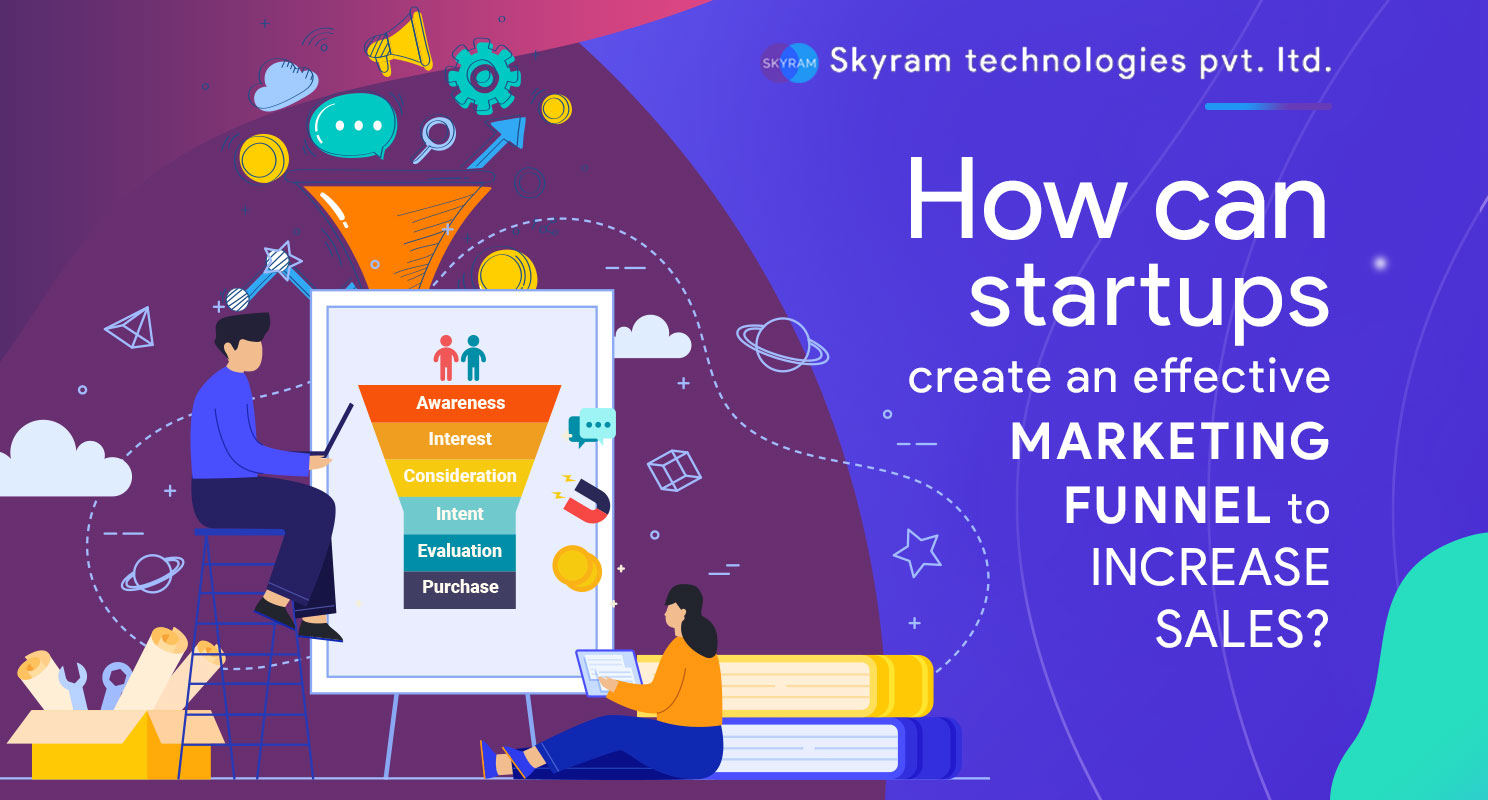
How can startups create an effective marketing funnel to increase sales?

Every business wants their sales process to run smoothly. To make sure that happens, it is imperative for every business to create an effective marketing funnel. The right marketing funnel will help in converting a visitor into a paying customer.

A lot of business owners are drifting away from the “marketing funnel”. It is a misconception to think that marketing funnel is way too mechanical. The funnel is a simple way to describe the lead nurturing sequence, to shift customers from awareness to purchase.

It is a useful way to describe a complicated process that offers startups and marketers with a good visual image. In this blog, we are going to breakdown the different steps to create an effective marketing funnel to boost your sales.

What is a marketing funnel?

A marketing funnel is a way to breakdown the customer journey all the way from the “awareness” stage to the “purchase” stage. The funnels can also include certain post-purchase steps that help in customer retention.

It is a compilation of all the steps that a buyer needs to go through before purchasing. There is no denying the fact that people buy all kinds of stuff at all times, whether they need it or not.

One of the primary reasons people buy stuff that they don’t need is because the top brands understand the consumer journey. Not only that, they know how to instigate demand among customers and guide them to buy something they don’t need.

What are the different types of marketing funnel models?

There are primarily four different types of marketing funnel models. They are as follows:

AIDA Funnel: This is also known as Awareness, Interest, Desire, and Action funnel. It was developed in the late 19th century. It is the most popular and most preferred marketing funnel that comes in four stages including awareness, interest, desire, and action.

The AIDA Model
The AIDA Model

This marketing funnel identifies the varying cognitive stages of an individual while buying a product or a service. It is more of a communications model that enables companies to see opportunities on how and when to communicate during each stage since consumers use different platforms these days.

Inbound marketing flywheel: The inbound marketing funnel is focused on three specific stages, attract, engage, and delight. This method of marketing funnel focuses on developing relationships with the target audience. In this way, you increase credibility and trustworthiness. The inbound marketing flywheel is a great way to get your target audience to look more closely at the products and services.

Conversion funnel: The conversion funnel is a much more open-ended than the first three because it enhances the delight stage. Thus, it transforms the repeat customers to brand advocates and it brings referrals to the business.

Growth funnel: The growth funnel recently became one of the very popular marketing funnels that are used by startups. It is used by Airbnb, Uber, Dropbox, and other premium startups. It is also known as the pirate funnel because it comprises five stages including, acquisition, activation, retention, referrals, and revenue.

The Growth Model
The Growth Model

If you want to capture leads at every stage of the marketing funnel, it is imperative to assign action at every step. Here are the following steps to create an effective marketing funnel for startups.

Steps to create an effective marketing funnel for startups

1. Awareness: Getting the message out in the open

This is stage one of a marketing funnel for startups. It is important for your brand to get discovered by the right people. Here you have to make sure that you target the relevant audiences to bring traffic to your website who will buy your offer.

You can create awareness through SEO using high-ranking keywords and interesting content for your audience. You can reference the product or service in some way or subtly promote the requirement for something like them in content. Keep the sales talk to a minimum.

You can also build awareness with paid advertising. There are other low-intent keywords triggering Google Search. This is also a chance to increase awareness. It is a bit advanced PPC technique where you should have a paid search strategy and solid lead nurturing system in place.

Also, sometimes, low-intent traffic might not click n your ad. Thus, keep an eye on the metrics. Despite the risks, using a low-intent keyword in Google Ads is a good way. It will get your brand seen at the early stage of a consumer journey.

Also, using social media platforms like Facebook, Twitter, Instagram, LinkedIn and more is a great way to build brand awareness.

2. Consideration: Establishing yourself as the most compelling option

This is the stage where you target people that show clear intent or desire to buy. It can be now or in the near future. The key to a successful remarketing strategy is to segment your campaign and target specific user interests.

Depending on the analytics setup, you can track specific user actions. Then create segmented remarketing lists with a specific message for every segment of audience. The actions indicate the extent of the user’s awareness and interest.

You can use this to create relevant campaigns for audiences. Use this similar tactic to target the leads at all stages of the marketing funnel. Also, capture email leads through email marketing for lead nurturing. Create email marketing campaigns to build an email list and get users to sign up.

3. Conversion: Turning leads into customers

The marketing goal is to convert leads, reduce conversion barriers, and turn consideration into action. Purchases are the most valuable types of conversions but there are others whom you can target with different campaigns. These include email signups, content downloads, free trials, account creations, demos, and more.

Creating organic and paid searches, SEO strategies, and Google Ad campaigns are the basics of conversion. Along with that, focus on optimizing the forms to maximize conversion. For every conversion, the user needs to complete a form. Thus, optimizing the form is important for conversions.

Next is, do the CRO in a smart way. There are 9 simple conversion rate optimization (CRO) fixes that influence conversion. These include lesser load times, single-column layouts, using ‘magic number’ technique, using ‘inverted pyramids’ for CTA’s, multi-step firms, remove the navigation from landing pages, testing the best CTA placement, testing secondary CTA’s, and exit-intent popups.

The attention should be on increasing incentives and removing barriers. Start with the most important aspect of the key pages and get them in order.

4. Loyalty: Turning customers into repeat buyers

The primary objective of a marketing funnel doesn’t end with a single purchase. That is just the beginning. You have to make your existing customers keep buying. Make sure that customer service is a top priority.

Regardless of how good your product/service is, customers will face problems of some kind. How you deal with your customers will become a major factor in customer retention. Create online guides, FAQ’s, Chatbots, contact management, and CRMs to help customers have the best experience.

This helps in filtering out cases. The most important aspect is to offer in-person support when needed. The support team should be ready to come in. it can be tricky if you have a large customer base but that is where a good CRM comes in.

Try to reward customers for their ongoing purchase. It works as an incentive, increases loyalty, and m0tivation to come back and buy more.

5. Advocacy: Availing new leads from existing customers

The final step is to turn happy customers into lead generators. How? Happy customers will continue to buy from you but they will also recommend you to others. 83% of the buyers state that recommendations from friends and family play a vital role in their purchasing decisions.

When you have a number of satisfied customers, create a profile of positive reviews. Also, get positive service stories or testimonials from your customers. Create referral campaigns by asking your customers to invite more of their friends and offering them incentives in doing so.

These are the steps that a startup needs to implement an effective marketing funnel. Are you looking to create an impeccable marketing funnel for your business? Get in touch with the certified professionals at Skyram Technologies here.

For more informative blogs, have a look at our blogs section here.

Ensuring flawless customer experience through UX investments that increase ROI

When the user experience (UX) improves customer satisfaction, it has a positive impact on the ROI of a company. Good UX investments enhance the customer experience. A satisfied customer is a loyal customer. They trust the product of a company and they come back for more.

This is why satisfied customers are imperative for the growth and success of any company. A seamless user-interface design, navigation, and usability leave a long-lasting impression on any website visitor. It is true for a mobile application as well.

With the growing impact of a website and a mobile application, most of the entrepreneurs today are spending time and resources on improving the user experience.

What is a UX design?

The UX design focuses on the experience that any visitor will have while visiting your website or using your product. The “product” here is beyond the tangible good or service. It includes the content that you create for reaching and interacting with your customers.

While developing a website with user experience in mind, the end goal is escorting the visitors through your business. It is done with such precision you that will show them exactly what they want to see. Thus, they start feeling why they need to buy it.

While dealing with the user experience the end goal is to present a unique solution that corresponds to the user’s requirement. Here are certain things that present-day UX designers need to make sure to impeccable customer experience.

What is a UX design?

1) Focus on creating a mobile-first experience

At present, customers want an easy and delightful buying experience. Making improvements to the consumer experience is one of the most strategic ways to accelerate lead gen, customer acquisition, and business retention.

When it is about making an impression, the first impression lasts! The customer experience should improve throughout all the points of interaction. The most likely point of interaction is through smartphones and mobile devices. 70% of global traffic comes from mobile devices.

Mobile-first experience

Source

Thus, whether it is your website application, a newsletter, social media posts, search ads, or anything else, the focus for 2020 should be on improving the mobile experience. That’s where your customers are.

2) Customization and data management

The level of customization you are capable of delivering will depend on the quantity and quality of information you can derive from the customers. In simple terms, to deliver a better customer experience, you need to follow the best customer data management practices.

Check the Google Analytics that offers every detail you need to know about the incoming traffic and visitor actions. The same is applicable to Twitter, Facebook, and Hubspot analytics. The only issue with these data analysis tools is, you will not be able to track specific consumer behavior.

To truly own the customer experience, it is important to manage and activate the first-party consumer data. Invest in customer data management platforms and tools to map, track and create unique customer experiences.

3) Creating Customer-Centric UX

Traditionally speaking, the user experience is a term that is referred to explain the human-computer interactions. With more and more customers spending time in online brand interaction, the line between the user experience and customer experience is getting blurry.

No company can deliver better customer experience before being customer-centric. It is important to prioritize customer interests over business interests. This, in turn, will pay back to meet business goals.

Customer-centric UX
Customer-centric UX

Source

This bet has proved to be correct for some of the world’s best brands like Apple, Uber, Airbnb, and Virgin. These brands have successfully won the battle of conversion and retention. Whether it is a SaaS product, a mobile app, or a website, the designers need to prioritize consumer convenience.

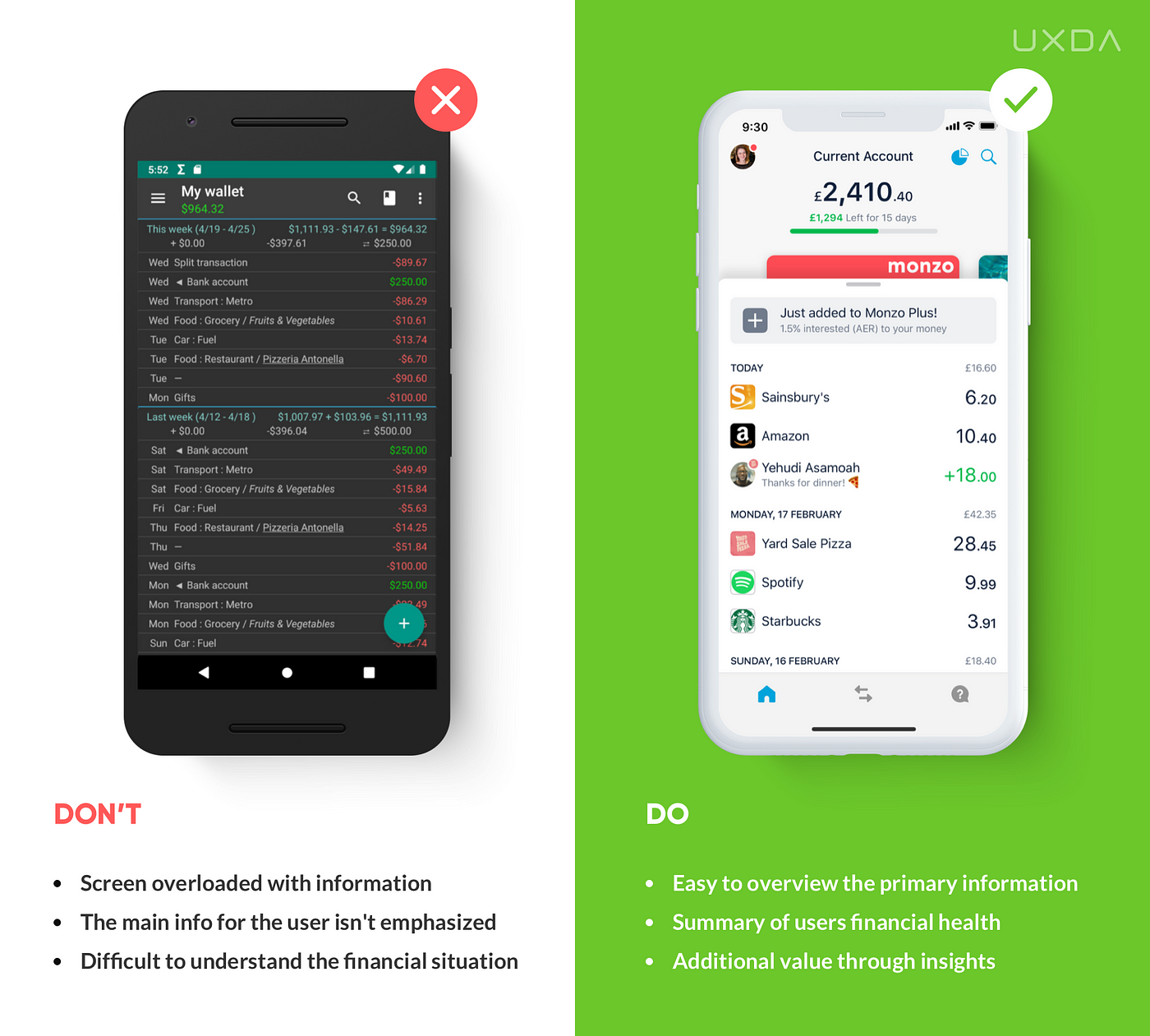
4) Do not overload the dashboard

As we already mentioned earlier that consumers expect the websites and applications will make things easier for them. If the website or a mobile application becomes too complicated to understand, the users will reject and choose a simpler alternative.

The dashboard is the most frequently viewed section of a website or an app. Thus, it should be easy for users to get important features and details at one glance. The users expect to access all their actions through the dashboard.

Clutter-free dashboard

Source

Make things easier to overview and ensure that the users have better control. Easy access to dashboard insights offers a pleasing experience from the user’s perspective.

5) Make your business visible on a map

We are in an age of online and digital connection. More and more consumers are using digital means to connect with their preferred brands and organizations. When you put your business on a map, it makes things quick and simple for visitors. They won’t have to worry about finding your business.

Everyone is busy with something these days. It is important to offer a convenient way for them to reach your location. With Google My Business, it is pretty simple for any business to place them on a map.

When you create a website or a mobile application for your brand/business, make sure that the user can access your location as quickly as possible. For instance, if the user is seeking the nearest location of your organization, make it effortless and intuitive.

Provide them with a map that displays all the locations of your branches. Add updated branch details so that the user is not in a situation that he/she visits the location but it is closed. For the user, it is important to know the details of your location and information like operational hours and relevant features.

6) Be there for the users by offering accessible support

A lot of business organizations hide the contact information or offer a single point of contact option to avoid any incoming message overload. If the user only gets a phone number, he cannot share screenshots or talk at a certain moment when he/she prefers.

Moreover, the phone operators remain busy most of the time and the user has to wait in a long queue. This can result in negative feelings toward your organization. Even if you create a user-friendly and mobile-friendly UX, there should be more than a single option embedded within the app or the website.

Accessible customer service

Source

Offering quick and easy access to a live chat increases the reliability and offers a feeling of reassurance. The user feels that he/she will be able to contact someone in case something goes wrong. This is exactly why most of the websites or mobile applications have introduced chatbots embedded within.

After some initial question and answer sessions, if the issue is not resolved, the chatbot redirects the user to a professional customer care support executive. A seamless customer support feature embedded within a website or an application plays a pivotal role in the overall customer experience.

Pay attention to the design of the screen. The chat window should be clutter-free. It should greet the user with a friendly message by name to offer a customized feeling.

Also, the chat should inculcate topics of conversation featuring probable issues that the user might face. This will help the support specialist to know quickly what they will be discussing.

These are the segments of UX investments that can enhance the customer experience to a whole new level. Do you want to add anything to this? Share your thoughts with Skyram Technologies.

If you are looking for a seamless UX design for website and mobile applications get in touch with us here.

For more informative blogs, check out our blogs section here.

Pro PPC Tips: Advanced Bidding strategies for Google Shopping campaigns

If you want to succeed as a retailer, it is imperative to create an organized Google Shopping campaign. We know that competing in Google Shopping is hard. 56% of the Google PPC budget is spent on Shopping.

It is now more important than ever for the retailers to create a well-thought-out Google Shopping strategy. Google Shopping campaigns are designed to offer companies another opportunity to engage with shoppers.

However, when it comes to the bidding plan, there is a lack of any formal strategies in bidding. If you don’t set up a strong biding strategy from the start, you will end up wasting a lot of money on Google Shopping ads.

Is there any way to solve the bidding problem? Yes, there is, but you need to start by clearly defined objectives and campaign structure. While bidding, it is important to stay competitive to ensure optimal Return on Advertising Spend (ROAS).

What factors affect Google Shopping Bids?

The factors that affect Google Shopping bids are as follows:

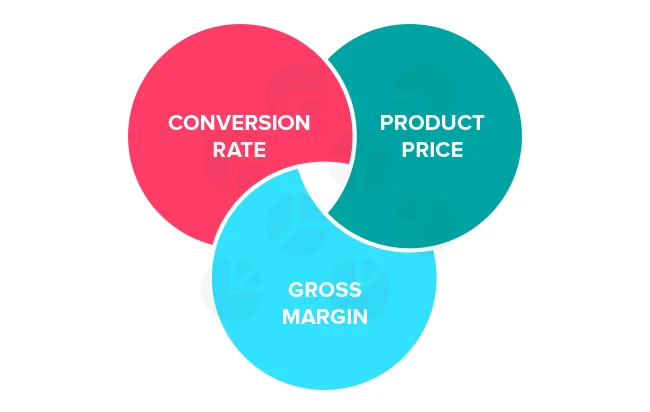
Conversion rate: There are certain products that will convert better than others. You need to invest more resources in products that convert better. Figure out the average conversion rates for the products and then bid accordingly.

Price of Products: ROAS is determined by the product price. A lot of e-commerce merchants make the mistake of not considering the product price. Don’t make the mistake of ignoring it.

Gross Margin: It is important to bid higher for the high-margin products and low for the low-margin products. Categorize the products according to their basic cost margin.

Factors affecting Google Shopping bids

Source

Once you get these numbers, the simple formula for maximum bid is

Maximum CPC = Product Price x Conversion Rate x Gross Margin

This needs to be the starting point. Why? The formula will tell your breakeven point. To make profits from your ad campaign, focus on:

  • Setting up the initial bids 25-50% less than the Max CPC
  • Improving the price
  • Improving the conversion rates

Why should you opt for Google Shopping Bids?

  • A lot of business organizations want to maximize clicks. If you are at the stage of building your brand, then the right Google Shopping bids can enhance the exposure.
  • If you want a high number of conversions, bidding can help your business in building a base of paying customers. It is also a good option if you have high demand products in large margins.
  • If you want to avail of optimal ROAS but your ad budget is limited, then this is a cost-effective way of making the most of it.

Pro tips to bid for Google Shopping campaigns

Bids are the biggest determining factor whether your product wins or not in the auction system. When you manage bids manually, you will have better control over your strategy.

  • Create custom bids for best sellers. Break the product groups according to the item ID’s for attributing custom bids for the best sellers. For the items that are bringing in too low revenue, exclude them by the item ID.
  • Raise the bids during a sale or promotion. The conversion rates get a boost on the products with sales or promotion. When you raise the bids during promotions, it will increase the volume which leads to a temporary drop in the cost per conversion. Google offers automated bidding strategies too.
  • Keep a fixed CPC and make sure the items get promoted with a fixed CPC. In this way, you will be able to exclude certain products for managing the bid by yourself.
  • Set a different target ROAS for different categories and products. The reason for doing this is, products with a low margin get a higher ROAS and the product with a high margin gets a lower ROAS.
  • Do not promote all the products. It is important to exclude certain products. The reason is, products should only be promoted at a certain time span for a particular reason. It is a bad idea to promote old products repeatedly.

A few more details to bid on Google Shopping campaigns

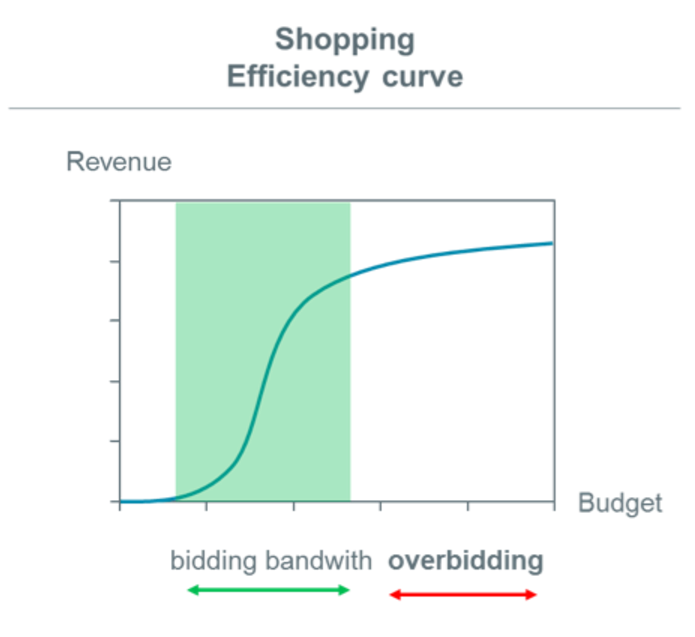
The S-Curve is one of the most important aspects of bidding in Google Shopping. The S-Curve is the Shopping Efficiency curve where two fundamental variables determine the campaign success – budget and revenue. There are three stages in the context of bidding.

  • Underbidding: Reduced bids that are ineffective in generating revenue.
  • Bidding Bandwidth: At this point, the value of a bid starts to increase rapidly.
  • Overbidding: This is the time when you start to see the diminishing returns on the bids.
The Bidding Curve
The Bidding Curve

Source

The bids need to fall into the bidding bandwidth, the section where this curve shoots upwards. That’s the sweet spot. Your campaign structure will segment your traffic and offer you control over the bidding strategy. Every campaign should have a unique bidding strategy to match your goals.

SKU (Stock keeping unit) Level Bidding

SKU (aka product ID or item ID) level bidding is a great way to segment your bids. It gives you the power to segment your bids according to product level vs. generic product traits like brand, category, custom labels. The issue with this strategy is, it is time-consuming to manage a large inventory.

The best idea is to perform an 80/20 analysis of the product inventory depending on a combination of KPIs like revenue, conversion, and returns. After that, create a focused and manageable campaign based on the target characteristic.

You can create an SKU level campaign for categories like bestsellers, high-margin, and high ROAS. After that, place a separate bid for every SKU in your campaign. Use the SKU level bidding on a certain category of products to monitor which matters the most.

Product Attribute Level Bidding

For a limited time, you cannot use SKU level bidding; instead, you can opt for the product attribute level bidding. This is where you combine two product attribute segments like category & brand or category & product.

With a two-product attribute structure, it is easier to set up specific maximum bids for every category. Unlike Google Product Category attribute, you get to choose which value to include. Thus, it will help in creating your own product categorization system within the product feed.

The best idea is to use product types with multiple levels for deeper and much more logical segmentation. The custom labels offer endless possibilities by enabling you to set up your values for five custom label value categories. Mix and match them with other product attributes.

Remarketing Audience Level Bidding (RLSA)

To create repeat visits, you need remarketing. You can remarket repeat visitors on Google Shopping. The keyword here is Audiences. With the RLSA campaigns, you place higher bids within your campaigns to different audiences. In this way, you will have a higher chance of getting traffic from your likely buyers.

For instance, you might be willing to big higher to attract people that abandoned your shopping carts vs. the people who browsed your website a few hours ago. The bidding for RLSA is done under the audiences tab. This ensures that you are more competitive in bidding to attract people from these audiences.

Are you looking to create an effective bidding strategy for Google Shopping? Get in touch with the professionals of Skyram Technologies here.

For more such informative blogs, have a look at our blogs section here.