The adverse effects of a bad web design might cost you millions

Web designers have repeatedly emphasized the importance of a user-friendly website. Yet, a lot of businesses fail to implement such a website. The web world has become such that if you don’t have a well-optimized website, you might as well not have a website at all.

With Google focusing on mobile-first experience, a robust website is the first stage of creating a sound online presence. Robust web design these days is much more of a requirement than a status symbol.

The usability, experiences, and content of a website can affect the revenue of a business. If you are neglecting your website, there will be real-world consequences. The companies may not fully realize the extent of damage, but with time, the rankings and number of visitors will be reduced.

The longer you are using bad web design, the more potential clients and revenue you will be losing. In today’s world, the brand that is capable of engaging more clients will win. It takes time to win in Google search engine results page. Every month you are not getting your website optimized, you are lagging behind.

Here are some of the most important ways of improving your website design and winning over the audience to your cause.

1) Create a web design for an overarching objective

What is the primary thing that you want your visitors to do on your website? Make sure your website is designed for that. If you don’t know what exactly you want your target audience to do, you are not ready to make a website.

A well-optimized website makes it abundantly clear what they are about. If you consider Google’s homepage, there have been numerous modifications, optimizations, and additional services. But the core services have not changed. There is a single search entry blank with buttons to activate it and it is surrounded by a lot of white spaces.

A good UX design will drive the visitors towards a clear action. Websites that don’t have an overarching objective, often suffer from an identity crisis. This is why their visitors go through the “paradox of choice” and it becomes frustrating. Thus, it is important to avoid such a scenario.

2) Present your website according to the requirement of the internet

Things have changed in the way people go through the internet these days. Nowadays, people don’t go through a website thoroughly. The pace of information-retrieval has replaced thoroughness. Thus, reading nowadays has become equivalent to scanning with eyes.

According to eye-tracking studies, internet users these days “read” in an F-pattern. We scan the headings, the subheadings, and the opening sentences of the paragraphs. The reason for such an inconsistent reading pattern is we want to compensate for the massive amount of information available.

A smart UX design can compensate such behaviors by frontloading the important and relevant information. The design needs to be such that the headlines and lead sentences are presented along the left margin where the users seek information.

The website users try to avoid long blocks of text to favor short and easy to digest paragraphs with paragraph-breaks. Instead of creating a long and clumsy content, use bullet points or numeric to sort out the points you want to establish.

3) Invest in offering a visual appeal

We already know that visitors will judge a website in less than a second. This has got a lot to do with visuals. For a lot of visitors, if the visuals disappoint, then the website as a whole becomes disappointing.

We are hardwired to be visual creatures. We favor our eyes over any other senses. Our brain is dedicated to process and remember visual information. Considering such cognitive biases, one simply cannot deny that we prefer image-driven websites.

This is why it is important to invest in creating high-quality photography or videography for your website. Also, along with consistent pictures, pay attention to color schemes, icons, negative space, clarity, and hierarchy.

4) Page load speeds

In general, people don’t have that much patience anymore. 40% of your incoming traffic will give up on your website if it takes more than three seconds to load. For most of the search engines, it becomes one of the essential factors for website ranking.

There is a myriad of things that you can do to increase your website speed. For instance, you can enable file compression, optimize the website code, reduce the number of page redirects, and leverage browser caching to reduce the load times.

Another strategy to reduce website load speed is to make sure that the file sizes of your website are not large. Optimize the website design in such a way that the quality of images remains intact and there are no junk files.

5) Mobile optimization

A website that is not optimized for mobiles is not a preferred website for visitors. It will take a long time to load and the text becomes extremely small and unreadable. The images, buttons, and menu options, all become disoriented.

Mobile traffic makes up more than 50% of all the website traffic since 2015. This means, one out of every two people checking your website, is doing it one a smartphone. Now, are you offering them a user-friendly experience?

The difference between smartphones and computers is, smartphones offer to scroll through vertically stacked content. The larger screens like computers allow more variety in navigation. Primarily, there are two forms of designs to ensure a mobile-friendly website, adaptive or responsive.

A responsive design will resize the elements of the website to fit the resolution of the user. An adaptive design is identical to having two different websites, one for the computers and the other for mobiles.

Responsive website design includes less work in web development and more through the range of screen sizes. On the other hand, the adaptive website design has more potential to offer the best experience on mobile.

There are numerous CMS’s like WordPress, Wix, Squarespace offer mobile-responsive themes. If you are using one such CMS’s then make sure that your theme is mobile friendly. The best option is to get in touch with the web design professionals that can get your website optimized.

In conclusion, it needs to be said that your website is the living and breathing representation of your brand. You don’t have to live with bad website design. Let the professional web designers of Skyram Technologies evaluate your website and optimize it in the best way possible.
10 signs it is time to re-evaluate your digital marketing strategies

Almost every business organization utilizes digital marketing strategies for the growth and expansion of its business. Once the digital marketing strategies are implemented, it is imperative to make sure that the strategies deliver results.

If your online marketing strategy is not getting your leads, conversions, or optimal ROI, then it is time to re-check your marketing strategies. However, it is not easy to determine when your marketing strategies need to be changed.

There could be multiple flaws in your existing marketing strategy. You may not know whether the marketing is effective if you don’t know what metrics to track and how. Also, you may see a certain amount of revenue coming in, but are you getting the optimal value of your investment?

Here are the 10 signs that it is now the time to re-access the performance of digital marketing strategies.

  1. You are not maximizing your ROI

If you are not getting the best returns from your investment, then it is time to check the cost per acquisition (CPA). When you start tracking your marketing campaigns, you will notice that certain channels are more effective than others.

The end goal is to attain the maximum number of customers or clients with the lowest amount of investment. You can determine the true ROI by comparing the results across different channels and campaigns. You will know what works and what doesn’t.

If the ROI is not maximized, then it is time to rethink your digital marketing strategies.

  1. The social campaigns are not working as expected

Most of the business organizations make the mistake of taking the “post & pray” approach. This means, they post content and hope that it will generate the desired engagement.

Instead, the reality should be posting content that will resonate with your audience. Every social media platform comprises its own set of analytics and performance metrics.

The likes, comments, shares, and clicks are good indicators of engagement. If you are sharing posts and hearing crickets, then things need to change.

  1. There is traffic but no conversions

Generating traffic/visitors is one aspect of digital marketing. However, if they don’t convert to customers/clients then it will not be profitable for you. Without conversion, you will not see the desired conversion.

Use Google Analytics to make sure that online marketing strategies are translating to conversions and not just limited to website visits. Track the conversions and determine the ROI of every campaign.

A lot of businesses invest in search engine optimization to attain highly targeted visitors. This will get you visitors who will subscribe to the newsletter, buy products, or reach out to you.

  1. You are seeing very less or no traffic at all

If you are seeing very little traffic, then this is also a bad sign too because the marketing efforts are not working. Most of the internet marketing platforms have their own algorithm that determines what content the users get to see.

For instance, on Facebook, the brands need to seek organic reach to get noticed by their target audience. In Google, it means optimizing the website so that it is displayed to the users in organic search.

Lesser traffic from the primary marketing channels means it is a clear sign that your marketing methods require a fix.

  1. Minimal returns on your paid ads

PPC ads are a good way to generate leads, but they can be extremely expensive if not done correctly. A lot of brands end up seeing poor results from the paid ads because they are not targeting correctly. This results in lesser conversion and the cost per click becomes too high.

The key to effective paid campaigns is to target the right audience with the right content. When you are running Google Ads, Facebook Ads, or Instagram Ads, make sure they are focused on your target audience.

CPC will vary but to make the best of it, you have to test the ad groups, ad copy, keywords, targeting, and more. This will help you maximize your ROI at the lowest CPC.

  1. Creating last-minute campaigns

A lot of us create digital marketing campaigns at the last minute. However, this should not be a tendency. Effective marketing campaigns take time, especially if you are analyzing existing data running A/B tests, segmenting your audience, and more.

To create an effective digital marketing strategy, it is important to plan well in advance. Conduct proper research on keywords, set up your ad targeting, hiring copywriters, and more. When you consider all the steps of planning and implementing an online marketing strategy, it works out well.

  1. Your website is getting buried in the search results

People utilize search engines like Google to seek brands, services, products, and information every day. Your audience is utilizing Google to look for brands like yours. If your website is not ranking high in search results, then you are missing out on a lot of potential customers.

A lot of websites will rank naturally but many will not. All the websites invest in their own SEO to rise up to the top of the search engine results page. Create an effective SEO strategy that involves optimizing your website, publishing high-quality content, target the right keywords, and attract valuable backlinks.

Do not leave the Google rankings up to chance. Make sure to have an SEO strategy to drive your website to the top.

  1. Not knowing how to analyze the performance of campaigns

If you don’t know how to measure the results, then too, your marketing strategies need a change. For every marketing platform and campaign, make sure that you have web analytics to track the Key Performance Indicators. The KPI’s need to be based on certain metrics to measure success.

  • For SEO, the page views, bounce rates and conversions matter
  • For social media, the number of likes, shares, comments or clicks matter
  • For the Google Ads, it could be clicks, CPC or the click-through rates matter

Setting up the KPIs and knowing to track them, will help in evaluating the campaigns that yield results.

  1. No cohesive or multichannel marketing strategy

A lot of business individuals rely on a single marketing channel. That should not be the case. Never rely on a single marketing channel. The goal needs to be cohesive. Multiple marketing channels help in reaching out to potential customers from multiple touchpoints.

In this way, your brand value is communicated effectively through every channel. Also, you will be confident that your marketing campaigns are working together to attract ideal customers.

  1. Not getting the desired revenue

If you are spending time, efforts, and money into digital marketing strategies, you should yield the desired revenue. If the efforts are not delivering you the desired results, it is time to determine what is wrong.

Whether you are running your own marketing strategies or hired a company, take a good look at whether the campaigns are delivering results. If you are not seeing leads, conversions, traffic, and revenue, it is time for a different approach.

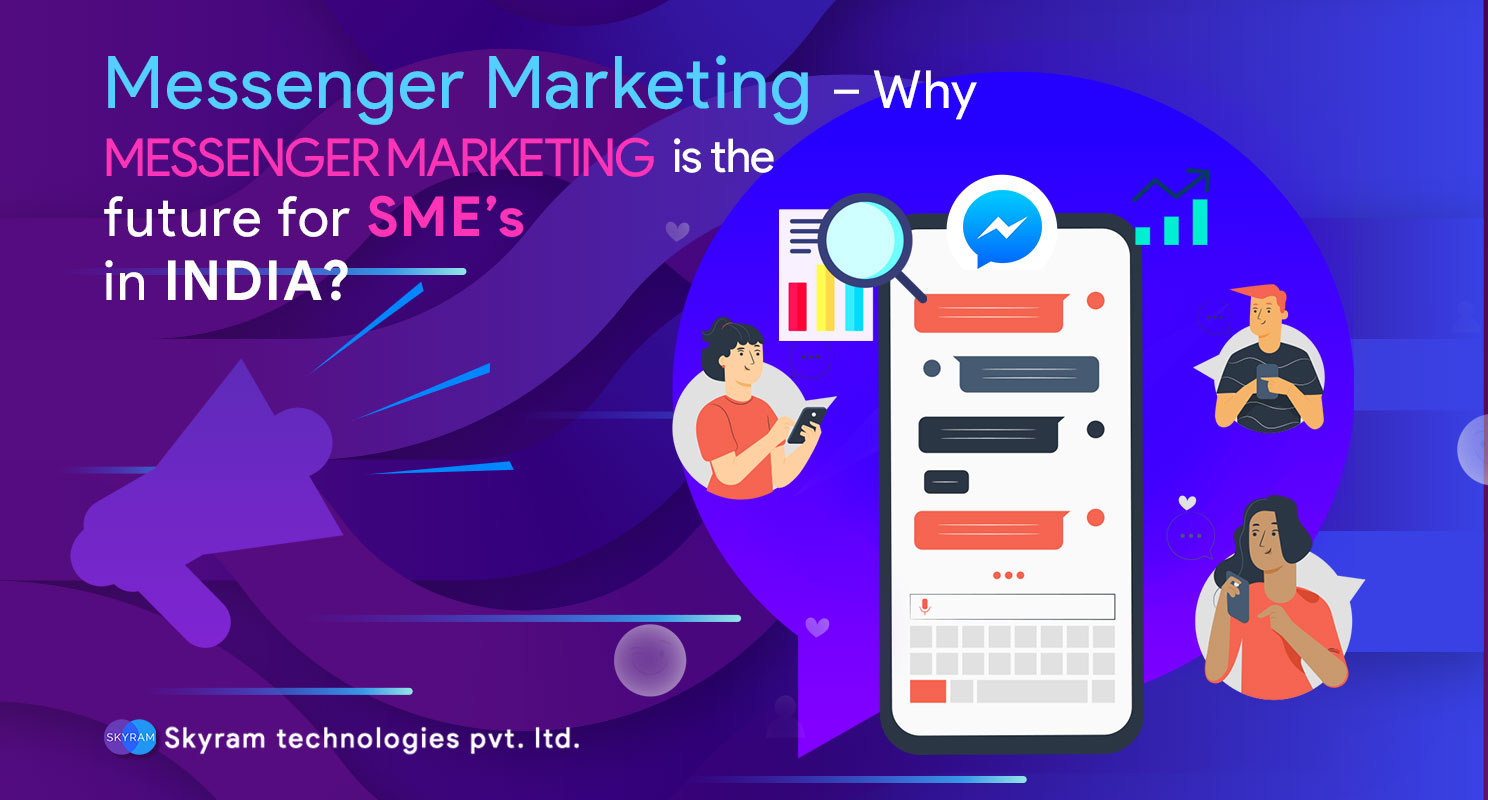
Messenger Marketing – Why messenger marketing is the future for SMEs in India?

Messenger marketing is known as the use of mobile chat applications for marketing purposes. The mobile chat applications are used for connecting with prospects/customers and enhancing business. Messenger marketing is done through applications like Facebook Messenger, Telegram, WeChat, WhatsApp, or more.

This is one of the easiest ways of reaching millions of people across the globe. Regardless of where you are, you can connect with anyone you want. Companies send out marketing messages in multiple forms. It could be texts, audio messages, video messages, images, or set up bots.

That’s how customers get to know what exactly a brand is selling. If it can be implemented in the right way, messenger marketing improves the relationship and increases conversions.

Some statistics on Messenger Marketing

Some statistics on Messenger Marketing

How does Messenger marketing work?

Messenger marketing helps businesses and online marketers to get the audience to subscribe to the campaigns through multiple messaging platforms. Mostly it is done through Facebook Messenger or Telegram.

Once the prospect subscribes, a business can send out marketing messages like videos, images, GIFs. They can also communicate through live chat.

Chatbots are one of the most common ways of interacting with customers. Chatbots act as an instant mode of communication and offer a higher click rate compared to the traditional marketing mediums. It helps the brands in sending out relevant notifications and reminders regarding the upcoming events.

They offer opportunities to re-engage the prospects. Also, they can help your sales & tech support team to answer questions from users, register people, collect orders, and promote the brand.

What are the reasons to use messenger marketing for SMEs in India?

  • One of the most obvious reasons why messenger marketing is the future of SMEs is because of the technology itself. Yes, there are chances of phishing or scams, but Facebook is extremely strict on who they allow on messenger. It is constantly improving. The sooner you start a messenger marketing campaign, the better it is.
  • Automation has seen a drastic increase in the past few years and it will continue to increase. 85% of the customers engage with businesses through technology, without any actual human interaction. This means 85% of the interactions are automated.
  • Another primary reason is, customers want it! It is as simple as that! 77% of the customers said that they want instant responses through chatbots. It is not only the millennials that appreciate the presence of chatbots. 24% of the individuals of the age 40-50 years, appreciate the instant responses of chatbots.
  • It is better than emails. Leads don’t have to share sensitive contact information or any other information. Just one click in messenger chat on your website and you can connect. As long as messenger is your default contact option, you can contact anyone that expresses interest in your company online.
  • Messenger marketing offers better control of your business dealings. Instead of just hoping that the customer sees the CTA, you can guide your potential customer to find the service that will actually help them. A chatbot will ask questions to find out how to serve them. It makes a campaign more successful.
  • It also helps you nurture the “lost cause” leads. By you, we mean the chatbots. Instead of wasting your time to nurture the leads that may not buy, let the chatbots do it. The chatbots can continue to nurture the leads for an indefinite period of time so that you don’t have to.

What are the beneficial aspects of using messenger marketing for SMEs in India?

  • First of all, messenger marketing is cost-effective! Yes, you will need a professional to set up the chatbots for you. However, it is still less costly than keeping a few paid individuals for contacting and engaging your customers. You can customize the bots according to your requirements.
  • Multi-functionality is another aspect of messenger marketing. The chatbots are flexible to respond to queries that supplement customer experiences in multiple domains. Chatbots can be programmed to do anything.
  • You can use a messenger to provide a service. That’s how you add value. Chatbots offer instant response and you patch it through to your live chat if the issue is not resolved. Messengers include additional services like notifying them about their orders, find movies and theaters or watch trailers, and more.
  • Customers can pay directly through messengers. In the future, customers will be able to transfer payments through messenger apps. Facebook is already beta testing a payment feature for the messenger. Thus, it means more convenience for customers and more sales.
  • Everyone advertises on Facebook. Convert your standard Facebook ad into a click to messenger ad. In this way, you will gain access to their messenger inbox. Thus, you are not just sending customers to your website but you are directly engaging with them right from the start.
  • Cart recovery is another benefit of messenger marketing. E-commerce businesses need to watch out for abandoned carts. If customers leave carts, personalized messages can remind them about their abandoned cart.

Messenger Marketing vs. Email marketing

No, we are not here to share the differences between email marketing and messenger marketing. The reason why we want to share this comparative analysis is that a lot of users would think of dodging email marketing and use only messenger marketing. That would not be the right strategy.

From the above statistics, it is clear that messengers are a significant tool for e-commerce platforms to increase user engagement. The average email open rates reach only 16% while the CTR reach is only 7%. Considering this with messenger marketing, a lot of you might think that email marketing is not effective anymore.

This is not true. The two platforms are different and their purposes are different. Email is created for sharing updates, news, and other promotional offers. Mostly it includes a one-way communication. On the other hand, messengers represent two-way communication.

People check messenger inboxes more than the email boxes. If customers have questions regarding any service, they will use a messenger for contacting a brand. In general, we want something quick and easy. This is where a messenger comes in. Email is a bit more formal and takes time.

Both of these channels can be utilized in different ways to reach your digital marketing goals. Keep your customers informed about your products and services and teach them how to use your product through emails. And when they are “warm” offer them to join your brand on messengers.

A few tips on messenger marketing to ensure best practices

  • Create and update the chatbot according to the customer feedback
  • Send out notifications to the existing customers while keeping a focus on the engagement
  • Describe the bot to the customers and prospects using the brand’s marketing material
  • Promote the chatbot in different places where the potential leads or prospects might visit
  • Customize the bots for more relevant and timely interactions
  • Keep things simple by reducing the number of options available

In the end, it can be said that messenger marketing is going to be one of the best ways of digital marketing for multiple businesses, especially e-commerce stores.

The good news is if you are looking for the best ways to create an optimized messenger marketing strategy, get in touch with a professional organization like Skyram Technologies.

Getting Started with Performance Marketing in 2020 – A Beginner’s Guide

Performance marketing is a comprehensive term for advertising and online marketing. In this form of marketing, the advertisers only pay when a particular activity happens. This activity could be a lead generated, a sale, or a click.

Performance marketing professionals rely heavily on paid marketing mediums. It is a form of online marketing that is making a significant mark in the digital marketing world every year. Simply put, it is marketing based on performance.

What is the difference between affiliate marketing and performance marketing?

Affiliate marketing is a type of performance marketing where the advertisers reward the affiliates for the activity regarding their marketing efforts. It can be said that all sorts of marketing come under the umbrella of performance.

Affiliate marketing is related to affiliated brands and product marketing. At present, it has grown to be a much more innovative and dedicated ‘performance marketing’ strategy.

On the other hand, performance marketing includes much more traditional ‘affiliate marketing’ that is known for generating sales through cashback and coupon sites.

Conversion optimization tools, influencers will large email lists and plug-ins offering a tailored experience is how performance marketing works. This is a new way of marketing ensuring performance across devices both online and offline.

It is possible through different marketing channels. Thus, it opens a world of marketing exposure and value that no brand, advertiser or merchant can miss out on.

What is the work process of performance marketing?

Performance marketing works in four groups. They are:

  • Retailers
  • Affiliates
  • Affiliate Networks & Third-Party tracking Platforms
  • Affiliate Managers

All these four groups work in unison with each other.

Retailers – These are also known as advertisers. They are the businesses that promote their services and products through affiliate partners or “publishers”. Retailers and e-commerce companies in different genres like fashion, clothing, food, beverage, health, lifestyle, beauty and sports can be successful in performance marketing.

Affiliates – They are the marketing partners. Affiliates or publishers come in different forms like loyalty, coupons, cash backs, product reviews, online magazines, and more. There should be a strategy on what these marketing partners need from a merchant to be successful.

Affiliate Networks & Third-Party tracking Platforms – The affiliate networks are important to the merchant/affiliate partnership. They offer a one-stop-shop for information tools like banners, product feeds, text links, payouts, and promotions. Different affiliate networks and tracking platforms have different cost structures, strengths, weaknesses, merchant vertical expertise, and more.

Affiliate Managers – Affiliate managers are the main drivers between the affiliates and merchants. The affiliate managers can either be in-house or they can be outsourced as well. Working with an experienced affiliate management company signifies that the brand is ready to scale up the performance and affiliate marketing.

There are some merchants who decide to offer an experienced agency to manage 100%. Some others work in conjunction with their in-house team. Sometimes it is beneficial to work with external agencies since the in-house teams might have limited resources, market research, and expertise.

What are the most common payment models used in Performance marketing?

  • Pay Per Sale or Cost Per Acquisition

This is an arrangement where the retailer or a merchant offers an affiliate publisher for the sales generated. This is the most common mode of payment for the merchants.

  • Pay Per Lead

A “lead” is described as an individual or a potential customer who has completed a form registration or signup. This includes some sort of information provided by the consumer or user about themselves.

Leads can be as simple as an email, a name, or as complicated as a three-page information in exchange for a loan or mortgage. The more complicated the lead form, the better is the payout.

  • Pay Per Click

In Pay Per Click, the retailer pays an affiliate for clicks on their landing pages. This is a lesser-used medium of payment in performance marketing.

What are the benefits of performance marketing?

There are multiple benefits to performance marketing.

  • The obvious benefits reside on the fact that you can build your own brand with third-party partners, their audiences, and budgets. You can increase the market share, audience engagement, and targeted traffic.
  • The other benefits include reducing risk, increasing market reach, and decrease budgets while growing the brand.
  • Performance marketing is completely trackable, quantifiable, and transparent. The brands will have the option to check the click to consumer path of each buyer. They can identify the opportunities for investment.
  • In performance marketing, the payment is done after a certain action, the risks are lesser. Also, the cost per acquisition is less and the ROI is higher. This is what leaves for more room for investing in other marketing strategies to expand your business.

What are some of the performance marketing tips to succeed?

Create a well-optimized landing page and offer: A bad landing page will make you lose a lot of clicks, visitors, and potential customers. Similarly, a bad offer prevents visitors to continue with the purchase.

If you are an advertiser, it is imperative to ensure you are offering your publishers with interesting offers for promotion. Being a publisher, you have to audit links and offers, provide the latest content, and keep updating the landing pages.

Continue A/B test and optimize the KPIs: Testing and measuring are extremely essential to reap the benefits from any good marketing strategy. When it is about performance marketing, you should try different methods for optimization of conversions, search engine optimization strategies, and CTRs. A/B testing helps you know what works and what doesn’t.

Choose the traffic sources: You need to make sure that the traffic is coming from qualified and reputable sources. The traffic sources are important in performance marketing. If the sources are less reputable, the consumers will not easily rely on your brand. Thus, they will be deterred from buying again.

Track and monitor as much as possible: Track the attribution with mobile vs. desktop, bounce rates, and more. All are important data points that can offer better insight into what is working and what doesn’t.

Similar to testing, the tracking and measuring gains are equally important to get the most of your performance marketing campaigns. Without proper analysis and adjustments for optimization, you cannot grow your sales.

Some existing performance marketing trends to check

  • Performance marketing was responsible for more than 16% of e-commerce sales in 2017. It is easy to track the growth in this marketing strategy. This makes performance marketing to be as good as email marketing. It is one of the major driving forces for e-commerce conversions.
  • As this marketing strategy grows, more people are making a career in performance marketing. Advertisers are investing in it and publishers are entering the space as well.
  • With better options for improved tracking and attributions due to third-party tracking platforms, the enhancements enable first click models. Thus, the publishers will not get dinged if someone leaves the referral and comes to buy from different sources.
  • Another important trend in performance marketing is to observe the continued development with the implementation of Artificial Intelligence and Machine Learning to drive sales.
  • Marketers will have thousands of data points to track and measure. AI will take out the complications of these data points and help in scaling efficient optimization seamlessly using machine learning.
  • This growth trend also allows marketers in freeing up the time while giving more opportunities to be creative in the marketing efforts.

In conclusion, it can be said that performance marketing helps in scaling up the reach, engagement, and conversion of the new buyers at a lower cost, lower risk, and higher ROI. It will enable you in building the brand and increase product awareness while engaging with customers without facing budget-constraints.

Creating a ‘Recession-Ready’ marketing strategy – 5 rules to follow

Is your marketing strategy ready for a recession? When the times are not in your favor, the marketing strategies that used to work previously will start to stumble. So what should you do during the time of recession? Should you still continue with your marketing strategies? If so, how?

This is the question that we are going to answer in this blog. We create a lot of digital marketing campaigns. Try out a lot of strategies. But are those strategies ‘recession-proof’? Here are the 5 rules you need to follow to create an online marketing strategy even during a recession.

#1 Don’t cut out marketing budgets randomly

During a recession, the tendency of business owners is to cut out the marketing budgets. This will be a mistake. Slashing the marketing budgets will only help you safeguard your profit for the short-term. Ultimately the brand will evolve as a weaker brand and attain much less profit.

Maintaining a brand that the consumers recognize is one of the best ways for reducing the risk when the economy takes a hit. In every recession cycle, the companies that offer a strong brand presence come out to be at the top.

If your competitors are cutting budgets, you will see a better and long-term return on your investments. Thus, instead of making a random cut in marketing expenses, look at where you are spending money and what is the return of it.

#2 Build and optimize the landing pages

When the time is tough, it is more important to optimize the return on investments. Whether you are using banners, Google AdWords, email campaigns, sponsorships, a dedicated landing page is the most effective way for turning a click into a prospect. Relevant landing page optimization can double the conversions.

Along with that, sending clicks to the home page and testing your pages can also increase conversions by 48%. Combining these tactics can result in 2.5X more leads for every dollar that you spend. Most of the companies are not using this technique.

Only 44% of the clicks for B2B companies are directed to the home page and not to a specific landing page. 62% of the companies have less than six landing pages. This is why a recession is the best time to focus on these basics.

#3 Analyze the behavior of your target audience during a recession

The trick to successfully marketing and advertising during the recession is to understand consumer psychology. A recession is a trying time for most of the customers. There is an ongoing worry and stress.

Now is the time to tap into the emotional side of your consumers. This will give you an edge to connecting with them. The marketing and ad campaigns that focus on the emotional engagement tend to be more profitable.

This is not the time for creating ad campaigns with an end goal to sell. Remember that people change when the world around them changes. What your target audience used to require two years ago, may not be the same this year.

Find out their motivations and behavior trends during an economic downturn and you can still reap the benefits from the situation.

#4 Track and analyze every minute activity in detail

Digital marketing allows in creating precise and measurable campaigns. Thus, you can create much better and quantifiable results than any traditional marketing campaign. To ensure impeccable tracking, you will need tools like Google Analytics.

Combine the analytics data with your sales data to identify the best performing marketing strategies. This will also help you to cut the expenses without causing a dip in branding or sales. During a recession, it is imperative to know exactly what return every marketing investment is offering and why.

The key is not only to survive, but to ensure a constant growth as well. With ad targeting capabilities gradually shifting towards AI and machine learning, it will be easier to reach audiences. You can create much more meaningful ad campaigns related to your business objective.

#5 Boost conversions by testing, editing and repeating

No one can make their audience change their habits. Instead, the best option is to figure out what works for them and what doesn’t keeping in mind the buyer perspective. You have to do it by modifying your campaigns, pivoting your strategy until you find out what clicks with your audience.

Start by gathering enough data and then test different tweaks to your strategies. Run tests to find out what is the most cost-effective strategy. When you have got the results, repeat the process. What you have to do is refine the recession marketing strategy and distill it to make sure only the best performing campaigns are there.

Remember the brands and business organizations that thrive in recessions are the ones that most adaptive to change. Do not forget your existing customers. The marketing strategies should be focused on your most valuable and loyal customers. Reward their loyalty and they will repay you in the form of recommendations and reviews.

Some additional tips to maintain a stable marketing strategy during a recession

  • Make sure you focus on finding more prospects that are ready to buy. When the buying slows down create offers that will appeal to someone who is looking for a solution.
  • Align sales and marketing. At present, the prospects start buying after interacting with the online marketing and online channels long before they speak to a sales rep. Thus, make sure to integrate marketing and sales.
  • Use lead management to maximize the value of every lead. The prospects are valuable corporate assets that you worked hard to acquire. Thus, in a down economy, you have to do everything possible to maximize value for them.
  • Create content around the needs and questions of your customers, Tough economic times cause fear and uncertainty. Thus, you need to have content that can address these variables.

In conclusion, all we can say is economic downturns are bad for every single individual. Times like these will test even the best business organization. There are a lot of variables that are out of hand during economic downturns, the good news is you can customize your own marketing strategies to survive and thrive during a recession.

Instagram Lead Generation – 10 insanely effective tips to boost ROI

Did you know that Instagram has more monthly active users than Facebook, Twitter, and Snapchat? While creating digital marketing strategies, a lot of us don’t consider Instagram to be a useful lead generating platform. This is where we miss out on a lot.

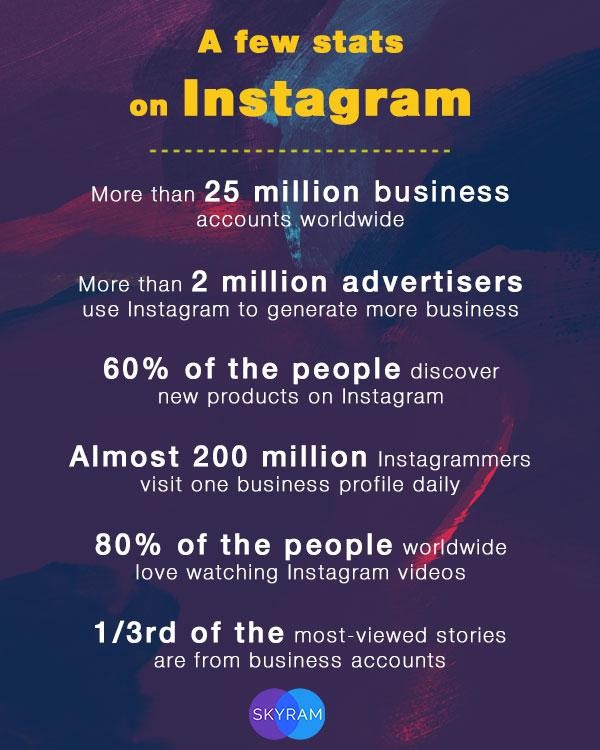
If done right, Instagram can be an extremely effective lead generating platform, even better than Facebook and Twitter. Almost 80% of the Instagram users tend to follow a business account. This is a great sign of intent that digital marketers can capitalize on.

According to a Facebook survey, 80% of the users check Instagram to decide whether they want to buy something or not. You cannot ignore so many useful opportunities to generate leads, especially if you are creating digital marketing campaigns.

In this article, we are going to share 10 simple tactics that will help you generate maximum leads from Instagram. Rest assured that they will accelerate your sales in no time.

Instagram facts
Instagram facts

1. Instagram lead ads

Instagram lead ads are a kind of obvious way to generate leads. The Instagram lead ads are designed in such a way that it helps businesses in collecting customer’s information. These include emails, phone numbers, job titles, and birthdates.

These ads help businesses in learning more about customers which helps in direct marketing campaigns. To create Instagram lead ads, you will need an Instagram business account. The customer information collected from Instagram is useful to fine-tune your ad targeting strategy or set up Lookalike Audiences.

These audiences will target more people on the platform with similar profiles and boost your exposure.

2. Use action buttons in your bio

If you have a business account on Instagram, you will be able to add action buttons to the profile. Include a link to your email, phone number, and business address. This helps people to get in touch with you easily.

Along with this Instagram also offers other action buttons for lead generation like Book, Reserve, and Get Tickets. These buttons bring people to the forms by the Instagram providers like Appointy, OpenTable, Eventbrite, Resy, and more. Choose one that your business uses.

3. Optimize the link in bio

The greatest drawback of Instagram is you cannot add a link to the posts. The only clickable link you can add is in your bio. In most of the posts, people use the reference “link in bio”. This has become old and outmoded. Try out some other smart ways of referencing the link in bio.

The link needs to point customers to whatever objective you are seeking to accomplish. This can be a newsletter subscription, product sales, or a survey. You can change your link in bio as frequently as you want.

Keep the link short, promote in on your Instagram posts, and add a CTA button above the bio link.

4. Engage with your audience

What is the point of using a social media platform if you are not “social”? You need to engage with your audience if you are serious about generating leads. This is applicable to every social media platform.

One of the easiest ways of increasing engagement is to respond to everything. Don’t just throw a “thanks” and carry on with your day. If you want to grow your audience and generate Instagram leads, you need to take some time out to craft a thoughtful response.

This doesn’t mean that you have to create a paragraph of responses, just show that you gave them attention. Use emojis and GIFs in your responses. You can still engage even if you don’t have an audience. Check similar brands and engage with Instagrammers that are engaging with them.

Anything that you can do to make your brand more accessible and engaging will give you more exposure and generate leads.

5. Sharing user-generated content

User-generated content is technically an unpaid content that is put out by the fans. It works best when you have to create a social proof for your brand. People trust what other people tell them about any product or brand, whether it is online or offline.

Instagram is just the right platform for sharing user-generated content for taking advantage of social proof and engagement. You can also use to create an “Instagram collection” of user-generated content to engage with the followers.

6. Use well-optimized landing pages

Once the user has clicked on the link, now it is time to make sure they don’t regret the decision. For this, you need a well-optimized landing page. To make sure that it is optimized here is what you need to do.

  • Double-check to ensure that the page can be scanned
  • It should offer a seamless yet enriching visual experience
  • The landing page has relevant content as expected by the buyer

Everything that your CTA’s promise to deliver, should be supported by an excellent landing page.

7. Use the swipe-up feature in Insta Stories

There is another section where Instagram lets you put links – the Instagram Stories. However, to be able to put links in Instagram stories, you will need more than 10k followers. People whose accounts have a large number of followers; they can embed important links in their Insta stories.

30% of the most-viewed Stories are from the business accounts. All your target audience needs to do is swipe up and they will reach the landing page. Since you can easily embed links and post as many stories as you want, this is an effective tool to generate leads.

8. A goal-oriented creative team

A good CTA is one of the best tools to generate leads on Instagram. The creative department needs to try out multiple CTA’s to check which works the best for their brand and target audience. Also, check whether the phrases like “swipe up”, “link in bio” and “order now” goes seamlessly with the respective content or not.

Also, the CTA and visual content should go hand in hand. In this way, you can keep your audience constantly interested. Your creative team should make ample space where you can add your CTA’s.

9. More footage for popular products

Instagram mentions its official blog. A tap on a certain product will not always lead to a sale. Here is the solution for it. Use Instagram Insights to check which products are performing the best.

Then increase the frequency of posts related to the top five highest-performing products. In this way, your audience will be reminded of the products that they like the most.

10. Use Instagram shopping factor

Yes, it is true that shopping doesn’t include growth in sales but even if a customer clicks on a product, it is considered as a potential lead. More than 100 million followers click on different product tags every month.

With Instagram Insights, you can gauge the audience mentality and product interest. You can also offer curated ads to your target audience. This will make them feel special and you can have a strong emotional appeal towards your audience.

In conclusion, it can be said that Instagram offers innumerable opportunities to generate leads. Your business will have a chance to broaden the outreach, analyze customer intention, and increase sales. Make sure that you post meticulously and constantly on a pre-determined schedule.

A lot of us use Instagram as just a platform to share photos. Apart from being a photo-sharing application, Instagram can help you boost your business by getting you more leads.

A checklist of 15 essential tips to increase organic traffic effectively

Getting a high rank in the search engines is tough. Most of the startups struggle with SEO or digital marketing campaigns. It is very normal.

The challenge for any business is to make sure that when their audience is looking for a service or a product, they find their business and not their competitor.

It is not always about mindless pay per click advertising or random search engine optimization. Spending a lot of money will not always get you the desired results, especially when it comes to getting organic traffic.

There is a lot that you can do to increase organic traffic. Also, there is a lot of misinformation about increasing organic traffic. In this blog, we are going to share a list of tips and tricks that you can use to increase organic traffic.

1. Eliminating the technical errors of the website

Speaking of technical errors, the best way to do it is to get a complete site audit done by the professionals. Optimize the site load speed, ensure consistent posting of unique contents like blogs, articles along with right keyword placement, and make sure the site is mobile optimized with a good theme.

Make use of both paid and free services. This is an optimal solution if you want quick results. You can use services that allow you in identifying SEO errors. The best of such optimizing tools include Semrush, SEOptimizer, and Ahrefs.

Make sure that the site is optimized for the readers and not just for search engines.

2. Make use of long-tail keywords

Don’t only stick to the high-ranking or popular keywords available. Try to use the keywords that are more specific and relevant to your genre of industry, services, or products. With time, Google and other existing search engines will recognize your website or your blog as a destination for a particular subject.

This will boost your content in the search engine results page and help your target audience to find you. Remember that ranking high on Google and getting organic traffic is all about owning something that influences people on a certain topic.

3. Mobile version of your website

This is not only about creating a well-optimized website. It is also important to have a mobile application for your site. 65% of internet users prefer mobile to check things out. You cannot lose such a wide range of audiences.

This is why, along with optimizing your website, you should have a mobile app for your website as well. It helps you to increase target audience coverage and increase sales multiple times. You can either create a separate mobile version or make use of an adaptive design of the main site.

4. Promote yourself on social media but not too much

When you write a blog, an article, create an image, video, or any other form of content, you can link it with social media accounts. Post them on different platforms like Facebook, Twitter, Instagram, LinkedIn, Digg, Stumbleupon, and more.

Social media is a great tool for promoting your products, services, and brand. Make sure that you don’t do it too much otherwise it will be considered as spamming. This will help in getting more traffic.

When people start coming from social media platforms to check your content, it indicates Google that your content is relevant and useful.

5. Use Google Analytics to track and optimize your content

You can use Google Analytics to track visitors to your website. Check where they come from and what kind of keywords they are searching for. This will help you in fine-tuning the content, which, ultimately, will increase organic traffic.

The end goal is to offer the customers what they want, be it quality information, products, advice or insights.

6. URL Optimization

You can complement the URLs with keywords. This will make the links more understandable for the visitors. While optimizing the URL’s make sure you do the following:

  • Use three to five relevant keywords, not more than that. Longer links will be cut off in the SERP.
  • Instead of underscores, make use of hyphens
  • Consider the spam indicators. Keywords from the URLs will be counted within the overall keyword frequency of the page.

The optimized URLs look more attractive and this is why it is likely that the visitors will click on them.

7. Competitive analysis

To be the first, you need to be ahead of your competition. Use the help of professional website audit services. A website audit will help in the following;

  • Reduce keyword cluster
  • Keep you updated with the latest product and services introduced by competitors
  • Create advertising budgets and solve strategic challenges

You can use online questionnaires, newsletter subscriptions; analyze social network groups, and other tools. With this information, you can make a lot of changes and improvements to your website.

8. Use press releases on third party resources

Regular publications of press releases on popular websites will help in solving a lot of issues. First, it increases traffic attraction and the second is it helps in external optimization. Visitors click on the news sites willingly.

The only issue is it is difficult to place these publications. Try to make the most of it by getting a positive result in outreach and lead generation.

9. Proper internal and external website optimization

External optimization is done to obtain links from third-party websites. The external links that don’t remain protected from indexing will transfer link-juice to the acceptor site. While working on creating an external ink mass, you have to consider the following:

  • The domain authority of the donor site, its quality of backlinks, spam levels and indexing
  • Check the rules of posting links. It is advised to surround them with content.
  • The topics of a donor site should be related.
  • Consider the placement frequency. Increase the link juice gradually. Search engines don’t trust young sites. Thus a sharp increase in the link juice will lead to spamming of the acceptor site.

Internal optimization is done to make the site relevant to those queries you use for promotions. It comprises of the following:

  • The use of keywords
  • Keyword grouping
  • Creating and publishing content optimized with Latent Semantic Indexing (LSI) and SEO.
  • Use Meta title and descriptions, subheadings, and image tags.
  • Creating robot.txt files and sitemap.xml if it is not generated automatically
  • Interlink your previous blogs or other content if relevant

Meta tags, titles, and subheadings help in drawing organic traffic. This is why; make sure that the content is properly supplemented with relevant keywords. Again, do not use them too much that it gets spammed.

10. Newsjacking

News Jacking is a sort of guerrilla marketing that offers unobtrusive advertising. It is ideally piggy-banking on the trending news topics to make sure you get noticed. This is done by adding your thoughts and opinions and then posting it on multiple platforms.

This will get you noticed. The users will visit the site using their search queries in news portals or any other platforms. However, the trick is to link your thoughts with new facts and logic, otherwise, this strategy will again turn out to be a repost of original content.

11. Setting up email marketing

Newsletters have demonstrated their effectiveness from time to time. It allows you to communicate with the customers and increase site visits. To configure the newsletters, you have to place a simple registration or subscription form present on the website.

Once you have set up an email marketing campaign, you will be able to establish a communication with the customers and notify them of the promotions, catalog updates, and all other important events.

12. Mailing in the messengers

This is similar to the emails. The difference is, messages in Facebook Messengers, WhatsApp, Snapchat, and other messaging portals have a higher percentage of opening. Everyone is using a smartphone these days and this is why the messages are more convenient.

These messaging portals have a lot of potential. However, before you start using such platforms, it is important to ask them whether they are comfortable in receiving such messages or not. Otherwise, the sender might block you.

13. Community hijacking

When it is about organic traffic generation and link-building, this is a great way. It works better in some industries, but in one way or the other, you will be able to advantage of this. This strategy includes finding online communities that comprise your target audience or people.

A dedicated community on a certain industry will help you get a lot of organic traffic if you can add value by creating posts, videos, or images. You can add links to the products or services that you offer. This will increase traffic on your website.

14. Boosting underperforming content

A major section of organic traffic and leads come from a small percentage of the total content present on a site. This brings a lot of opportunities. You will have a bunch of content ranking on page 2/3 for targeted keywords. These are the “low-hanging fruits”.

From Google analytics, check the data on keywords that are bringing you the maximum traffic. The objective is to find keywords that are hovering between positions 10 to 25. When you find such a keyword, click through to it and check the pages it is ranking for.

Now, on those pages, add links to some of the powerful pages of your website. By powerful, it means the pages with the highest number of external links pointing to them. After adding the links find out if you can make a few more tweaks in the content or not. Finally, upload the keywords and track them accordingly.

15. Find questions that your buyer persona is asking

Good strategies for content marketing are not only about finding the right keyword. The content should resonate with your buyer persona. Start by finding out what the buyer persona is asking, or rather what their demand is.

From there you can align the questions to keywords to draw traffic to your website. Once you start doing this, you will not only increase your website traffic, but also fulfil your potential customer’s needs.

In conclusion, it can be said that there are no ‘hard & fast’ rules for increasing organic traffic. Once you start your website, there are a myriad of ways you can tweak and optimize different elements of a site that helps you in increasing site traffic.

For a complete website audit and optimization, you can get in touch with the professionals at Skyram Technologies.

Life after lockdown – Will business brands start afresh to win customers?

In the last 4 months, the COVID-19 pandemic has caused the world to come to a standstill. Almost 4 billion people all over the world were under some kind of lockdown because of this pandemic. Millions of business organizations lost customers and business opportunities, regardless of their industries.

At present, we are moving towards the initial “unlock” phases. The lockdown will be over too. However, considering the nature of the pandemic, a lot of things are going to change for businesses. Along with losing customers, the graph of revenue has hit an all-time low.

The new challenge right now is to gain customers. With the market reopening, reaching out to the customers has become the number one priority for the brands.

As much as we all want to get back to our normal lives, there will be a lot of changes in our lifestyle. The business brands will also have to come up with new strategies to adapt to the new conditions.

The government doesn’t have any other alternatives than to focus on the lives and livelihoods of the people. The primary challenge businesses will face is to restart their operations since a large section of our ecosystem is still in lockdown.

What could be the possible changes in customers/people?

People are not going to be the same after the lockdown ends. People will change and the changed behavior needs to be handled differently. Life will not be the same.

  • There will be more compassionate and humanitarian requirements to deal with. Thus, businesses that are more humane will thrive and not the ones that focus too much on sales, performances, and promotions.
  • It is important to combine performance with humanitarian activities. Moreover, businesses need to accept the fact that the way things used to work has changed now. Part of the reason why small and medium-sized companies will find it tough to bounce back is that the suppliers are not in good shape.
  • The micro, small and medium enterprises were already facing major difficulties even before the lockdown. The COVID-19 acted as a double whammy.
  • Online shopping has increased drastically. According to a survey by Janrise, a Hyderabad-based communication firm, 60% of people are in strong favor of online shopping. 49% of them said that they are not going to visit a mall in the future.
  • Another significant change in the e-commerce brands will be to rewrite the delivery policies and returns. The brands have to communicate the changes without offending or discouraging the existing customers.

For instance, the food delivery platforms like Swiggy and Zomato are going good jobs by sending out customized messages and updates assuring the users on the maintenance of hygiene and safety. It helps in building confidence among the customers.

What can businesses like retail, manufacturing & construction do to cope with the changing environment?

Right from getting their workers back to securing factories, every company is creating business continuity blueprints. Under such circumstances, almost every business organization needs to reconsider its product, promotion, service, and branding strategy.

  • Automation is something that the majority of business organizations are looking for. There should be a balance between deploying people and utilizing machines/bots. Since the stakes are higher at present, even if a single employee is found to be infected, the entire operations unit has to be sealed.
  • Almost every company is in the middle of “scenario planning”. Even if automation is on the minds, it is a long-term goal. A lot of companies are fixing the supply side. They are securing raw materials, managing up the costs, enhancing the workforce, and getting the workers back.
  • Business sectors like construction and manufacturing, which are heavily dependent on manual labor, could face issues in bringing their workers back. Considering the non-essential goods, fixing the supply chain will not be easy either. In the cases where supplies are domestic, the companies need to micromanage the smaller suppliers.
  • It is important to deploy a “people-first – economy-second” approach. Considering the economic consequences of under-utilized factories, manufacturing units, and operating units, the companies can start with 30% capacity while increasing the human resource power to 40-50% gradually.
  • With a humane approach, it can help in securing the trust, not only amongst customers but among employees too. To get the manufacturers on their feet, Indian requires drivers to move raw materials and goods.
  • The segment of drivers has been massively impacted by this pandemic. Not only the drivers, getting back the migrant laborers to the workplace will require compassion and care. For the electronics and hardware manufacturing business, the immediate challenge is to ensure social distancing norms on the operational floors.
  • With fewer people on the operations, it becomes difficult to run everything smoothly. Also, it will increase costs. In the retail industry, a huge number of stores are established in shopping malls.
  • This is the time to train the staff to be sensitive towards the visitors. It is important to understand their body language whether they are comfortable or not. Brands like Panasonic have used the lockdown period to get its retail sales staff prepared and enhance their skill.

How can businesses like e-commerce and online stores cope with the changing scenario?

  • Businesses need to look for diversification from B2C to B2B segments. Build the digital ordering infrastructure. There are a lot of startup app developers who can rapidly create and launch a branded mobile app at a modest expense.
  • This is the time to build the app, install store shelving, and create marketing collateral. Thus, when your offline store reactivates, on the very first day you will be launching your online ordering platform as well. Make the most of SEO with the help of professionals during this pandemic to increase website ranking.
  • For online delivery stores, this is the time to reassess the menu. Identify the opportunities for the items that are designed for a new environment. Find out which consumers could be reluctant to dine in, launch catering items packed individually, or offer “grab n go” lunch boxes.
  • An online business can plan activation events for new revenue channels. For instance, Blackwood BBQ invested in hand-painted signs, tents, and lights for launching a new pop-up drive-through operation. For building awareness in the community, they created a promotional launch day that will raise money for the #feedfirstresponders program.
  • This is the time to optimize COGS (cost of goods sold). The pressure on occupancy and labor expenses will become greater in the post-COVID-19 scenario. Making all the possible strategic changes in the menu, pricing, packaging, and portioning will bring the COGS in line.
  • Communicating with your employees is a key aspect. Amidst the uncertainty, you cannot leave your employees out of the loop. Phone calls work better than emails. It makes them feel secured.

In conclusion, it can be said that the whole planning process is going to change. Most companies used to quarterly or monthly planning of demand. Now is the time for weekly planning and assessment of the situation. Large companies have more complications because of a lot of products and services.

One thing that remains certain is, as we exit the COVID-19 pandemic, businesses will be moving towards a new “normal”. This is the time to reassess their online marketing, branding, and operational strategies to re-establish themselves amidst their customers.

The game-changing impact of machine learning in digital marketing

Digital marketing needs you to manage different channels that include digital direct, search, email, websites, and social media. Media managers of different companies are always looking for multiple tools to improve marketing efficiency. Also, tools reduce manual labor and save time and money.

Machine learning is gaining traction as one of the best ways for cost optimization, trend recognition, and task automation. However, adopting machine learning will not guarantee immediate results. It is imperative to understand how machine learning can help in digital marketing.

Then, you have to figure out strategies that are in sync with your business objectives.

Now, when you are looking for ways to implement machine learning in digital marketing, you will come across artificial intelligence. There is a difference between machine learning and artificial intelligence.

What is the fundamental work process of machine learning?

Machine learning is a sub-category of artificial intelligence (AI). In the case of AI, it uses algorithm-driven machines for completing its tasks in an intelligent way. Whereas, machine learning involves feeding “data” to teach itself on how to improve and optimize the insights gained from the data.

As you continue to feed more data into the machine, it will improve and refine the algorithms. The changes will be reflected in the output. The more data it analyses, the more accurate the algorithm or model will be.

Why is machine learning influencing digital marketing?

The primary reason why machine learning is influencing is that machines are capable of quickly analyzing a wide range of data. They are efficient and chances of human error are almost non-existent. A machine can identify patterns and trends.

It helps the marketing team members to save a lot of time to create campaign strategies and specialize in other areas. Also, analyzing the data helps the marketing team to get in-depth insights into optimizing the marketing strategies.

By the end of 2020, developers will add some sort of AI functionality in at least one service or application. Along with that, by 2020, 85% of the customer interactions will be managed by AI’s with no human involvement.

The primary goal of machine learning is not to take away the jobs of digital marketers. Its main objective is to make the jobs of digital marketers easy.

Why is the sales process suitable for automation?

Automation is useful when it is applied correctly. However in sales, instead of automation, artificial intelligence is the key. The process of sales conversation has changed a lot. Customers these days are looking for a more personalized experience.

To offer a compelling and customized experience the sellers need to utilize a fusion of human intelligence, AI, and empathy. The sales engagement tools that use automation for streamlining workflows and eradicate mundane administrative tasks can save time for salespeople. They can use the time to make connections with their customers.

Selling is an art, especially while working in a remote environment. When a genuine human connection is combined with AI, it creates a significant impact with more conversions.

What are the primary elements to ensure success?

Customer engagement should be prioritized. To provide maximum value to the customers and meet their demands, salespeople need to be equipped with proper content and guidance. They should know what to say, what to do, and what to show in every conversation with potential buyers.

Intelligent content management, clear guidance and better buyer engagement data is important for success. Collaboration across go-to-market teams is also important for customer acquisition and retention. Teams need to work in true partnership.

How is machine learning used in digital marketing?

Machine learning is already being used in multiple areas of digital marketing. Here are the following ways businesses are using it to enhance marketing efforts.

1. Customization/personalization

Every customer wants to speak directly to a brand. 52% of the customers tend to switch brands if they don’t personalize their responses with them. With advanced machine learning, it is possible to implement customized communication to make your customers feel special.

Personalization in e-commerce means offering the customers with the right information/update/content at the right time. This could be as small as an email with information about products they are interested in, like the “recommended products”.

2. Optimized content

Machine learning can help in crafting content that resonates with your target audience in a better way. There are a lot of tools that help in changing the message tone and individual words that can impact your audience.

Machine learning uses A/B testing to learn more about the products and services you offer. You can experiment with different content on every email, article, headlines, paid social media ads, and call-to-action.

Google is the best example of this scenario. The search engine has become extremely intuitive. It has improved the capability to learn about your intent and searches. All this has become possible due to the machine learning capabilities. At present, it can offer you with more relevant search results.

3. Better bidding

PPC is the most data-heavy channel of marketing. Previously, the PPC executives and managers used to spend long hours in analyzing the datasets and gain workable insights. Machine learning has eased out the process.

With Google’s Smart Bidding option, you will have the help of machine learning to optimize each campaign to increase conversions. Automation is also useful for budget allocation, retargeting the right audience, and reporting as well.

The role of a PPC manager is shifting. At present, they are needed to take on a more strategic advisory role and let the machines do the work. Facebook, Instagram, and LinkedIn have developed sophisticated advertising platforms.

4. Chatbots

Chatbots have revolutionized customer support services, especially of e-commerce stores. It is common to see a chatbot popup in the bottom corner of a website these days. This is done through machine learning to offer better service to customers.

Chatbots are used by multiple e-commerce businesses to answer basic questions and queries immediately. They learn from customer queries and responses to expand their array of data. Thus, it helps the auto-bots to answer better in future queries.

They are available 24/7 without any waiting time for the customer. Chatbots are the best ways to meet the demands of modern customers. Live chat support has the highest satisfaction level of any customer service channel.

At the end, it can be said that the machines cannot replace humans. It is used to improve the experience for both the customers and digital marketing teams. At present, people are craving for more in-person interaction. The true power of AI and machine learning is realized when it is combined with human empathy.

Hacks to increase customer loyalty through digital marketing during a downturn

With the ongoing COVID19 pandemic, a huge number of business organizations and brands are going through a phase of transition. There are a lot of changes going on in the business operations, and work hours. This is due to reduced manpower and disrupted modes of communication.

The well-established e-commerce business organizations or major brands are facing an overload of incoming queries from customers. On the other hand, small and medium businesses are struggling to retain customers. It is tough for them to deliver due to reduced human resources.

Well, the good news amidst all these issues is there has been a sudden spike in the number of people that stay online. This is the best time to reach more people through digital marketing, social media marketing, and online marketing strategies.

India observed a significant growth in the e-commerce sector due to the COVID19 pandemic.

To capitalize on this scenario and maintain customer loyalty, it is important to bring a few tricks in digital marketing strategies. How to do that?

In this blog, we have brought you some simple yet effective hacks to increase customer loyalty through digital marketing even during the downturn.

1. The power visual explanation with videos, animations and GIFs

No doubt that every customer will have a lot of queries regarding their requirements, especially with the COVID19 crisis now. Instead of posting answers for FAQs, or communicating with them verbally, it is better to use videos. Written or verbal communication will solve the query of a single customer.

Videos on the other hand will solve the same queries of thousands of people at once. Animation has become an integral part of marketing, especially among industries like real-estate, e-commerce, SaaS development companies, and more.

There are multiple uses of animation in business like advertisements on social media, explanatory videos for customers, tradeshow videos, and more. Videos create long-lasting impressions, increases engagement, encourage them to stay, and help retain customers.

People are more interested in explanatory videos these days. Such videos are easy to understand and fun to watch. Thus, they are beneficial to the clients because they save a lot of time. No one wants to read long wordy posts for their queries.

It is useful to gain the trust of the customers. When they feel that you have made things easier for them, it makes them return to you for any issues. Et voila! Customer loyalty increased!

2. Improve the virtual illustration by removing the sharp edges

Virtual illustrations create an emotional connection. To associate your brand with a particular digital illustration you have to make things unique and distinguishable. Create a few elements that are present with your brand everywhere.

Starting from the website, the mobile app, the social media marketing campaigns, and advertising banners, those elements should always be there. A seamless and smooth digital illustration can boost marketing and multiply the sales.

If used properly, a digital illustration will smooth out the sharp edges of negative customer experience. A simple example is, if your website or mobile application is facing a technical glitch, instead of displaying “we’re sorry”, put up a fun illustration asking forgiveness.

Chances are, this will make the users smile despite their issues. Thus, they shall continue to stick with your brand, hopefully in a better mood.

3. Use mobile apps to stay connected with customers

Most of the businesses these days have a mobile application for both Android and iOS operating systems. Companies that invest in their own mobile app, have a stable and independent channel of communication. It helps the company to spread the updates and news among their clients with ease.

Yes, we know a lot of factors can cause things to go out of schedule. But, with a mobile application, it becomes easy to retain customer’s trust. Mobile apps offer complete access to the customers to get all their queries resolved quickly.

Customers are loyal to the brands that offer them mobility.

4. Create loyalty programs to survive the downturn

In business, it is not always about profits. The downturn can also help businesses in surviving the market. During a crisis like this, a lot of businesses think of reducing their online marketing efforts.

Well, this might sound contradictory to the popular belief, but the loyalty programs are helpful. The loyalty programs and discounts drive business to get out of the crisis.

Trying to engage more with customers during a downturn makes them more loyal. It enhances their confinement. Offering loyalty programs through digital marketing, social media marketing, or online marketing during such a crisis, increases the chances of enhanced customer loyalty.

If your company can do it, rest assured that your target audience will appreciate it. Companies that take care of their customers, the customers feel the same way. When the brands reveal their care through discounts, loyalty programs, it increases customer loyalty.

At present, mobile loyalty is important to maintain the customer’s interest.

5. Invest in business mobility through delivery services

Amidst this crisis and lockdown, there has been an increase in the mobile delivery services. This has offered businesses a chance to improve their services through mobile delivery. Now, multiple digital businesses, especially the retail stores and e-commerce stores are making it compulsory.

A lot of e-commerce firms are also investing in Progressive Web Applications (PWA) to enhance the online shopping experience. The mobile application development firms need to plan for PWA regarding all digital solutions.

Time is of significant value, especially in this fast-paced era. Ensuring a flawless delivery service is imperative to ensure a better customer experience and increase loyalty. With changing requirements of customers, the brands need to keep up.

To create an intense reputation it is crucial to have a strong customer care service. To survive through crisis, businesses need to improve the quality of customer care and pay attention. This reduces the anxiety among customers. That, in turn, increases customer retention and financial problems for business even during a crisis.

To get a complete digital marketing guidance for your business to stay afloat amidst this crisis, get in touch with Skyram Technologies.

For more insights on digital marketing, social media marketing, and e-commerce strategies, follow our blogs.