Unraveling the Influencer Marketing Enigma: Does It Enhance Brand Awareness and Propel Sales?

Introduction

In the vibrant and ever-changing realm of digital marketing, influencer marketing has soared to prominence as a contemporary phenomenon. Social media platforms have given rise to influential personalities, with brands clamoring to capitalize on their magnetic pull on consumers. But does influencer marketing genuinely foster enduring brand awareness and sales growth? In this comprehensive exploration, we will delve deep into the fascinating world of influencer marketing, scrutinizing its effectiveness, potential drawbacks, and strategies to optimize its impact on brand visibility and sales.

I. Decoding Influencer Marketing: A Closer Look

A. Defining influencer marketing Influencer marketing is a captivating form of social media marketing that revolves around partnering with influential figures who command a substantial following on specific platforms. These influencers leverage their credibility and trust to promote a brand’s products or services, swaying consumer opinions and purchasing decisions.

B. The influencer spectrum

  1. Mega-influencers: Celebrated icons with millions of followers
  2. Macro-influencers: Social media stars boasting a vast following, typically ranging from 100,000 to one million followers
  3. Micro-influencers: Niche experts with a smaller, highly engaged following, typically between 1,000 and 100,000 followers
  4. Nano-influencers: Enthusiasts with a minuscule but loyal following, usually less than 1,000 followers

C. The evolution of influencer marketing Influencer marketing has evolved from celebrity endorsements to a more diverse and nuanced landscape. With the rise of social media, everyday individuals have gained the power to shape consumer behavior, giving birth to micro and nano-influencers who often have a more authentic connection with their audience.

D. Influencer marketing: By the numbers

  1. Influencer marketing is projected to be a $21.1 billion industry in 2023 (Influencer Marketing Hub)
  2. 90% of marketers consider influencer marketing to be an effective strategy (Linqia)
  3. 89% of marketers say that ROI from influencer marketing is comparable to or better than other marketing channels (Influencer Marketing Hub)

II. The Allure of Influencer Marketing: Effectiveness Explored

A. Trust and credibility: The secret sauce Influencers owe their marketing prowess to the trust and credibility they have cultivated with their audience. Consumers often perceive influencers as more genuine and relatable than traditional advertising, making their endorsements highly persuasive.

B. Brand awareness: The influencer effect Collaborating with influencers can dramatically amplify a brand’s visibility and reach, especially if the influencer’s audience aligns with the brand’s target market. By capitalizing on the influencer’s creative flair and distinct voice, brands can craft memorable and compelling campaigns that resonate with consumers.

C. Sales magic: Influencers in action Influencer marketing has the potential to directly boost sales through endorsements, promotional codes, and affiliate links. However, its indirect impact on sales by enhancing brand awareness and fostering positive associations cannot be overlooked.

D. The psychology behind influencer marketing success Influencer marketing capitalizes on the principles of social proof and the halo effect. Social proof refers to the human tendency to follow the actions of others, while the halo effect is the phenomenon where positive perceptions in one area influence opinions in other areas. By partnering with influencers, brands can leverage these psychological principles to foster trust and encourage consumer action.

III. The Dark Side of Influencer Marketing: Pitfalls and Challenges

A. The peril of inauthentic partnerships and influencer fraud Influencer marketing is not without its risks. Inauthentic partnerships, where influencers promote products they don’t genuinely endorse, can backfire. Moreover, influencer fraud, such as buying fake followers or engagement, can significantly diminish the effectiveness of a campaign.

B. The conundrum of measuring ROI and lasting impact Quantifying the return on investment (ROI) and long-term influence of influencer marketing can be a daunting task due to challenges like attribution, variable engagement rates, and isolating the effects of influencer marketing from other promotional efforts.

C. Navigating the ever-changing social media landscape As social media platforms evolve and new platforms emerge, brands must continually adapt their influencer marketing strategies to stay relevant and effective. This may involve learning the nuances of different platforms, embracing new content formats, and staying up-to-date with platform-specific best practices.

D. Balancing creativity and control Striking the right balance between giving influencers creative freedom and maintaining brand consistency can be a challenging aspect of influencer marketing. Brands must navigate this delicate balance to ensure that sponsored content remains authentic and engaging while still aligning with their brand image and messaging.

IV. Supercharging Influencer Marketing for Brand Awareness and Sales: Strategies Unveiled

A. Picking the perfect influencer fit To optimize the efficacy of influencer marketing, brands must meticulously select influencers whose audience, content, and values align with their own. This process involves rigorous research, vetting, and relationship-building to ensure an authentic partnership.

B. Crafting captivating and genuine content Working closely with influencers to create enthralling and authentic content that resonates with their audience can significantly enhance the impact of influencer marketing on brand awareness and sales. This collaboration may involve co-creating content, allowing creative freedom to the influencer, and ensuring sponsored posts blend seamlessly with the influencer’s content style and themes.

C. Embracing long-term collaborations By nurturing long-term relationships with influencers, brands can forge deeper connections with the influencer’s audience, leading to increased trust and brand loyalty. This approach can result in more sustainable brand awareness and sales growth over time.

D. Monitoring and measuring influencer marketing success To maximize the impact of influencer marketing on brand awareness and sales, it’s essential to monitor and measure campaign performance. This may involve keeping an eye on engagement rates, tracking conversions through promotional codes or affiliate links, and utilizing analytics tools to evaluate overall campaign effectiveness.

E. Diversifying your influencer marketing mix To achieve the best results, brands should consider diversifying their influencer marketing strategies by partnering with influencers across the spectrum, from mega-influencers to nano-influencers. This diversified approach can help brands reach a wider audience and tap into the unique benefits offered by each type of influencer.

V. Case Studies: Influencer Marketing Success Stories

A. Daniel Wellington The watch brand Daniel Wellington leveraged influencer marketing to catapult from a small start-up to a globally recognized brand. By partnering with influencers across different platforms and follower counts, the brand reached a wide audience which ultimately leads to impressive sales growth.

B. Gymshark Fitness apparel brand Gymshark used influencer marketing to grow from a small e-commerce store to a multi-million dollar business. By partnering with fitness influencers who shared the brand’s values and goals, Gymshark was able to create authentic and engaging content that resonated with its target audience, driving substantial brand awareness and sales.

VI. Conclusion

In essence, influencer marketing has the potential to significantly elevate brand awareness and drive sales when executed with precision. By meticulously choosing the right influencers, crafting engaging and genuine content, and focusing on long-lasting partnerships, brands can maximize the influence of influencer marketing on sustainable brand awareness and sales growth. However, it’s vital for brands to be aware of the potential pitfalls and challenges tied to influencer marketing and to devise strategies for mitigating these risks. By doing so, brands can wield the power of influencer marketing to achieve their marketing objectives and enjoy enduring success in today’s fiercely competitive digital arena.
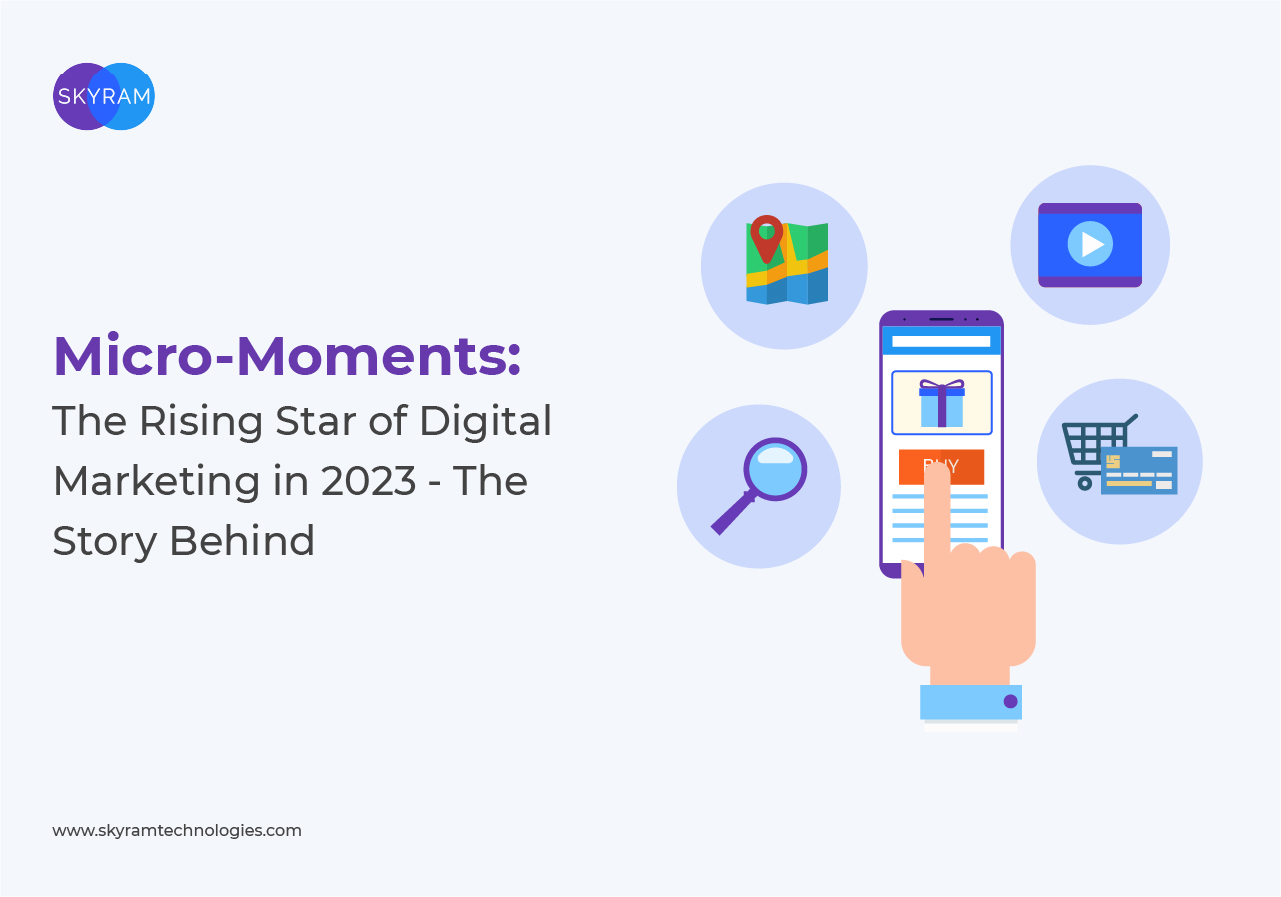
Micro-Moments: The Rising Star of Digital Marketing in 2023 – The Story Behind

Introduction

If businesses want to flourish in the quickly expanding world of digital marketing, they must look to the future. One tendency that has been prevalent recently is the notion of micro-moments. Google first introduced Micro-Moments in 2015, and they are already seen as a significant 2023 trend in digital marketing. This essay will look at the development of micro-moments, their significance in the field of digital marketing, and how businesses can use this potent strategy to outperform competitors.

I. Describing the evolution of the Micro-moments

A. Influence of mobile technology on consumer behaviour

Cell phone usage has significantly altered customer behaviour. Consumers now have quick access to information, goods, and services thanks to portable mobile devices. Consumers now anticipate instant gratification as a result of this shift in behaviour, and they depend more and more on technology to help them make quick decisions and meet their needs.

B. The 2015 launch of Micro-Moments by Google

Recognizing this shift in consumer behavior, Google introduced the concept of Micro-Moments in 2015. The idea was to help businesses understand and capitalize on the various instances when consumers use their mobile devices to address a specific need, whether it’s seeking information, making a purchase, or finding a local business.

C. The growth and development of Micro-Moments over time

Since their introduction, Micro-Moments have continued to evolve and gain importance in the digital marketing landscape. As mobile device usage continues to grow, businesses have increasingly recognized the need to target and cater to these critical moments in the consumer journey.

II. Understanding Micro-Moments

A. The four key types of Micro-Moments

  1. ‘I-want-to-know’ moments These moments transpire when consumers turn to their devices seeking information about a topic, product, or service. They are in the research phase and are not necessarily ready to make a purchase.
  2. ‘I-want-to-go’ moments These occur when customers use their smartphones to look up nearby businesses like shops, eateries, or service providers. The user’s intention in these circumstances is frequently to go to a physical location.
  3. “I-want-to-do that” moments These situations arise when consumers ask for instructions or specifics on how to perform an activity or complete a task. They can be seeking direction, counsel, or instructions over a range of topics.
  4. Moments of “I want to buy”

These occur when potential consumer uses their smartphone when they are ready to make a purchase to research the best options, compare prices, or identify the most practical

B. How businesses can capitalize on these moments

By understanding and targeting these specific Micro-Moments, businesses can create highly relevant and timely content that meets consumers’ needs, ultimately improving engagement, conversion rates, and brand loyalty.

III. Micro-Moments as a Top Digital Marketing Trend in 2023

A. Mobile gadgets’ growing influence on consumer behaviour

Consumers are increasingly using their smartphones and tablets for a variety of demands as the use of mobile devices rises. Because of our reliance on mobile technology, Micro-Moments are now a crucial component of every effective digital marketing campaign.

B. Advantages of a micro-moment marketing strategy

  1. Increasing customer interest Businesses can better engage with their audience by delivering pertinent material and focusing on individual Micro-Moments, which builds connections and trust with customers.
  2. Higher conversion rates Micro-Moment marketing enables businesses to address consumers’ immediate needs, making it more likely that they will take the desired action, such as making a purchase or visiting a physical location.
  3. Greater brand loyalty By consistently providing value and meeting consumers’ needs during their Micro-Moments, businesses can cultivate brand loyalty and turn customers into long-term advocates.

C. Real-world examples of successful Micro-Moment marketing campaigns Companies such as Nike, Starbucks, and Sephora have successfully implemented Micro-Moment marketing strategies, resulting in increased customer engagement, higher conversion rates, and stronger brand loyalty.

IV. Implementing Micro-Moments in Your Marketing Strategy

A. Identifying your target audience’s Micro-Moments

To capitalize on Micro-Moments, businesses must first identify the moments that are most relevant to their target audience. This process involves researching consumer behavior, understanding their needs, and analyzing search patterns.

B. Creating targeted and relevant content for each moment

Once you’ve identified your audience’s Micro-Moments, it’s crucial to create content that addresses their needs and preferences during those moments. This content should be tailored to the specific moment and delivered through the appropriate channels, such as social media, email, or mobile apps.

C. creating a mobile-friendly website and online presence

Businesses must make sure that their website and online presence are optimised for mobile devices in order to effectively benefit from Micro-Moment marketing. This includes a responsive website layout, quick page loads, and intuitive navigation.

D. Utilising analytics and data to evaluate the effectiveness of your micro-moment marketing initiatives

By tracking and analyzing key performance indicators (KPIs) related to your Micro-Moment marketing efforts, you can identify areas for improvement and make data-driven decisions to enhance your strategy.

V. Future Prospects of Micro-Moments in Digital Marketing

A. The impact of emerging technologies on Micro-Moments (e.g., AI, voice search, AR)

Technology will become more and more influential in determining the direction of Micro-Moments as it develops. Businesses will need to modify their content to accommodate speech searches as a result of, for instance, the rising popularity of voice search. The creation of more individualised and immersive experiences during Micro-Moments can be aided by augmented reality (AR) and artificial intelligence (AI), further increasing client engagement.

B. Micro-Moments’ function in omnichannel marketing strategies

Micro-Moments will also play a crucial role in the development of omnichannel marketing strategies. By incorporating Micro-Moment marketing across various channels – such as social media, search, email, and in-store experiences – businesses can create a seamless and consistent customer journey that addresses their needs at every touchpoint.

C. The potential for further growth and innovation in Micro-Moment marketing

As consumer behavior continues to evolve, and new technologies emerge, there will be ample opportunities for growth and innovation in Micro-Moment marketing. Businesses that stay ahead of these trends and adapt their strategies accordingly will be better positioned to succeed in an increasingly competitive digital landscape.

Conclusion

In conclusion, Micro-Moments have emerged as a top digital marketing trend for 2023, driven by the ever-growing importance of mobile devices in consumers’ lives. By understanding and targeting these critical moments, businesses can create highly relevant content that engages their audience, drives conversions, and fosters brand loyalty. As we move forward, it will be essential for businesses to stay ahead of the curve and adapt their strategies to meet consumers’ needs during their Micro-Moments, ensuring continued success in the competitive world of digital marketing.

The New Rules of Social Media Success: Moving Past Clicks and Likes

The Social Media Paradigm

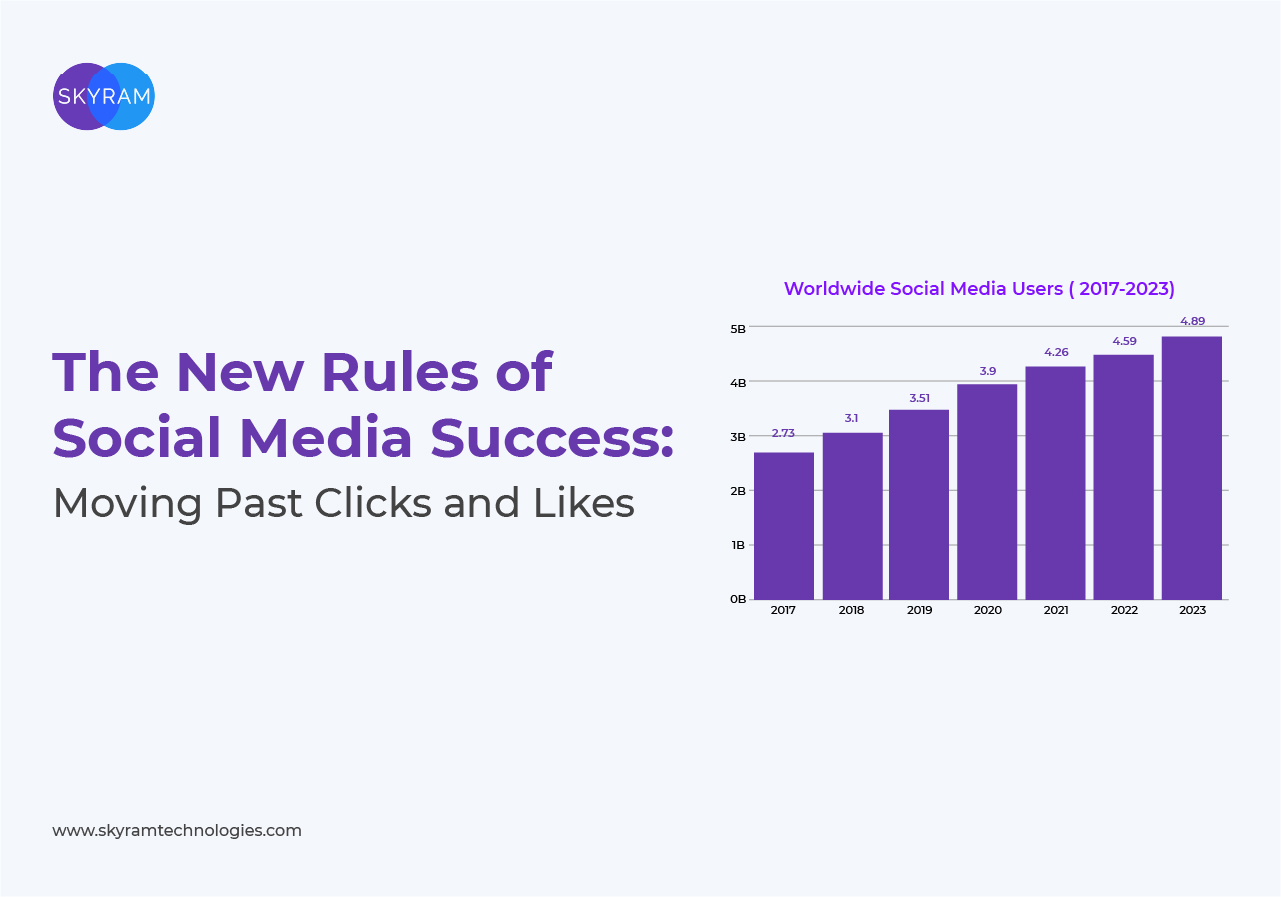
In today’s digital age, social media has emerged as a dominant force. With billions of people across the globe accessing these platforms daily, businesses are increasingly leveraging social media to connect with their target audience, enhance brand visibility, and drive conversions. Yet, as the social media landscape continues to evolve, so it is necessary to follow the metrics for success. The era of measuring success purely by likes and clicks is gradually fading. Businesses need to rethink their social media metrics, focusing on more meaningful indicators that reflect engagement, audience sentiment, and overall brand impact.

The Limitations of Clicks and Likes

Clicks and likes have long been the standard metrics for gauging social media success. A high number of likes or clicks on a post was seen as an indication of its popularity and effectiveness. However, these metrics present a surface-level view of social media engagement, and they have their limitations:

  1. Lack of Depth: Clicks and likes provide a quantitative measure of engagement but fail to offer qualitative insights. They tell you how many people interacted with your content, but they don’t reveal why they did so or how they felt about it.
  2. Vanity Metrics: Clicks and likes can be termed as ‘vanity metrics’. They might boost your ego, but they don’t necessarily translate into business outcomes, such as sales or customer loyalty.
  3. Susceptibility to Manipulation: The credibility of clicks and likes as metrics is further undermined by practices like click-farming and buying likes, which can inflate numbers without reflecting genuine engagement.

Given these limitations, businesses need to look beyond clicks and likes and focus on more comprehensive, meaningful metrics.

Rethinking Social Media Metrics: The Shift Towards Meaningful Engagement

What measures then should businesses pay attention to to evaluate their effectiveness on social media? The solution is meaningful interaction, which provides deeper perceptions of the attitudes and behaviours of your audience. Here are a few crucial metrics to think about:

  1. Comments and Shares: Comments and shares are powerful indicators of meaningful engagement. Comments suggest that your content has provoked thought or elicited a response, while shares indicate that users find your content valuable enough to share with their network.
  2. Brand Mentions: Brand mentions, whether on your own social media posts or elsewhere on the platform, indicate that users are talking about your brand. Tracking brand mentions can help you gauge your brand’s visibility and reputation on social media.
  3. Audience Sentiment: Audience sentiment refers to the emotions and opinions expressed by your audience towards your brand on social media. Sentiment analysis tools can help you understand whether the conversation around your brand is positive, negative, or neutral.
  4. Conversions: Ultimately, one of the main goals of social media marketing is to drive conversions, whether that means sales, newsletter sign-ups, or other desired actions. Tracking conversions can help you understand how effectively your social media efforts are driving business outcomes.

Embracing a Holistic Approach: The Importance of Integrated Metrics

While shifting the focus towards meaningful engagement is crucial, businesses should not entirely disregard clicks and likes. These metrics, despite their limitations, still offer valuable insights into audience behaviour. The key lies in integrating these traditional metrics with engagement metrics to create a more holistic view of your social media performance.

A multi-faceted approach can offer richer insights and help businesses understand the overall impact of their social media efforts. By combining quantitative metrics like clicks and likes with qualitative metrics like comments, shares, and sentiment, businesses can gain a comprehensive understanding of their social media performance.

Leveraging Insights for Success: Turning Metrics into Action

Knowing your social media numbers is just the beginning. Utilising these insights to improve your social media strategy and spur success is where the real value is found. This is how:

  1. Determine What Is Effective and What Is Not: Use your data to determine the content types that are and are not connecting with your audience. This might assist you in improving the alignment of your content strategy with the preferences and interests of your audience.
  2. Recognise Your Audience: Metrics like comments, shares, and sentiment can give you important information about the behaviour, interests, and views of your audience. Utilise this information to better comprehend your target audience and adjust your social media strategy to suit their requirements.
  3. Measure ROI: Metrics like conversions and sales can help you measure the return on investment (ROI) of your social media efforts. This can help you justify your social media spending and identify areas where you could improve efficiency.
  4. Improve Engagement: Use your metrics to identify opportunities to boost engagement. This could involve experimenting with different types of content, posting times, or engagement tactics.
  5. Manage Your Brand Reputation: Metrics like brand mentions and sentiment can help you manage your brand reputation on social media. Use these insights to identify and address any potential issues or crises before they escalate.

Conclusion: The Journey Towards Effective Social Media Measurement

In the dynamic world of social media, where algorithms change and user behaviours evolve, measuring success cannot be confined to static metrics like clicks and likes. The shift towards meaningful engagement and integrated metrics signifies a more nuanced understanding of social media’s impact, one that goes beyond surface-level interactions to delve into audience sentiment, brand reputation, and tangible business outcomes.

It’s important to keep in mind that these modern metrics are more than just numbers on a dashboard as we move past clicks and likes. They portray actual people interacting with your brand, including their ideas, judgements, feelings, and behaviours. Therefore, how well you can use these insights to connect with your audience, develop relationships, and spur business growth is the true test of your success on social media, not how many likes or clicks you can accrue.

Social media is ultimately just a tool, and just like any tool, how well you utilise it will determine how effective it is. You may use social media to accomplish your company objectives and make a long-lasting impact by concentrating on the relevant KPIs, taking a comprehensive approach, and continuously optimising your plan based on insights.

As you embark on this journey to redefine social media success, keep in mind that nothing stays the same. Stay flexible, knowledgeable, and, most importantly, involved with your audience. They are, after all, the reason why your brand is there on social media.

Therefore, as we enter a new era of social media measurement, let’s aim for more conversations, connections, and meaningful engagements rather than just more clicks and likes. Since that is ultimately what social media is all about.

Boost your brand with Skyram Technologies

As we move into this new era of social media interaction, it is crucial to align your business with the shifting digital trends. One such trend is the rising significance of voice search optimisation. More customers are increasingly using voice assistants like Siri, Alexa, and Google Assistant to do online queries. Businesses must adapt their online presence for voice search as a result of this transformation.

Skyram Technologies is at the forefront of this digital revolution, offering cutting-edge voice search optimization services. Our team of experts leverages advanced SEO strategies and innovative tools to help your brand rank higher in voice search results, enhancing your brand visibility and driving more organic traffic to your site.

Whether you are a small business looking to make your mark in the digital space or an established brand aiming to stay ahead of the curve, Skyram Technologies can provide the expertise and solutions you need to succeed in this voice-first era.

So why wait? Step into the future of digital marketing with Skyram Technologies. Let’s go beyond clicks and likes, and create meaningful engagements that drive your business growth.

Contact us today to learn more about our voice search optimization services and how we can help elevate your brand in the digital space.

Remember, in the digital world, staying ahead is the key. And with Skyram Technologies by your side, you are always one step ahead.

Shattering Misconceptions: Digital Marketing – A Lucrative Investment or a Sizable Expense?

The Emergence of Digital Marketing

In the last few decades, digital marketing has taken the world by storm. The rise of the internet, alongside the proliferation of digital devices, has led to a shift in the marketing landscape. Businesses, irrespective of their size or industry, are increasingly recognizing the power of digital platforms to reach and engage their target audience. Yet, as digital marketing continues to gain momentum, a hotly debated question lingers: Is digital marketing an investment or an expense?

To unravel this perplexing question, we need to delve into the realm of digital marketing, exploring its potential returns and inherent costs. This in-depth analysis will provide clarity and equip businesses with the knowledge needed to make informed decisions about their digital marketing strategies.

Digital Marketing: An Investment in Growth

For many businesses, digital marketing is seen as an investment. Several important factors support this opinion:

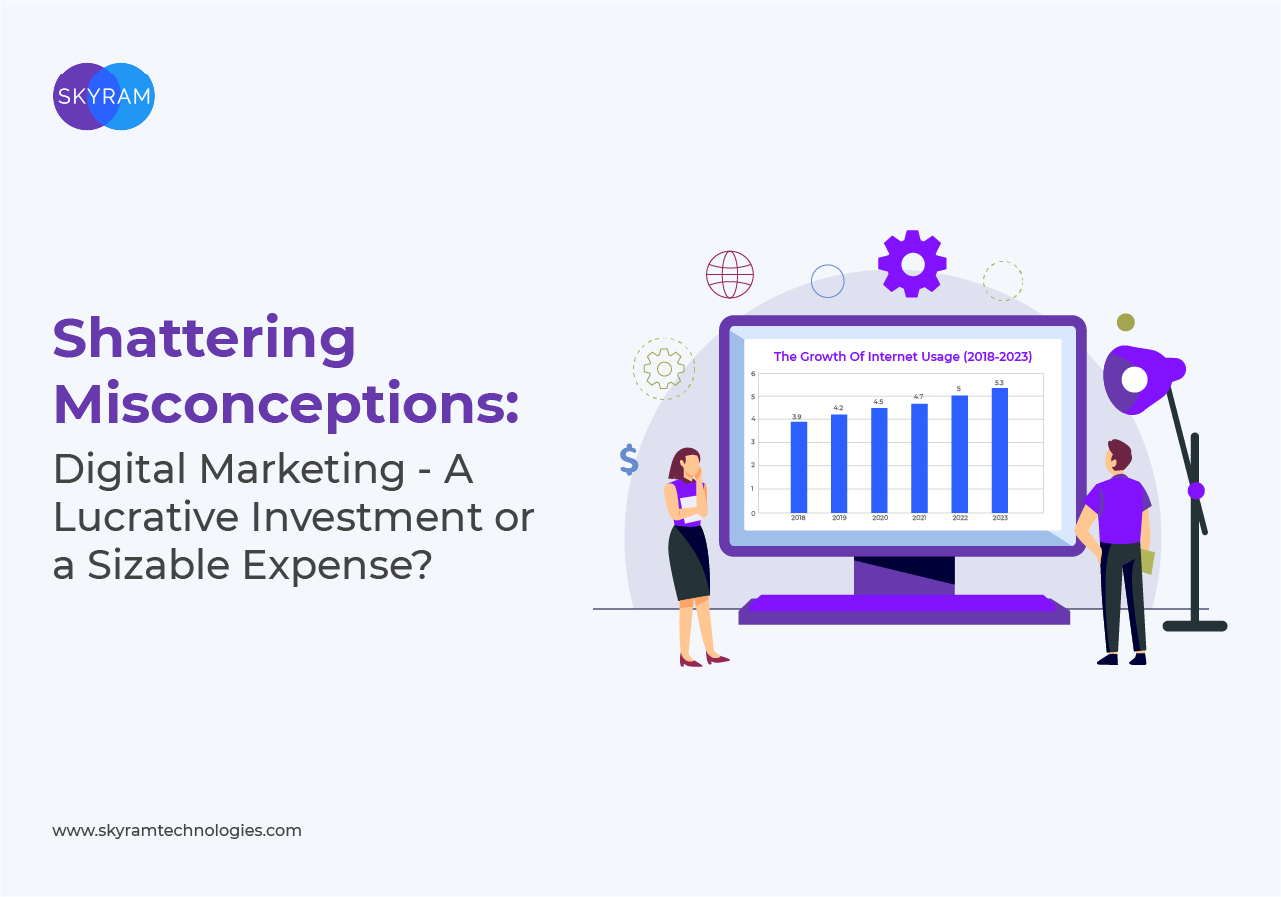
  1. Expanding Global Reach: The capacity of digital marketing to cross geographical boundaries is one of its main benefits. Digital platforms present a previously unheard-of potential for businesses to engage with a worldwide audience in a world where more than 4.6 billion people use the internet. A larger audience could bring in more customers, increase brand recognition, and eventually increase revenue. By investing in digital marketing, businesses can take advantage of these benefits and set themselves up for success in the global market.
  2. It is inexpensive Techniques: Generally speaking, digital marketing is less expensive than conventional marketing strategies. Take email marketing as an illustration. Compared to traditional mail, an email marketing campaign can reach a lot more individuals for a lot less money. Businesses may use digital marketing more effectively, boosting return on investment (ROI) and making the investment profitable.
  3. Real-time analytics: Data is what drives the digital world. Businesses may obtain a variety of information about their efforts thanks to digital marketing. They can track metrics in real-time, analyze performance, and make data-backed decisions to optimize their strategies. This ability to measure, analyze, and adapt rapidly can lead to more successful campaigns and a higher ROI, further solidifying the position of digital marketing as a worthwhile investment.
  4. Targeted Approach: Thanks to digital marketing tools, companies may precisely target their advertising campaigns. Based on many variables, like demographics, interests, and online behaviour, they can define their target audience and then modify their marketing messaging to appeal to this group. Increased conversion rates from this focused approach can turn digital marketing into a profitable investment rather than just a cost.
  5. Building Customer Relationships: Digital marketing, which goes beyond only selling goods and services, emphasises developing relationships with customers. Using social media, email marketing, and other digital platforms, businesses can engage with their customers, build relationships, and boost customer loyalty. These relationships might lead to repeat business and referrals, yielding a high return on investment.

Digital Marketing: The Expense Angle

Despite the compelling reasons to view digital marketing as an investment, there are arguments for seeing it as an expense:

  1. Initial Setup Costs: Digital marketing requires a substantial initial outlay. Businesses may need to hire digital marketing professionals or engage digital marketing agencies, invest in digital marketing tools, and spend time developing comprehensive strategies. These initial costs can add up, making digital marketing a sizable expense for businesses.
  2. Ongoing Maintenance: Digital marketing is not a strategy that can be established and forgotten. It necessitates continuing expenditures for things like social media administration, SEO, and content generation. Digital marketing is a continual expense because of these high ongoing costs.
  3. Time-consuming Work: Digital marketing could take a significant amount of time. For instance, SEO campaigns may not yield returns for several months, and developing a sizable social media following takes time and regular work. Given that time is a valuable resource for any business, dedicating the necessary time to digital marketing can be considered a significant outlay of funds.
  4. Risk Factors: Digital marketing involves certain risk, just like any other investment. Businesses may spend a sizable sum on digital marketing initiatives that don’t get the desired outcomes. In such circumstances, the funds allocated to these campaigns might be viewed as costs rather than returns.

An assessment of the dichotomy’s comprehension

Given these perspectives, is digital marketing an expense or an investment?

The problem is harder to understand than it first looks. Depending on a number of variables, such as the plan employed, the techniques employed, and the results gained, digital marketing can be either a cost or an investment for a firm.

Digital marketing is an investment when it is strategic, data-driven, and customer-focused. Businesses who spend money on digital marketing with a plan in place, rely on data to guide their choices, and prioritise building relationships with customers frequently get a return on their investment.

They can improve brand awareness, boost conversion rates, and foster greater consumer loyalty, all of which will boost revenue.

On the other hand, ineffective or poorly planned digital marketing can be costly. A business runs the danger of financial loss if it invests in digital marketing initiatives without having a clear plan or understanding of its target market. The money used for digital marketing in these circumstances could be viewed as a cost.

What ultimately determines whether digital marketing is a cost or an investment is the process. Businesses that use a strategic approach to digital marketing must focus on their target audience, use data to inform their decisions, and continually improve their methods.

Additionally, they must see digital marketing as a protracted endeavour that calls for ongoing investment and dedication.

When used in this manner, digital marketing could prove to be a profitable investment for companies, producing large returns. For businesses, digital marketing is a costly proposition since, if handled carelessly or as a one-time effort, it may not yield a return on investment.

In response to the query at the outset of this essay, I would suggest that digital marketing may be both an expense and an investment. How businesses manage and conduct their digital marketing operations will determine everything.

Actionable Insights: Your Key Takeaways

Having dissected the complexities and nuances of digital marketing as both an investment and an expense, here are some actionable insights to inform your digital marketing strategy:

  1. Embrace a Strategic Approach: Rather than jumping into digital marketing haphazardly, take the time to develop a clear, comprehensive strategy. Identify your target audience, define your marketing goals, and develop a plan to achieve these goals through digital channels.
  2. Utilise Data: In the digital world, data is king. Use analytics tools to monitor the outcomes of your online marketing campaigns, learn more about the habits of your target market, and come to informed judgements.
  3. Focus on building relationships: Relationship building is a key component of digital marketing in addition to sales. Utilise digital channels to interact with your audience, establish bonds with them and increase client retention.
  4. Put out persistent effort: Digital marketing is not a one-time undertaking. It necessitates constant expenditures of time, energy, and resources. Consider this commitment as an investment in the long-term expansion of your company and be ready to make it.
  5. Manage Risks: Like any investment, digital marketing carries risks. Keep a careful eye on your campaigns, be ready to make changes as necessary, and don’t be afraid to abandon them if they aren’t producing the desired results.

To sum up, digital marketing can be both an expense and an investment. It is an expense since resources must be spent, but it is also an investment because it has the potential to provide substantial returns. Your method is the crucial factor.

With a strategic, data-driven approach focused on building customer relationships, you can turn your digital marketing efforts into a profitable investment. If you need tailored digital marketing solutions to propel your business to new heights, reach out to Skyram Technologies today. We’re here to help you think outside the box and achieve your marketing goals. Happy marketing!

Referrals and data links:

1.Digital 2023: Increasing Internet Use Worldwide

2. The price of digital marketing for small businesses (https://www.lyfemarketing.com/blog/).

3.How to Use SEO ROI to Showcase Your Organic Marketing’s Effectiveness (https://www.searchenginejournal.com/seo-roi-demonstrate-effectiveness-organic-marketing/381529/)

4. The Complete List of Marketing Statistics for 2023 (available at https://www.hubspot.com/marketing-statistics)

5 .The Components of Email Marketing That Lead to Better Returns

6. How to Calculate the Return on Investment for Your Content Marketing Campaign

Local SEO Services Are Necessary For Small Businesses

What seems to be the most reliable source for gathering information about any services that you want? Without any hesitation, a large number of people will say that the search engines like Google, Bing or Yahoo provide us with valuable and trustable information about our requirements. The practice of conducting a search before choosing any service is very much old. It has just started a few decades ago but it has become quite popular. Today a large section of our population entirely depends on search engines to fulfil their purposes on the daily basis. Suppose you want to taste continental dishes, what do you do? You will definitely take out your phone and search Google by typing ‘best continent restaurant near me’, right? Then you will definitely choose one that appears on the first page on Google and won’t go beyond the first page. This entire process is largely controlled by the local SEO strategy and almost all of us are not aware of it.

BrightLocal’s most recent local consumer survey is indicating the fact that 78% of the total internet users use the internet to get information about local businesses. Being a local business owner you must not miss this chance to get noticed by a large section of the audience. In comparison to large businesses, local businesses often suffer from countless issues that hamper the growth of their business. Additionally, if they ignore this opportunity it can affect their businesses. If you want your business to get found easily you must take assistance from the local SEO service. Yes, it is the power of local SEO. So, if you think that your business is not getting enough exposure and it is affecting the growth of your business, switching to local SEO can be the only solution.

Definition of Local SEO

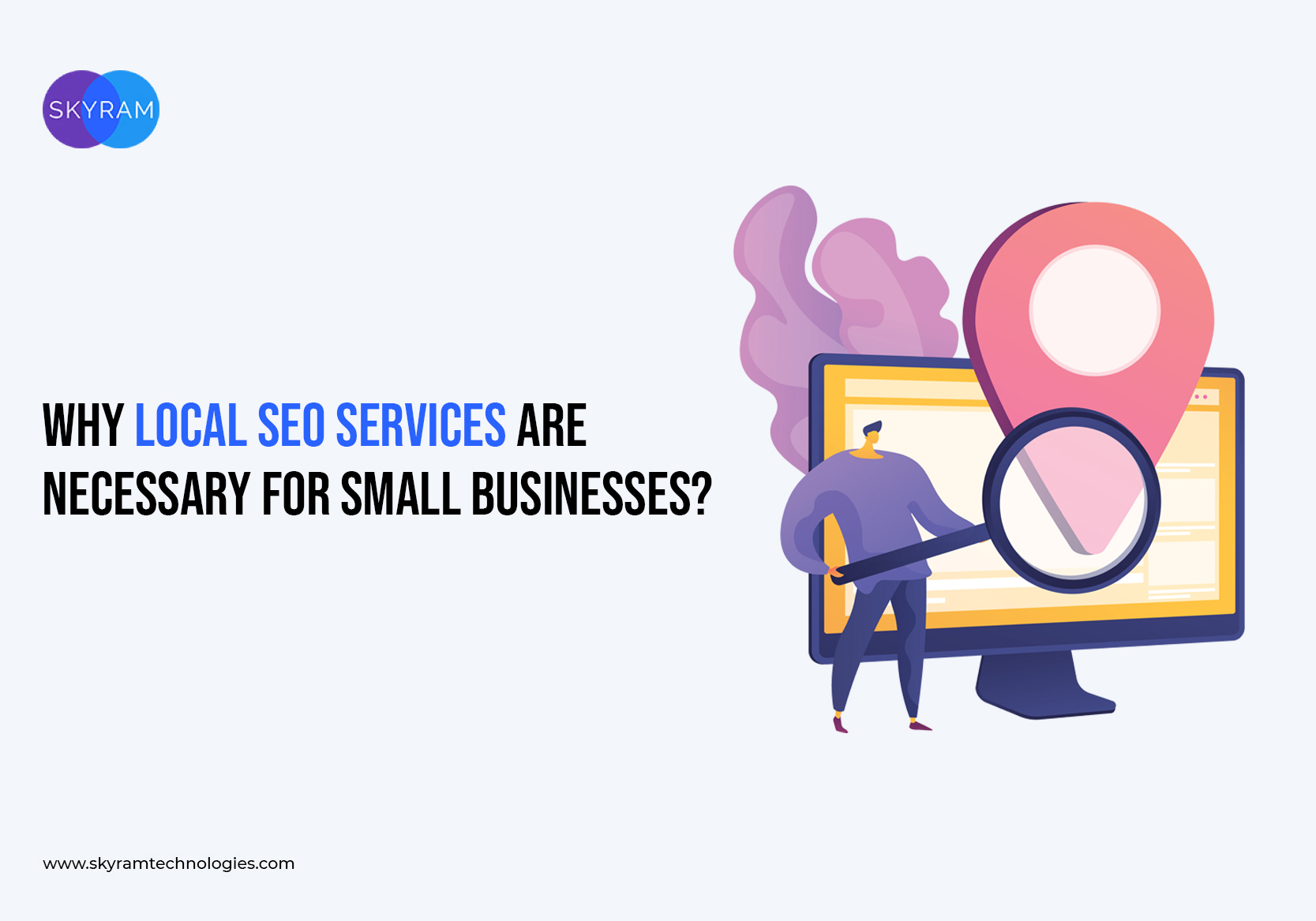
Being the inhabitants of the digital age, almost all of us are quite aware of the term SEO, but we are not aware of its process of work. Local search engine optimisation is a vital part of SEO services that gives more stress on improving the visibility of local businesses on search engines like Google, Yahoo or Bing. Generally the phrase ‘near me’ is often used to conduct searches as the searches are normally conducted within a particular geographical location.

It is very much helpful for local businesses which are striving hard to gain popularity on a large scale. By optimising their website, they can improve the online visibility of their business and can appear in the top position of the SERP. it provides them with wonderful chances to showcase their products or services.

How small businesses can be benefitted from local SEO?

Local searches have become very popular today as the maximum number of people prefer to conduct a search on Google before switching to any services or products offered by a particular company. You may wonder why it is necessary to take help from the local SEO service. To be very true, the Google search patterns since 2017 show a general increase in the incorporation of the phrases like “near me today/tonight.” etc. It is a clear indication that the volume of local searches is increasing. So, if you own a business and if it is located close to where someone is conducting their search, you must take some measures to optimise the website for your business so that it can appear on the SERP. Customers who are searching for similar services or products will easily find out about your business and you will get easy chances to enhance your conversion rate.

Today the structure of marketing has been thoroughly changed. Now people don’t prefer to search from one shop to another to get their desired products as this process demands a lot of time and energy. Finding the right shop or right person who can provide them with their required products or services is more popular today. You may think that having a website is enough to increase your visibility. But it is wrong. To be very honest even if you have an impressive website, without the help of a local SEO specialist you can’t help your website to reach a large number of people. It is only possible through well-managed SEO strategies. So, if you own any small business, you must consider the matter of seeking help from an SEO company which is an expert in providing SEO services locally.

What are the different components of the local SEO strategy?

There are different types of elements that are involved in the local SEO strategy. But among them, only five are mentionable that play a dominant role in determining the ranking of a business and which demand the immediate attention of the business owners.

  • Content marketing

Content is the most vital thing to optimise your online presence. You must create high-quality and engaging content that the audience prefers to read. It plays a vital role in local SEO and determining the success of your business.

  • Business listing and citations

Businesses are needed to be verified before the local listing. So, it is essential to include your business in all relevant business directories. For every listing, you must use the same name address and phone number of your business.

  • On-site SEO

It is necessary to ensure the integrity of your website. The structure should also be accurate. The insertion of the proper HTML codes will allow search engines to interpret the content of your website. The inclusion of the schema markup will provide you with huge opportunities to improve the rank of your website.

  • Reviews

Showcasing genuine customer reviews on particular products or services can boost your sales. A general increase in your reviews on all platforms will ultimately lead to the improvement of your ranking on search engines.

  • Link building

Designing and implementing link-building campaigns is necessary to significantly improve the rank of your website. Although it demands a little time and effort as it largely depends on the quality content that includes valuable and interesting information, it will provide you with outstanding results. Without implementing the link-building technique into your local SEO strategies, you will never become successful to rank your website high on the SERP.

How a small business can use Local SEO?

Switching to a local SEO service can be an excellent way for small businesses to boost visibility in local SERP. Here we have listed down some of the most unbeatable ways that can be used by small businesses to get the best results.

  • Setting up and maintaining a Google My Business profile is essential.
  • No matter whether the customer reviews are positive or negative, giving them a response is vital as it shows your care about your customers.
  • Listing your business in the local online directories is essential as this allows the search engines to find whether your business is legitimate or not along with scanning your given data to find your accuracy.
  • The creation of error-free and consistent local citations compels search engines to trust your data.
  • Inclusion of the local keywords can hugely influence the ranking of your website people who are conducting local searches can find your business easily. With the simple use of local keywords, you will be able to rank your website higher on the SERP.

So, hiring local SEO services for small businesses can be a magical tool that will shower countless opportunities for your business.

Closing note

Do you also want to get started with local SEO? Skyram Technologies can assist you effectively in optimising and managing your local search presence. We know that there is a significant amount of work that is included in the process of building a solid local SEO strategy and our team of expert SEO professionals is quite well-known about it and is also eminent in implementing it in the right way. With our exclusive local SEO service we will skyrocket the conversion rate and the sales of your business. We have prolonged experience in providing SEO help to a large number of businesses that belongs to different sectors. It is something that makes us more seasoned to deal with various types of SEO issues that primarily hampers the online growth of businesses.

Unlike any other business don’t search for the local SEO services near me, it will waste both your time and effort. If you think you are in desperate need of SEO services, you can easily reach out to us. Just give us a call. We always remain eager to discuss the best opportunities with our clients. We will only provide you with the services after the assessment of your business needs. We don’t ever compromise the quality of our service. Our relentless efforts and extraordinary SEO support will surely give you the expected results. Don’t think that our service is expensive. We offer the best competitive price in the market. For any kind of enquiry, please feel free to contact us.

Voice Search is a Game Changer for E-commerce in India: How far is it true?

Introduction

A rapidly digitising society is coming to understand the power of voice-enabled devices. One well-known use of this technology that is profoundly changing the e-commerce business, particularly in India, is voice search. The introduction of smartphones, improved internet accessibility, and the advancement of artificial intelligence (AI) have all boosted the use of voice search. But how much of the claim that voice search is revolutionising Indian e-commerce is actually true? The complexity of this revolutionary technology, its current state in India, and its implications for the growth of e-commerce are all explored in this article.

Voice Search’s Development

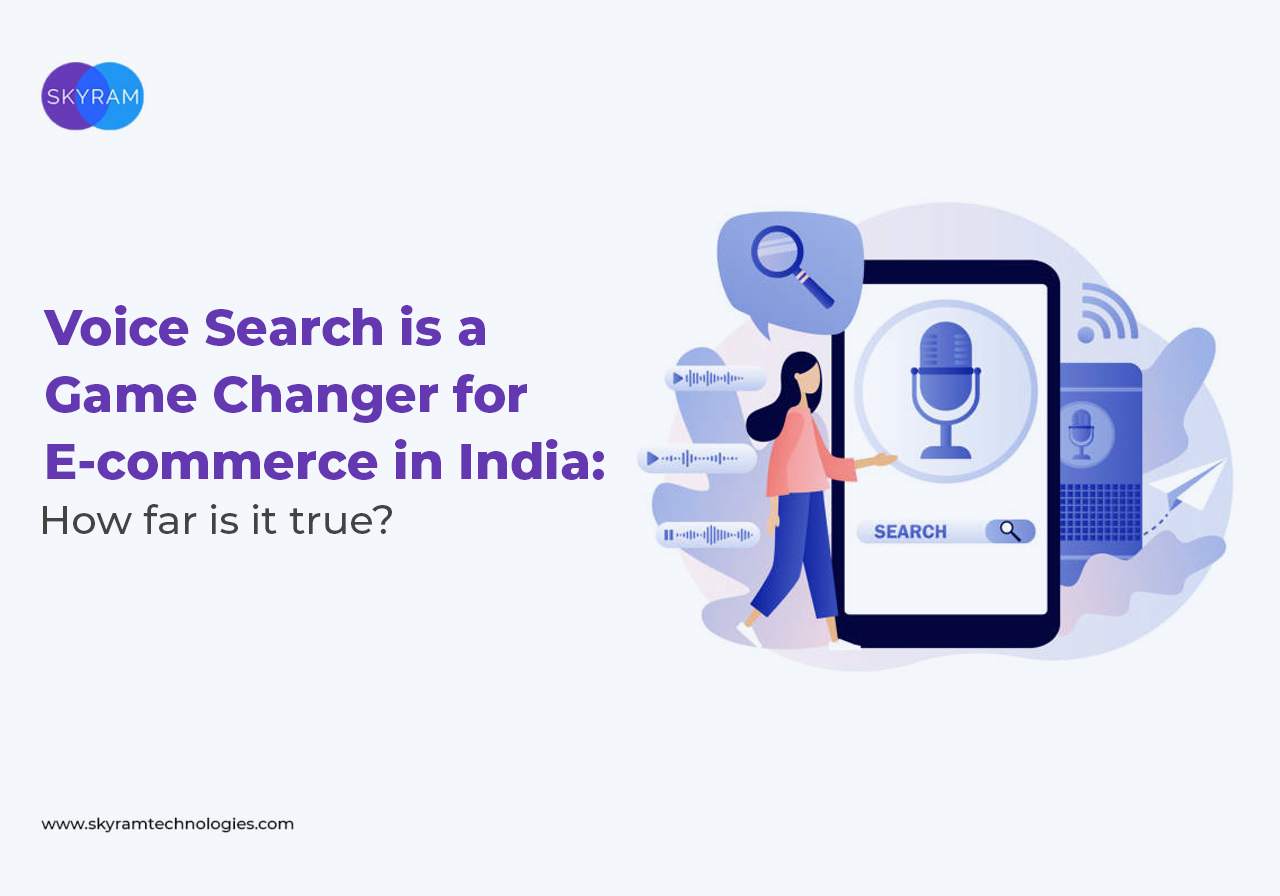
Voice search—the ability to do a web search using spoken words—has undergone a considerable evolution with the advent of AI and natural language processing (NLP). It began as a helpful tool for mobile searches but swiftly developed into a crucial component of the online ecosystem. This transition has been greatly influenced by the emergence of voice assistants like Google Assistant, Alexa from Amazon, and Siri from Apple.

Globally, more than a billion voice searches are conducted monthly, highlighting the technology’s growing popularity. In India, the trend is even more pronounced. With over 650 million internet users, India is one of the fastest-growing digital markets worldwide. The penetration of regional languages and dialects, coupled with the proliferation of affordable smartphones, has led to accelerated adoption of voice search.

Voice Search and E-commerce in India

The Indian e-commerce market, forecasted to reach USD 200 billion by 2026, is primed to benefit from the rise of voice search. As per a study by Google and Bain & Company, by 2021, vernacular language users were expected to constitute 75% of India’s internet user base, and voice search queries in India were growing at a whopping 270% year-on-year. This demonstrates how voice search can promote the expansion of e-commerce.

Voice search is becoming more and more popular among Indian shoppers, who ask their gadgets to look up products, read reviews, and place orders. In rural and semi-urban areas, where literacy rates may be lower and where people may feel more at ease speaking in their native tongues than typing in English, this move towards voice search is even more significant.

The adoption of touchless technology, such as voice search, has also been considerably accelerated by the COVID-19 epidemic. The ease of voice search can increase e-commerce revenues as people grow acclimated to purchasing online.

The Challenges

Despite the promising growth, there are several challenges that the voice search ecosystem needs to address. These include language diversity, speech recognition accuracy, privacy concerns, and the need for a robust digital infrastructure.

India is a linguistically diverse country with 22 officially recognized languages and hundreds of dialects. Voice recognition software will have a difficult time coping with this since it needs to recognise different languages and dialects with accuracy.

Additionally, privacy issues are crucial. Privacy and data security concerns are escalating as voice assistants grow more prevalent in our daily lives. Gaining customer trust is crucial if voice search is to continue to be used.

Strategies for Companies in the Voice Search Era

As voice search continues to transform the e-commerce landscape, businesses must adapt and align their strategies to this new reality. Here are some strategies businesses should consider:

1. Voice Search Optimization: As voice searches typically involve longer, more conversational queries, businesses should integrate long-tail keywords into their SEO strategy. The content on their websites should be conversational and answer potential questions that customers may have. Additionally, optimizing for ‘near me’ searches can help businesses attract local customers.

2. Multilingual Support: Given the linguistic diversity in India, businesses should ensure their voice search capabilities support multiple languages. This can be achieved through investments in AI and NLP technologies that can accurately understand and respond to a wide range of languages and dialects.

3. Improve Site Speed: Voice search users are likely to be on mobile devices and may have slower internet connections, particularly in rural and semi-urban areas. Therefore, it is important to have a website that loads quickly to provide a smooth shopping experience.

4. Leverage AI for Personalization: Businesses can use AI to analyze past customer interactions and provide personalized product recommendations. This not only makes the shopping experience more enjoyable but can also lead to increased sales.

5. Privacy and Trust: Businesses must address data security and privacy concerns to build trust among consumers. This includes being transparent about how customer data is used and implementing robust data security measures.

6. Voice Commerce: Beyond voice search, businesses should also explore voice commerce – the ability for customers to make purchases directly through voice assistants. This involves integrating their e-commerce platforms with voice assistant technologies to facilitate voice-activated shopping.

7. User Experience: Finally, businesses must ensure a seamless user experience across all touchpoints.

This includes ensuring that their websites can be readily navigated using voice commands and that there is the least amount of friction when switching from voice search to purchase.

In conclusion, businesses have both a challenge and an opportunity with the rise of voice search. Businesses may stay ahead of the competition and give their customers a better buying experience by proactively adapting their strategy to this new reality. Voice search has changed the way that people interact with technology and conduct online business in more ways than one. Businesses that recognize this and adapt will be the ones that thrive in the new digital economy.

The Future: Voice Search as a Game Changer for E-commerce in India?

Given the trajectory, it appears voice search has the potential to be a game-changer for e-commerce in India. However, its future success hinges on a few key factors.

Firstly, the development and integration of robust AI and NLP technologies will be critical to improving speech recognition accuracy across India’s myriad languages and dialects. Major tech companies like Google and Amazon are already investing heavily in these areas, indicating a promising future.

Secondly, addressing privacy concerns and building consumer trust will be essential.

Businesses will need to reassure customers that their personal data and information is secure and not being exploited.

Last but not least, it is crucial to keep enhancing digital infrastructure, especially in rural and semi-urban areas. This necessitates knowledge of voice technology and digital literacy in addition to the physical infrastructure required for internet connectivity.

Additionally, voice search offers businesses a fascinating chance to customise the online shopping experience. The quality of the product recommendations and the shopping experience may both be improved by the use of AI and machine learning to learn from previous interactions by voice assistants.

The role that the government played in this technological advancement cannot be overstated. In order for voice search to succeed, regulations that support the digital economy, protect consumer privacy, and foster technological innovation are crucial.

In conclusion, despite the challenges that still need to be overcome, voice search has the huge potential to change the e-commerce landscape in India. Due to its comfort, accessibility, and personalization, a voice search is a potent tool for the future of e-commerce.

Voice search has the potential to not only change e-commerce but also to democratise society by extending the benefits of the digital economy across the entire country, given India’s unusual linguistic diversity and rising degree of digital literacy. It would be fascinating to watch how voice search influences Indian e-commerce in the future as technology develops. If you need tailored solutions to propel your business to new heights, reach out to Skyram Technologies today. We’re here to help you think outside the box and achieve your marketing goals. Happy marketing!

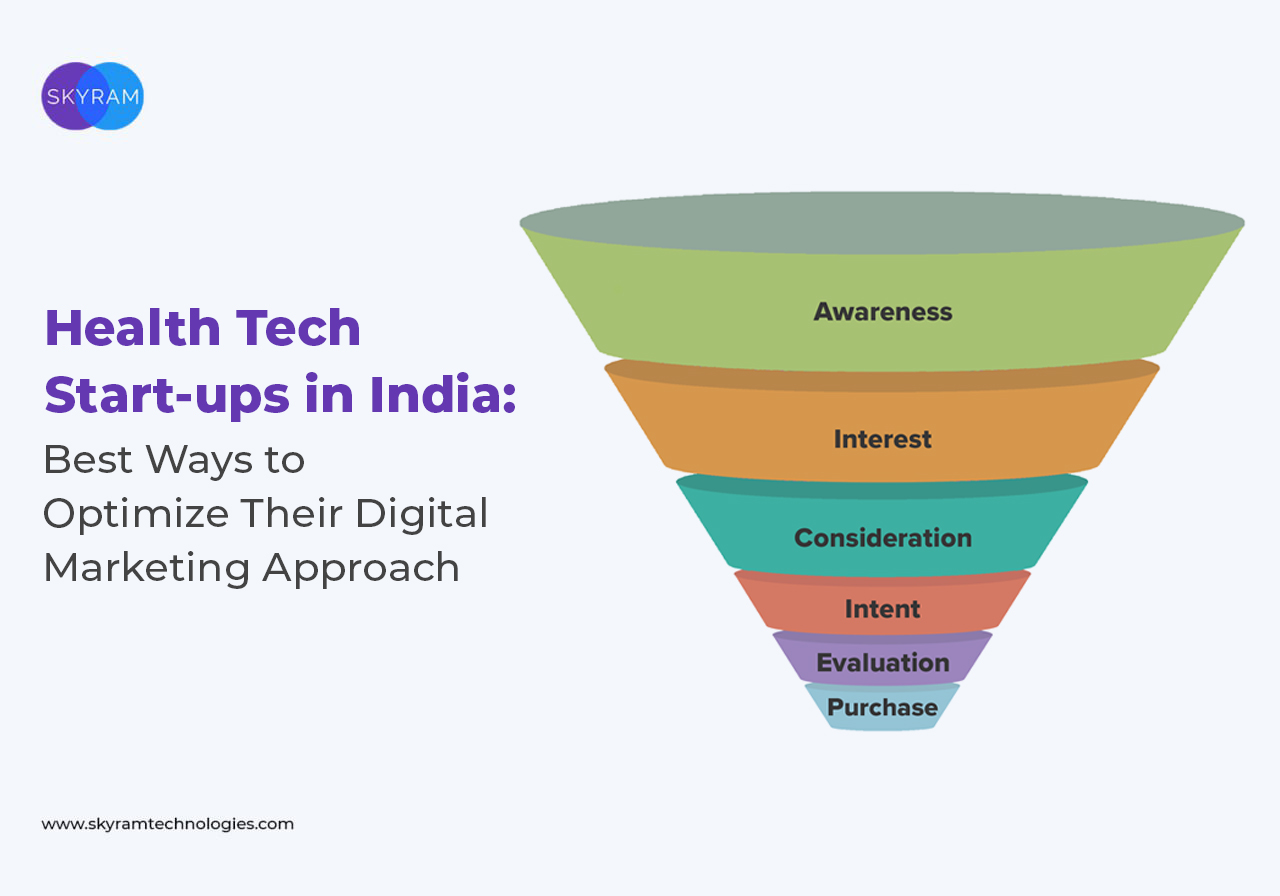
Health Tech Start-Ups in India: Best Ways to Optimize Their Digital Marketing Approach

Introduction

The digital realm has unlocked myriad opportunities across sectors, birthing innovative solutions to traditional problems. One sector reaping significant benefits from this digital revolution is healthcare, particularly in India – a nation teeming with over 1.3 billion individuals, many of whom are increasingly embracing technology. Here, the intersection of health and technology has given rise to a new breed of platforms, each designed to make healthcare more accessible and efficient. However, for these ventures to thrive, they must adeptly wield digital marketing strategies to capture and retain the attention of their target audience.

This piece aims to explore effective practices for optimizing the digital marketing outreach of health tech ventures in India. We will journey through the current market environment, unique challenges that these startups face, and the strategic approaches they can adopt to enhance their healthcare digital marketing efforts.

local seo for healthcare

The Present Landscape of Health Tech Ventures in India

With a technology-friendly population and an ever-growing community of internet users, India is fertile ground for digital disruptions. The health tech space is one area witnessing significant momentum. A report by NASSCOM predicts that the Indian health tech market could reach a staggering $21 billion by 2025. Ventures in this domain are leveraging technology to deliver a range of services, from online consultations and e-pharmacies to AI-driven diagnostics and digitized health records.

Despite the promising growth trajectory, health tech ventures are confronted with a slew of challenges. The market is fiercely competitive, with numerous players vying for consumer attention. Overcoming resistance to digital healthcare seo services adoption, particularly in rural and semi-urban locales, is another hurdle. Finally, earning consumer trust, especially when handling sensitive health data, is a significant obstacle.

To navigate these challenges, an effective digital marketing strategy is a must. It not only aids in reaching and educating potential customers but also in building trust and fostering long-term relationships.

Deciphering the Audience: The Bedrock of Digital Marketing

At the heart of any digital marketing strategy lies a deep understanding of the audience. For health tech ventures, this translates to understanding the health-seeking behaviours, preferences, and pain points of their target demographic. Detailed audience personas can aid in crafting personalized marketing messages and in determining the right platforms for communication.

Health tech ventures must remember that their audience isn’t a monolith. It encompasses patients in search of medical services, healthcare professionals, caregivers, and even insurance companies. Therefore, the marketing approach should be tailored to cater to the needs and preferences of these distinct groups.

seo for healthcare providers

Mastering the Digital Marketing Craft

1. Capitalizing on Content Marketing

In the digital marketing world, content is indeed king, and this holds especially true for health tech ventures. By offering valuable, accurate, and digestible health information, these companies can position themselves as authoritative voices in the healthcare sector. This helps build trust and credibility, which are essential for patient engagement and retention.

Content can be disseminated via blogs, videos, podcasts, and social media posts. Infographics and animations can be particularly effective in elucidating complex health topics. Importantly, all content should adhere to medical regulations and guidelines to ensure ethical marketing practices.

2. Harnessing the Power of SEO

Search Engine Optimization (SEO) is a potent tool for improving online visibility. By optimizing website content with relevant keywords, health tech ventures can climb higher in search engine results, thereby attracting more organic traffic. SEO strategies should also include optimizing for local search, as many healthcare seo marketing services are sought on a local basis. Moreover, voice search optimization is increasingly important, given the rising use of digital assistants like Alexa and Siri.

3. Utilizing Social Media Platforms

Social media platforms offer fertile grounds for engaging with the target audience directly. Health tech ventures can utilize these platforms to disseminate health advice, updates about their offerings, and testimonials. Social media also provides an opportunity for collaborations with influencers in the seo for health and wellness business, significantly augmenting brand visibility and credibility.

4. Implementing Email Marketing

Despite the emergence of various digital communication channels, email remains a reliable method of engagement. Tailored email campaigns can assist health tech ventures in maintaining user engagement, promoting new offerings, and providing personalized health advice. It’s imperative to segment the email list based on the audience’s attributes and inclinations to ensure the content is relevant and engaging.

5. Embracing Data Analytics

The role of data analytics in digital marketing cannot be overstated. By examining user data, health tech ventures can glean insights into user behaviour, preferences, and engagement patterns. This information can be employed to fine-tune marketing strategies, personalize content, and enhance user experience. To ensure appropriate and ethical usage of user data, privacy-preserving data analytics approaches should be used.

6. Putting the user experience first

An intuitive website or app is essential for keeping users and motivating them to use the healthcare seo services provided. This entails making certain that there are quick load times, simple navigation, and responsive design. Moreover, the user interface should be accessible and inclusive, catering to people with various abilities and language preferences.

7. Exploring Cutting-edge Technologies

Cutting-edge technologies like AI, VR/AR, and blockchain can also be integrated into the digital marketing strategy. For instance, AI can be used for chatbots that provide instant customer support or for predictive analytics to forecast market trends. VR/AR can offer immersive experiences, like virtual tours of healthcare facilities, while blockchain can provide transparency and security in data transactions.

seo for health and wellness business

Tackling Challenges in Digital Marketing

While digital marketing presents numerous opportunities, it also poses certain challenges. These include standing out in a crowded digital space, maintaining user privacy and data security, ensuring regulatory compliance, and managing online reputation. It’s essential for health tech ventures to proactively address these issues and have contingency plans in place.

To stand out, ventures need to offer unique value propositions and communicate them effectively. Regularly updating marketing strategies based on user feedback and market trends can also help maintain a competitive edge.

In terms of privacy and data security, ventures should follow the best practices in data management, use secure technologies, and be transparent about their data practices. Compliance with health advertising regulations and digital communication laws is also critical.

Online reputation management involves monitoring digital channels for user reviews and feedback, promptly addressing negative feedback, and promoting positive testimonials. A proactive and empathetic approach to customer service can go a long way in maintaining a positive online reputation.

In Conclusion

The digital marketing landscape for health tech ventures in India is both challenging and exhilarating. By understanding their audience, leveraging various digital marketing tools, and proactively addressing potential issues, these ventures can effectively reach their target audience, build trust, and promote their services. The keys to success are adaptability, creativity, and a relentless focus on providing value to the users.

In the end, digital marketing is not just about promoting a product or service; it’s about fostering relationships, promoting health literacy, and empowering individuals to make informed health decisions. Health tech ventures, with their innovative solutions, have the potential to revolutionize the healthcare sector in India. With a well-optimized digital marketing approach, they can truly make a difference in the lives of millions. If you need tailored digital marketing strategy for healthcare solutions to propel your health tech start-up business to new heights, reach out to Skyram Technologies today. We are here to help you think outside the box and achieve your marketing goals. Happy marketing!

Key Takeaways:

  1. Audience Understanding: To optimize digital marketing, health tech start-ups must first understand their diverse audience, which includes patients, healthcare professionals, caregivers, and insurance companies. Understanding their needs and preferences will help in crafting personalized marketing messages and strategies.

  2. Content and SEO: Content marketing and SEO are essential tactics for online advertising. Start-ups may build authority and improve their online presence by offering useful, reliable health information and optimising it for search engines.

  3. User experience and data analytics: Start-ups may improve user experience and fine-tune marketing efforts by using data analytics to obtain insights into user behaviour and preferences. A user-friendly interface is essential for retaining and engaging customers.

  4. Emerging Technologies: Health tech start-ups should explore emerging technologies like AI, VR/AR, and blockchain, which can offer new avenues for customer engagement, improve data security, and provide more personalized and immersive experiences.

  5. Proactive Problem-Solving: Start-ups should proactively address digital marketing challenges, such as standing out in a crowded market, maintaining user privacy and data security, ensuring regulatory compliance, and managing online reputation. By behaviour, they can build trust and foster long-term relationships with their users.

E-commerce Digital Marketing Strategy: 8 Ways to Drive Yourself to Think Outside-the-Box

Introduction:

In the fast-paced, ever-evolving world of e-commerce, standing out from the competition is crucial to achieving long-term success. With an abundance of online retailers vying for the same customers, it’s no longer enough to rely on traditional digital marketing tactics. To truly captivate your audience and build a loyal customer base, you need to embrace innovative and cutting-edge strategies that make your brand unforgettable.

That’s where thinking outside the box comes in. By pushing the boundaries of conventional marketing wisdom and exploring uncharted territory, you’ll differentiate your e-commerce brand and create memorable and engaging customer experiences. In this article, we’ll look at eight innovative digital marketing strategies that can inspire you to reevaluate your approach, present you with new opportunities, and propel your e-commerce business to whole new heights. Are you willing to rethink how you do digital marketing? Commence now!

  • Use of user-generated content (UGC):

    UGC is a very useful weapon in your arsenal for digital marketing. By encouraging people to create and share content related to your business, you may create dependable, fascinating, and authentic marketing materials. When using UGC, keep the following in mind:

    • Create hashtag campaigns that incentivize customers to share photos, videos, or reviews of your products
    • Develop contests or giveaways that encourage customers to share their experiences with your brand
    • Highlight and reshare the best UGC on your social media channels, website, or email newsletters, giving credit to the original creators
  • Utilize influencer marketing creatively:

    Influencer marketing has proven to be a powerful tool in driving engagement and sales for e-commerce brands. To get the most out of your collaborations, think beyond traditional sponsored posts and consider these innovative approaches:

    • Partner with influencers for product development or limited-edition collections, giving their followers a unique reason to engage with your brand
    • Invite influencers to host live events, Q&A sessions, or takeovers on your social media channels, fostering a deeper connection between their audience and your brand
    • Experiment with long-term partnerships that allow influencers to become true brand ambassadors, sharing their genuine passion for your products over time

    Market statistics and data points:

    1. Global e-commerce sales are projected to reach $5.4 trillion in 2022, highlighting the growing importance of digital marketing strategies for e-commerce businesses (Source: eMarketer).
    2. According to a report by Statista, influencer marketing is expected to grow to an industry worth $13.8 billion in 2021, emphasizing the power of influencers in driving engagement and sales for e-commerce brands.
    3. A survey by Salesforce found that 62% of customers expect personalized offers and experiences from companies, underlining the importance of personalization in digital marketing strategies.
  • Experiment with new marketing channels and platforms:

    Emerging marketing channels offer untapped potential for reaching and engaging with your target audience. Keep an eye out for innovative platforms and technologies, and be willing to experiment with them. Some ideas include:

    • Exploring the use of social commerce features, such as Instagram Shopping or Pinterest’s Buyable Pins, to enable seamless shopping experiences for your customers
    • Creating engaging content on platforms like TikTok or Clubhouse, targeting demographics that are active on these channels
    • Utilizing chatbots and messaging apps like Facebook Messenger or WhatsApp for personalized customer support, promotions, or nurturing leads
  • AI and data analytics can be used to generate personalised marketing campaigns:

    With the aid of these technologies, you may develop very effective marketing campaigns that appeal to your target market. Data insights and tools with AI capability can help you:

    • Create segments of your audience based on their behaviours, preferences, and previous purchases, and then provide each section with offers and content tailored to that segment.
    • Use dynamic content to show customers the deals, articles, or products that are most relevant to them on your website or in email marketing.
    • Use predictive analytics to examine consumer wants, preferences, and behaviour in order to create marketing tactics that are ideally suited to their requirements.
  • Gamification may improve customer experiences:

    Gamification is the process of incorporating game-like elements and rewards into non-game contexts, such as e-commerce, to boost user engagement, loyalty, and satisfaction. By integrating gamification into your customer journey, you can make the shopping experience more enjoyable and interactive, ultimately encouraging repeat visits and purchases. Consider these strategies for implementing gamification in your e-commerce business:

    • Design a loyalty program that rewards customers for various actions, such as making purchases, referring friends, or leaving reviews, and offer exclusive discounts, gifts, or access to special events as incentives
    • Create interactive quizzes or product finders that help customers discover the perfect product for their needs, while also gathering valuable insights into their preferences
    • Develop branded mini-games or challenges that entertain customers and showcase your products in a fun and engaging way, offering discounts or rewards for high scores or completion
    • Use progress bars, badges, or leaderboards to encourage friendly competition and motivate customers to achieve specific goals, such as completing their profile, sharing content, or participating in community discussions
    • Implement personalized, milestone-based rewards that recognize customers for their ongoing support and loyalty, celebrating achievements such as their first purchase anniversary, a specific number of orders, or a referral milestone

    Market statistics and data points:

    1. The global gamification market is projected to grow at a CAGR of 27.4% from 2021 to 2028, reaching $58.77 billion by 2028, highlighting the increasing significance of gamification in customer engagement (Source: Grand View Research).
    2. According to Gartner, by 2022, 70% of customer interactions will involve emerging technologies such as AI and AR, further emphasizing the need for e-commerce brands to adapt and adopt these technologies in their marketing strategies.
  • Master the art of captivating storytelling:

    The power of storytelling lies in its ability to evoke emotions, build connections, and create memorable experiences. By mastering the art of captivating storytelling, you can make your e-commerce brand resonate with your audience on a deeper level and foster lasting relationships. Consider these tips when crafting your brand narratives:

    • Determine your brand’s unique selling propositions and incorporate them into captivating narratives that highlight the utility and advantages of your items.
    • Explain your brand’s history, including its beginnings, mission, and values, to assist people comprehend and identify with your goals. Use a consistent brand voice and message that reflects your brand’s personality and values to make your content more relevant and real. Feature customer success stories to show how your products have improved people’s lives.
    • Include multimedia components in your tale by using audio, video, photos, and interactive features.
  • Utilise experiences in virtual reality (VR) and augmented reality (AR):

    Exciting prospects for e-commerce firms to improve the customer experience are provided by AR and VR technologies. These technologies can be incorporated into your marketing approach in order to:

    • Create virtual showrooms or fitting rooms, allowing customers to visualize your products in their homes or on their bodies before making a purchase
    • Develop immersive branded experiences or games that engage customers and showcase your products in unique and memorable ways
    • Use AR features in your mobile app or website to provide interactive product demonstrations or tutorials, helping customers better understand how your products work

  • Collaborate with complementary brands for co-marketing efforts:

    Strategic partnerships can greatly amplify your marketing efforts, allowing you to reach new audiences and enhance your brand’s reputation. When considering co-marketing opportunities, keep these tips in mind:

    • Identify brands that share a similar target audience and complementary products or services, ensuring a natural fit for both parties
    • Develop joint promotions, events, or content that provide value to both brands’ customers, such as bundle deals, co-branded products, or educational webinars
    • Leverage each brand’s strengths and resources, including email lists, social media channels, and marketing expertise, to maximize the reach and impact of your co-marketing efforts

Conclusion

By experimenting with these outside-the-box ideas, you can elevate your e-commerce digital marketing efforts and make a lasting impact on your audience. Embrace innovation and creativity to stand out in the crowded online retail space and drive success for your business. Remember to share this article with your colleagues and connections. If you need tailored digital marketing solutions to propel your e-commerce business to new heights, reach out to Skyram Technologies today. We’re here to help you think outside the box and achieve your marketing goals. Happy marketing!

Top 10 Worst Branding Mistakes to Avoid in the D2C Industry in India

Introduction

In the rapidly growing Direct-to-Consumer (D2C) industry in India, branding plays a crucial role in attracting customers and setting businesses apart from their competitors. With the right branding strategy, companies can create lasting impressions and foster long-term relationships with their audience. However, several branding mistakes can hamper their growth and success. This article outlines the top 10 worst branding mistakes to avoid and provides actionable advice to help D2C businesses thrive in the competitive Indian market.

Mistake #1: Inadequate Understanding of the Target Audience

One of the most common branding mistakes is failing to understand the target audience. This can lead to ineffective marketing efforts and missed opportunities. To avoid this mistake, businesses should:

  • Conduct thorough market research to identify their ideal customer profile
  • Analyze customer demographics, preferences, and pain points
  • Regularly engage with their audience to gather insights and adapt their branding accordingly

Mistake #2: Poor or Inconsistent Brand Identity

A strong and consistent brand identity is essential for establishing trust and credibility among consumers. Inconsistencies in visual elements or messaging can confuse the audience and weaken the brand’s appeal. To develop a cohesive brand identity, businesses should:

  • Clearly define their brand’s values, mission, and unique selling proposition (USP)
  • Create a brand style guide that includes guidelines for logos, colors, typography, and other visual colours
  • Ensure all marketing materials, both online and offline, adhere to the brand guidelines

Mistake #3: Neglecting Local Culture and Preferences

Failing to consider local culture and preferences can alienate potential customers and damage the brand’s reputation. To resonate with the Indian audience, businesses should:

  • Research cultural norms, traditions, and preferences specific to their target market
  • Adapt their branding to incorporate local elements, such as language, imagery, and colours
  • Regularly gather feedback from Indian consumers to fine-tune their branding approach

Mistake #4: Ignoring Online Presence and Digital Channels

With the rapid expansion of e-commerce in India, a strong online presence is critical for D2C businesses. Neglecting digital channels can limit brand visibility and hinder growth. To optimize their online presence, businesses should:

  • Develop a user-friendly and mobile-optimized website that showcases their brand identity
  • Utilize social media platforms to engage with their audience and promote their products
  • Invest in search engine optimization (SEO) and content marketing to boost organic traffic

Important Facts:

  1. The Indian e-commerce market is expected to reach $111 billion by 2024, growing at a CAGR of 27% during the 2019-2024 period (Source: IBEF).
  2. The D2C market in India has been experiencing rapid growth, with over 600 new D2C brands launched between 2014 and 2021 (Source: Avendus Capital).
  3. A study by Facebook and Bain & Company predicts that the D2C market in India will account for a 19% share of the total online retail market by 2025, up from a 13% share in 2020.

Mistake #5: Overlooking Customer Feedback and Engagement

Customer feedback is invaluable for refining branding strategies and fostering brand loyalty. Ignoring this feedback can lead to missed opportunities for improvement and disconnect with the audience. To encourage customer engagement and feedback, businesses should:

  • Create opportunities for customers to share their thoughts, such as online reviews or social media comments
  • Actively respond to customer inquiries and concerns, demonstrating a commitment to their satisfaction
  • Regularly analyze feedback and implement changes to address common pain points or requests

Mistake #6: Ineffective or Inappropriate Messaging

Unclear, irrelevant, or offensive messaging can damage a brand’s reputation and deter potential customers. To craft compelling brand messages, businesses should:

  • Develop a clear and consistent brand voice that aligns with their target audience’s preferences and values
  • Tailor their messaging to address customer needs, desires, and pain points
  • Regularly review and update their messaging to ensure it remains accurate and relevant

Mistake #7: Failing to Differentiate from Competitors

In the crowded D2C market, differentiation is crucial for capturing consumer attention and establishing a unique brand identity. To set themselves apart from competitors, businesses should:

  • Identify their unique selling proposition (USP) that addresses a specific customer need or desire
  • Communicate their USP consistently across all marketing channels and touchpoints
  • Continuously innovate and improve their product offerings, services, or customer experiences to maintain a competitive edge

Important Facts:

  1. According to a survey by Qualtrics, 89% of Indian consumers believe that a strong brand is more important than ever, emphasizing the importance of effective branding in the D2C industry.
  2. A report by Edelman Trust Barometer found that 81% of Indian consumers trust a brand based on its values, highlighting the significance of aligning branding strategies with target audience preferences and values.
  3. Research by Forrester indicates that 66% of consumers are likely to switch brands if they feel they are treated as a number instead of an individual, underscoring the importance of personalization and understanding the target audience in branding.

Mistake #8: Inadequate Brand Storytelling

Storytelling is a potent technique for engaging audiences and putting a human face on a brand. Weak emotional connections with customers might result from the failure to create compelling and real brand stories. Businesses should do the following to boost brand storytelling:

  • Develop an engaging brand narrative that emphasises their mission, beliefs, and journey.
  • Share examples of how they have benefited clients, team members, or the neighbourhood.
  • Add aspects of storytelling to marketing content, including blog entries, videos, and social media postings.

Mistake #9: Overpromising and Underdelivering

Overpromising and underdelivering can severely damage a brand’s reputation and trustworthiness. To manage customer expectations and deliver consistent brand experiences, businesses should:

  • Communicate their product offerings, services, and benefits without exaggeration
  • Implement quality control measures to ensure products and services meet or exceed customer expectations
  • Encourage open communication with customers to address any issues or concerns promptly

Mistake #10: Inefficient Brand Monitoring and Evolution

Brands must continually adapt and evolve to stay relevant and competitive in the ever-changing D2C landscape. Failing to monitor and adjust their branding strategies can result in stagnation or decline. To keep their branding fresh and effective, businesses should:

  • Regularly track brand performance metrics, such as awareness, perception, and engagement
  • Conduct periodic competitor analyses to identify trends and opportunities for improvement
  • Remain open to change and embrace new technologies, platforms, and best practices in branding and marketing

Conclusion

By avoiding these top 10 worst branding mistakes, D2C businesses in India can better position themselves for success in the competitive market. With a deep understanding of their target audience, a consistent brand identity, and a commitment to continuous improvement, businesses can foster lasting relationships with their customers and drive growth.

At Skyram Technologies, we understand the unique challenges and opportunities faced by D2C businesses in India. Our digital marketing expertise, combined with our empathetic approach, enables us to provide tailored branding solutions that drive growth and success for our clients.

To learn more about how we can help you prevent branding blunders and grow your D2C business, contact us immediately.

Transforming Healthcare with AI-powered Wellness Solutions: A Glimpse into the Future

The healthcare industry has always been at the forefront of technological advancements, and the rapid emergence of artificial intelligence (AI) is no exception. AI-powered wellness solutions are revolutionizing the healthcare landscape, offering immense potential to transform the way we approach healthcare and wellness. With AI’s ability to process vast amounts of data and extract valuable insights, it has the potential to revolutionize how we diagnose, treat, and prevent diseases. In this article, we will explore the current industry and market size of AI-powered wellness solutions, the challenges in the market, the opportunities driven by AI to solve those challenges, strategies to consider for the future, and market predictions.

Current Industry and Market Size

The global AI-powered wellness solutions market has been experiencing significant growth in recent years. According to a report by Grand View Research, the global AI in healthcare market size was valued at USD 6.8 billion in 2020 and is projected to reach USD 45.2 billion by 2028, with a CAGR of 30.8% during the forecast period. This rapid growth can be attributed to the increasing adoption of AI in various healthcare applications, including diagnosis, treatment, monitoring, drug discovery, and personalized medicine.

One of the key factors driving the growth of the AI-powered wellness solutions market is the rising prevalence of chronic diseases, such as diabetes, cardiovascular diseases, and cancer. Chronic diseases account for a significant portion of the global disease burden and are a major challenge for healthcare systems worldwide. AI-powered wellness solutions offer the potential to detect and manage chronic diseases in their early stages, leading to better patient outcomes and reduced healthcare costs.

Challenges in the Market

Despite the promising potential of AI-powered wellness solutions, there are several challenges that need to be addressed for their widespread adoption. One of the major challenges is the ethical use of AI in healthcare. Issues such as data privacy, security, and bias are critical concerns that need to be addressed to ensure the responsible and ethical use of AI in healthcare. Patient data is sensitive and protected by regulations such as the Health Insurance Portability and Accountability Act (HIPAA) in the United States, and ensuring the privacy and security of this data is of utmost importance.

Another challenge is the need for regulatory frameworks to keep pace with the rapid advancements in AI. As AI-powered wellness solutions continue to evolve, regulations need to be in place to ensure that they meet the required standards for safety, efficacy, and quality. Regulatory bodies need to work closely with the industry to develop guidelines and standards for the development, validation, and deployment of AI-powered wellness solutions.

Furthermore, there is a need for addressing the issue of bias in AI algorithms. Bias in AI algorithms can result in discriminatory outcomes, particularly in areas such as disease diagnosis and treatment recommendations. Ensuring that AI algorithms are trained on diverse and representative datasets and are thoroughly validated for bias is crucial to ensure that AI-powered wellness solutions are fair and unbiased.

Opportunities driven by AI

Despite the challenges, AI-powered wellness solutions offer immense opportunities to address these issues and transform healthcare. One of the key opportunities is in improving the accuracy and efficiency of disease diagnosis. AI algorithms can analyze vast amounts of data, including medical records, imaging studies, and genetic information, to assist healthcare providers in making accurate and timely diagnoses. For example, AI-powered algorithms can analyze mammograms to detect breast cancer in its early stages, leading to better patient outcomes.

Another opportunity is in personalized medicine. AI can analyze an individual’s genetic information, lifestyle factors, and other relevant data to develop personalized treatment plans. This can help healthcare providers deliver targeted and effective interventions, leading to better patient outcomes and reduced healthcare costs.

AI-powered wellness solutions also have the potential to improve patient monitoring and management. With wearable devices and other connected health technologies becoming increasingly popular, AI can analyze real-time data from these devices to monitor patients’ health and provide timely interventions. For example, AI-powered algorithms can analyze data from wearable devices to detect irregularities in heart rate, blood pressure, or glucose levels, and alert healthcare providers or patients themselves for timely interventions.

Moreover, AI can also play a significant role in drug discovery and development. The traditional drug discovery process is time-consuming and costly, with a high rate of failure. AI-powered algorithms can analyze vast amounts of data, including genomic data, molecular data, and clinical data, to identify potential drug candidates and predict their safety and efficacy. This can accelerate the drug discovery process and lead to the development of more effective and safer drugs.

Strategies to Consider for the Future

As AI continues to advance and reshape the healthcare landscape, several strategies need to be considered to harness its full potential. Some of the key strategies for the future of AI-powered wellness solutions in healthcare include:

  1. Collaboration between healthcare providers and technology companies: Collaboration between healthcare providers, researchers, and technology companies is crucial for the development and deployment of AI-powered wellness solutions. Close collaboration can help in understanding the unique needs and challenges of the healthcare industry and developing solutions that are practical, effective, and compliant with regulations.
  2. Ensuring transparency, ethics, and fairness in AI algorithms: Transparent and ethical use of AI algorithms is essential to gain the trust of patients, healthcare providers, and regulatory bodies. Ensuring that AI algorithms are developed, validated, and deployed in a transparent and ethical manner, with a focus on fairness and bias mitigation, is crucial to ensure the responsible use of AI in healthcare.
  3. Investing in data infrastructure and interoperability: Data is the fuel that powers AI algorithms. Investing in robust data infrastructure and ensuring interoperability between different healthcare systems and data sources is crucial for the success of AI-powered wellness solutions. This can enable seamless data sharing, data integration, and data analysis, leading to better insights and outcomes.
  4. Continuous validation and improvement of AI algorithms: AI algorithms need to be continuously validated and improved to ensure their accuracy, safety, and efficacy. Regular validation of AI algorithms against diverse and representative datasets can help in identifying and mitigating biases, improving accuracy, and enhancing performance.
  5. Focusing on patient-centric care: Patient-centric care should be at the core of AI-powered wellness solutions. Ensuring that AI technologies are designed and deployed in a way that empowers patients, respects their privacy, and provides personalized care is crucial for the success of AI-powered wellness solutions.

Market Predictions

The future of AI-powered wellness solutions in healthcare looks promising, with significant growth expected in the coming years. According to market research reports, the global AI in healthcare market is projected to reach USD 45.2 billion by 2028, with a CAGR of 30.8% during the forecast period. AI-powered wellness solutions are expected to play a significant role in transforming healthcare in the following areas:

  1. Disease diagnosis and treatment: AI-powered algorithms are expected to play a crucial role in improving the accuracy and efficiency of disease diagnosis and treatment, leading to early detection and better patient outcomes.
  2. Personalized medicine: AI-powered wellness solutions are expected to enable personalized medicine by analyzing individual’s data and developing targeted treatment plans.
  3. Remote patient monitoring: AI-powered technologies are expected to play a significant role in remote patient monitoring, allowing healthcare providers to monitor patients’ health in real-time and provide timely interventions.

  1. Drug discovery and development: AI-powered algorithms are expected to accelerate the drug discovery process, leading to the development of more effective and safer drugs.
  2. Patient engagement and empowerment: AI-powered wellness solutions are expected to empower patients by providing them with personalized information, insights, and tools to actively manage their health and wellness, leading to improved patient engagement and empowerment.
  3. Telemedicine and virtual care: AI-powered technologies can enhance telemedicine and virtual care by providing remote diagnostics, personalized treatment plans, and virtual health coaching, enabling patients to receive high-quality care without the need for physical visits to healthcare facilities.
  4. Population health management: AI-powered wellness solutions can analyze population-level data to identify trends, patterns, and risk factors, leading to more effective population health management strategies and interventions.
  5. Health insurance and reimbursement: AI-powered technologies can improve the accuracy of health insurance claims processing, fraud detection, and reimbursement decisions, leading to more efficient and streamlined processes.
  6. Mental health and well-being: AI-powered wellness solutions can also play a significant role in improving mental health and well-being by analyzing data from wearable devices, social media, and other sources to detect early warning signs of mental health issues and provide timely interventions.

Conclusion

AI-powered wellness solutions have the potential to transform healthcare by improving disease diagnosis and treatment, enabling personalized medicine, enhancing remote patient monitoring, accelerating drug discovery, empowering patients, and optimizing healthcare processes. However, there are challenges to overcome, including regulatory compliance, transparency, ethics, data interoperability, and validation of AI algorithms. By addressing these challenges and adopting strategies such as collaboration, transparency, patient-centric care, and continuous improvement, the future of AI-powered wellness solutions in healthcare looks promising.

As the healthcare industry continues to evolve, it is essential for healthcare providers, researchers, and technology companies to work together to harness the full potential of AI in healthcare. By leveraging AI-powered wellness solutions, we can enhance patient care, improve health outcomes, and create a more efficient and effective healthcare system. The market for AI in healthcare is projected to grow significantly in the coming years, and the future holds immense opportunities for AI to revolutionize the way we approach healthcare and wellness. With responsible and strategic implementation, AI has the potential to shape a brighter future for healthcare, leading to better health outcomes and improved quality of life for patients around the world.