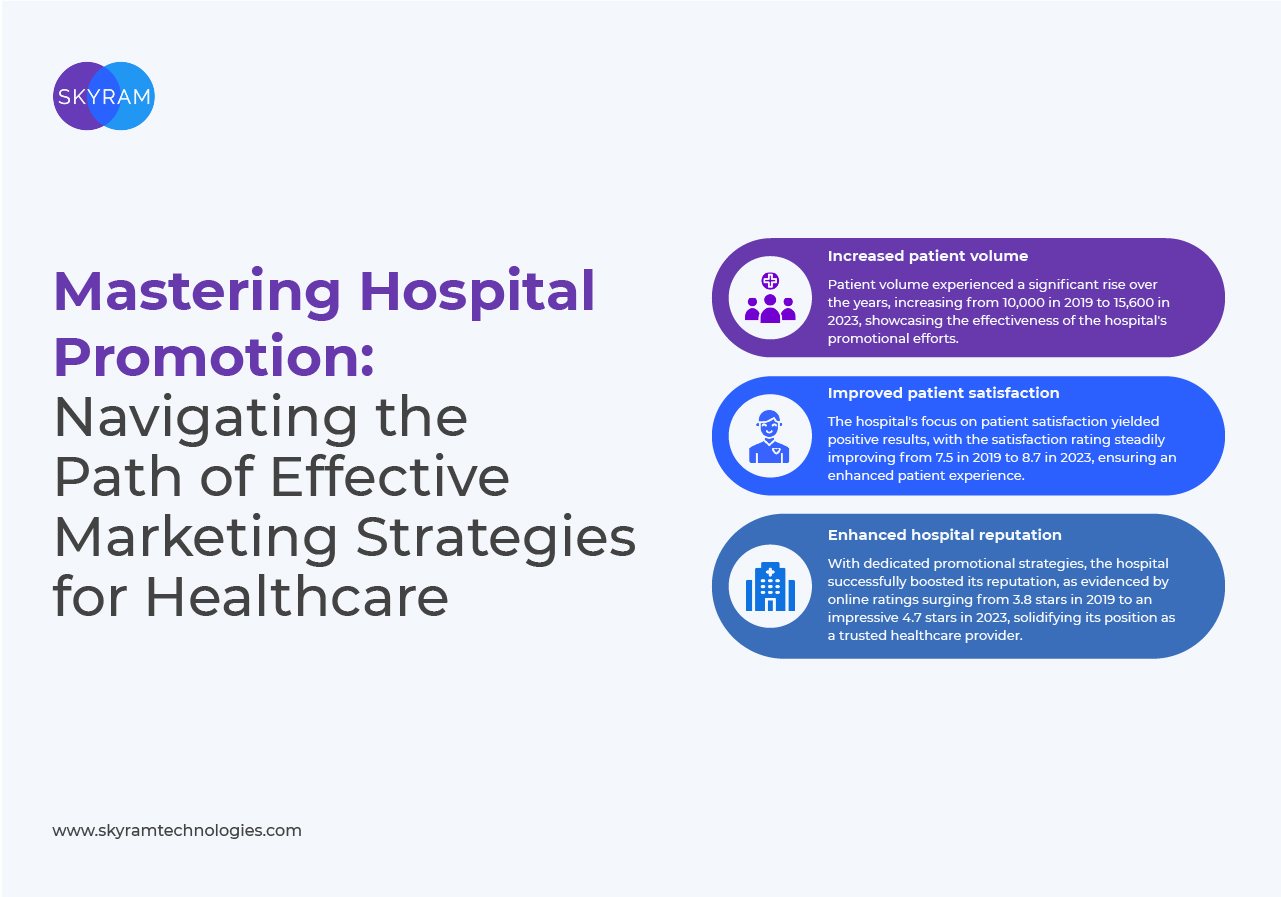
Mastering Hospital Promotion: Navigating the Path of Effective Marketing Strategies for Healthcare

Introduction

Healthcare has entered a period of significant change, with competition, digital disruption, and consumerism working in tandem to reshape the industry. In order to survive in today’s technologically driven world, hospitals now more than ever need to master smart and targeted promotion. All professionals, from brand managers to CEOs and CMOs, must adapt to and embrace effective hospital advertising because of this demand. To help with this transition, we offer a thorough manual that explains the nuances of tried-and-true marketing tactics and makes sure that your hospital stays a top option for patients.

Why is Hospital Promotion Important?

Hospital promotion is far more than the mere assemblage of persuasive messages and appealing visuals. It forms the foundational building block of healthcare institutions, providing them with a competitive edge in today’s complex healthcare landscape.

By effectively creating awareness, fostering trust, and nurturing a positive reputation, hospital promotion transcends its primary purpose of raising visibility. It extends to formulating a robust patient community and solidifying an unwavering bond with them.

With an uptick in patient volumes and enhanced patient satisfaction levels, the importance of hospital promotion becomes evident. However, it doesn’t stop there; it also results in the creation of loyal patients who will act as brand ambassadors, contributing to word-of-mouth marketing. Consequently, a commitment to hospital promotion translates to long-term institutional growth and profitability.

Key Strategies for Effective Hospital Promotion

  1. Patient-Centric Approach: Emphasizing patients’ needs and experiences is a crucial aspect of hospital promotion. It is the embodiment of the shift from transactional healthcare to relational healthcare. Fostering this relational bond cultivates loyalty and trust, key elements that secure repeat visits and generate patient referrals. Personalizing care to suit patient preferences and offering tailored services significantly elevate patient satisfaction levels and enhance institutional reputation.
  2. Digital Marketing: The establishment of a solid online presence is a mandate for contemporary hospital promotion. Hospital websites act as digital front doors, providing potential patients with crucial information and the impetus to choose your services. Meanwhile, social media platforms provide an avenue for patient engagement, where updates and health-related information are shared.
  3. Content Marketing: Deploying engaging and relevant content can significantly augment your hospital’s promotional efforts. Through various forms such as blog posts, videos, podcasts, or patient testimonials, your hospital can be positioned as a reliable source of health-related information, ultimately gaining patients’ trust.
  4. Data-Driven Marketing: Harnessing data and analytics is an efficient way to streamline and optimize your marketing endeavours. They offer deep insights into your target audience’s behaviour, allowing you to refine your promotional messages. Furthermore, they facilitate the measurement of marketing campaigns’ effectiveness, informing future strategy decisions.
  5. Community Outreach: Engaging in community outreach programs solidifies your hospital’s position as a valued community partner. Hosting health fairs, wellness programs, or even free clinics not only increases your institution’s visibility but also forges a strong bond with the community, ultimately benefiting your hospital’s promotional efforts.

Leveraging Technology in Hospital Promotion

Technology has evolved as an essential instrument for promoting hospitals. Numerous methods exist to improve and tailor the marketing initiatives of your hospital, including the use of electronic health records (EHRs), customer relationship management (CRM) platforms, data analytics, and internet platforms.

EHRs can be used to analyse patient demographics and healthcare trends, enabling the development of specialised marketing tactics. CRM systems monitor patient interactions and record information that can be utilised to enhance patient relationships and assess the success of marketing campaigns.

The emergence of telemedicine and health applications, supported by developments in AI and machine intelligence, offers a chance to expand the services offered by your hospital outside its physical location. It provides patients with convenience and presents your hospital as a cutting-edge technological organisation.

With the integration of data analytics, your hospital can move from broad, generic campaigns to highly targeted and personalized promotions. Analytics help track campaign performance, measure patient engagement and provide insights into improving future efforts.

Moreover, online platforms like social media and blogs offer a convenient and effective way to reach out to the community, share knowledge, and highlight your hospital’s services. It helps to establish a strong online presence, which is vital in this digital age.

Conclusion: The Future of Hospital Promotion

The success of hospital marketing will depend on its capacity to change with the digital environment while retaining a constant focus on patient-centric care. It incorporates a mix of conventional and cutting-edge tactics that are in line with shifting patient expectations and technological developments.

The hospitals that quickly react to these developments will have an advantage in the era of digital disruption and patient empowerment. These organisations will make use of technology and data-driven insights, interact with the local population, and concentrate on delivering individualised and high-quality treatment.

Hospital promotion is not a one-size-fits-all approach. Each institution needs to tailor its strategies based on its unique offerings, target audience, and regional dynamics. What remains constant, however, is the commitment to patient care and satisfaction.

Therefore, as we venture into the future, hospital promotion will continue to play a pivotal role in healthcare. It will determine not just the survival, but the growth and success of healthcare institutions.

Remember, hospital promotion is more than just a marketing strategy; it’s about building relationships, fostering trust, and maintaining a commitment to delivering outstanding patient care. With a well-planned and executed hospital promotion strategy, your institution can rise above the competition and resonate with your target audience.

Empower Your Hospital Promotion with Skyram Technologies

To master the art of hospital promotion, a thoughtful fusion of conventional marketing tactics, digital tactics, and patient-centered methods is needed. Your marketing tactics should change as the healthcare landscape does. You can create a stronger, more resilient healthcare brand that is prepared to meet future demands through efficient hospital advertising. You can get assistance from Skyram Technologies in navigating the difficulties of healthcare marketing and promotion.

Our team of skilled digital marketers focuses on promoting healthcare. We can help, whether you need help updating your website, increasing your social media presence, creating SEO-optimized content, or putting data-driven marketing tactics into action.

Our comprehensive marketing solutions are designed to help you reach your target audience effectively, enhance patient satisfaction, and increase patient volumes. We believe in the power of personalized care, and our services are tailored to align with your unique needs and goals.

Let us help you take your hospital promotion to the next level. Contact us today to learn more about our services and discuss how we can help you succeed in this digital age.
Contact Skyram Technologies

Marketing Medicine: Effective Digital Marketing Strategies for the Healthcare Industry

The Digital Revolution in Healthcare: An Introduction

Isn’t it astounding how swiftly technology is transforming industries? Technology and patient care are coming together in a way that has never been seen before, particularly in the healthcare industry. One of the most significant changes in this landscape has been the emergence of Digital Marketing & Social Media in the Healthcare Industry. This powerful tool has revolutionized how healthcare providers connect and interact with their audiences, making patient engagement more direct, effective, and personal.

As healthcare leaders—Brand Managers, Marketing Heads, Product Heads, CEOs, and CMOs—understanding this transformative digital landscape is crucial for success. Leveraging digital marketing strategies effectively can propel growth, improve patient engagement, and ensure that your organization remains competitive in an increasingly digital world.

This article serves as your comprehensive guide to understanding and navigating this exciting digital terrain. Are you ready to seize the opportunities that digital marketing presents in the healthcare industry? If yes, then let’s delve deeper and unravel the powerful tools and strategies that lie ahead.

Understanding the Role of Digital Marketing in Healthcare

The pivot towards digital marketing in the healthcare sector is neither accidental nor avoidable—it’s a necessary evolution, dictated by the digital age. More and more patients are using the internet to find health-related information, make educated decisions about their health, and communicate with medical professionals. As a result, healthcare providers who are visible online and active in digital marketing enjoy a competitive advantage.

Digital marketing plays a critical role in modern healthcare services. It is instrumental in attracting new patients, educating the public about health issues, promoting health services and products, and enhancing patient engagement. Additionally, digital marketing paves the way for healthcare providers to offer remote services, catering to patients’ needs for convenience and flexibility.

By effectively leveraging digital marketing strategies, healthcare providers can streamline care delivery, improve patient engagement, and propel business growth. Therefore, executives need to understand and adapt to this digital revolution to ensure their healthcare organizations stay ahead of the curve.

The Potential of Social Media in Healthcare

Social media has become an influential player in today’s healthcare industry. With more than 3.5 billion social media users globally, websites like Facebook, Instagram, and Twitter offer an unexplored opportunity to interact with patients directly, disseminate vital health information, and improve connections between patients and healthcare professionals.

Moreover, according to the National Research Corporation, 41% of patients said that social media would affect their choice of a specific doctor, hospital, or medical facility. This data points towards the inevitable future of healthcare marketing – digital, patient-centred, and transparent.

Effective Digital Marketing Strategies in Healthcare

Understanding the importance and potential of digital marketing in healthcare is just the first step. Here are some effective strategies to harness these benefits:

  • Content Marketing

Content is king in the digital world, and healthcare is no exception. According to a recent HubSpot report, organizations that prioritize blogging are 13x more likely to achieve positive ROI.

Healthcare providers can leverage content marketing by creating informative blogs, eBooks, and whitepapers on health-related topics. This not only enhances their credibility and trust but also improves SEO, increasing their visibility on search engines.

  • Social Media Marketing

Healthcare providers can utilize social media to deliver health information, answer patient queries, and enhance patient engagement. However, it’s crucial to maintain a balance between promotional content and valuable health information. Remember, your goal is to establish trust and rapport with your audience, not merely sell your services.

  • Search Engine Optimization (SEO)

With 77% of patients using search engines before booking appointments, SEO is a critical component of ‘Digital Marketing & Social Media in the Healthcare Industry.’ Effective SEO strategies, such as keyword optimization, quality backlinking, and local SEO, can significantly increase a healthcare provider’s visibility online.

  • Email Marketing

Despite being one of the oldest digital marketing channels, email remains highly effective, particularly in healthcare. Email marketing enables healthcare providers to deliver personalized health information, appointment reminders, and promotional offers directly to the patient’s inbox. This not only improves patient engagement but also fosters long-term patient loyalty.

  • Pay-Per-Click (PPC) Advertising

Another effective digital marketing strategy in healthcare is Pay-Per-Click advertising. It allows healthcare providers to target specific demographics or geographic regions, driving targeted traffic to their websites. According to Wordstream data, 41% of clicks go to the top three paid ads on the search results page. Therefore, healthcare providers who invest in PPC can see significant returns in terms of increased website traffic and potential patient leads.

  • Video Marketing

Video material is quickly gaining popularity in today’s digital age and for good reason. A report by Wyzowl suggests that 84% of people say they’ve been convinced to buy a product or service by watching a brand’s video. Healthcare providers can leverage this trend by creating educational and informational videos about their services or health conditions. This not only helps patients understand complex medical information but also enhances the healthcare provider’s credibility.

  • Online Reputation Management

In the era of ‘Digital Marketing & Social Media in the Healthcare Industry,’ online reputation is everything. A survey by Software Advice found that nearly 94% of patients use online reviews to evaluate providers. Therefore, healthcare providers must focus on monitoring and managing their online reputation, including responding promptly and professionally to any negative feedback or reviews.

  • Mobile Marketing

With over 659 million smartphone users in India alone, mobile marketing cannot be ignored. With the ubiquity of smartphones, mobile marketing is essential. This could include optimizing your website for mobile viewing, developing a healthcare app, or sending SMS reminders for appointments. Explore the benefits of developing a healthcare app to provide patients with convenient access to services, appointment scheduling, health records, and personalized health information.

  • Leveraging Data & Analytics

In digital marketing, data is power. Healthcare providers who utilize digital analytics can gain insightful information about their patients, their behaviour, and their preferences. This data can be used to refine marketing strategies, improve patient services, and make informed business decisions.

Moreover, predictive analytics can help healthcare providers anticipate patient needs, predict future trends, and prepare accordingly. By leveraging data and analytics, healthcare providers can ensure they remain at the forefront of patient care.

Patient-Centric Marketing: A Shift towards Personalized Care

As a healthcare professional, you are aware that the requirements of the patient always come first. In the digital marketing landscape, this principle translates into a shift towards patient-centric marketing. This approach involves tailoring your marketing strategies to meet the unique needs and preferences of each patient, thereby enhancing their experience and satisfaction.

A notable example of patient-centric marketing is the implementation of patient portals. These online tools provide patients more control over their care by making it simple for them to access their medical records, make appointments, and get in touch with their doctors. These portals not only improve the patient experience but also streamline administrative processes for providers.

Moreover, healthcare apps are becoming increasingly popular tools for delivering personalized care. These apps can offer a wide range of features, such as medication reminders, fitness tracking, telehealth services, and educational resources, thereby providing a more holistic and proactive approach to healthcare.

Balancing Innovation and Ethics: The Role of Regulatory Compliance

While digital marketing offers numerous opportunities for innovation and creativity, it’s essential to navigate this landscape ethically and responsibly. This is especially true in the healthcare sector, where patient confidentiality and privacy are of utmost importance.

One of the key considerations in this regard is regulatory compliance. The Health Insurance Portability and Accountability Act (HIPAA), for instance, requires the secure processing of patient data. As such, healthcare providers must implement secure communication channels, provide transparent privacy policies, and ensure that their marketing strategies comply with all relevant regulations.

This approach not only safeguards patients’ rights but also protects your organization’s reputation and fosters trust with your audience.

The Road Ahead: Emerging Trends and Technologies

Looking forward, the future of Digital Marketing & Social Media in the Healthcare Industry is poised to be shaped by several emerging trends and technologies. Among others, these include the Internet of Things (IoT), virtual reality (VR), and artificial intelligence (AI).

AI, for instance, has vast potential for personalizing patient experiences, automating administrative tasks, and improving diagnostic accuracy. Similarly, VR can provide immersive educational experiences for patients, while IoT devices can facilitate real-time health monitoring and proactive care.

You can make sure that your business remains at the forefront of healthcare innovation by keeping up with these trends and incorporating them into your digital marketing efforts.

Conclusion

The fusion of ‘Digital Marketing & Social Media in the Healthcare Industry’ is a game-changer, propelling healthcare providers to redefine patient interaction and care. The successful implementation of digital marketing strategies in healthcare requires an understanding of the digital landscape, a clear plan, and a patient-centric approach.

As we move forward, the role of digital marketing in healthcare will only grow in significance, with emerging technologies paving the way for more personalized and efficient patient care. To enhTot outcomes and stay competitive in this quickly changing business, healthcare providers must embrace these digital transformations and leverage the potential of digital marketing more than ever.

This is not just about marketing; it’s about Marketing Medicine in the digital age.

Elevate Your Digital Health Marketing with Skyram Technologies

Are you ready to take your healthcare organization’s digital marketing to the next level? At Skyram Technologies, we specialize in helping healthcare providers like you navigate the complex landscape of digital marketing. Our team of experts understands the unique challenges and opportunities in healthcare and is equipped to provide you with tailored strategies that drive results.

From building a strong online presence and creating engaging content to optimizing your advertising efforts and ensuring data security and compliance, we’ve got you covered. We’re here to help you every step of the way, whether you’re starting from scratch or hoping to enhance current methods.

Don’t leave your digital marketing to chance. Choose Skyram Technologies and let us empower you to connect, engage, and grow your patient community like never before.

Ready to get started? For a free consultation, get in touch with us today. We can influence the direction of healthcare together. Contact Us

Navigating the Future: Key Trends and Predictions Shaping the Healthcare Industry

Introduction

Hey there, future shapers! You’ve come to the perfect location if you’re involved in the Indian healthcare sector. Rapid tech advancements, changes in policies, and evolving patient expectations are shaking up the healthcare scene like never before. With the industry projected to reach a whopping 50 billion dollars by 2025, there’s so much to look forward to! So, sit tight and get ready for a thrilling exploration of the future of the healthcare industry.

A Revolution Called Preventive Care

Let’s talk about the big, bad monster – non-communicable diseases (NCDs). They are sneaking up on us and provide a significant risk to the general public’s health. But guess what? We have a secret weapon – Preventive Care. It’s like a crystal ball that alerts us about potential health risks before they turn into major problems. And the impact is huge; as per the World Economic Forum, it could save India a massive $6.2 trillion by 2030!

The Digital Takeover: Telemedicine and More

Our smartphones have changed the way we order food, shop, and even date, so why not healthcare? Enter, Telemedicine – our answer to reaching the farthest corners of India, providing quality healthcare right at their doorstep. And there’s more! From AI-assisted diagnostics to IoT-enabled patient monitoring, digital innovations are transforming healthcare delivery, making it more accessible and efficient.

Working Hand in Hand: Public-Private Partnerships

Bridging the gap in healthcare resources is no small feat. Public-Private Partnerships (PPPs) have thankfully accepted the challenge. Together, they’re aiming to enhance healthcare services and improve the lives of millions. Success stories like the Yeshasvini Cooperative Farmers Healthcare Scheme in Karnataka show us that when we pool resources and expertise, we can achieve extraordinary results!

Unleashing the Power of Personalized Medicine

Healthcare is getting personal, literally. Thanks to advancements in genomics, treatments are now being tailored to suit individual genetic makeup. This breakthrough in personalized medicine, particularly in oncology, is like hitting the bullseye on inpatient treatment, resulting in better outcomes and higher patient satisfaction.

Infrastructure Investment: Laying a Solid Foundation

If we’re aiming for a healthier nation, we can’t ignore the need for quality healthcare infrastructure. With millions of people living in Tier II and III cities, these regions need our attention. Investing in hospitals, clinics, and medical colleges here can bring quality care closer to them. Plus, let’s not forget about our digital health needs. Robust digital infrastructure is crucial to support telemedicine and maintaining digital health records.

The Startup Booster Shot

Indian health-tech startups are pivotal in transforming the healthcare sector. They’re democratizing healthcare access and affordability by bringing services to remote areas and ensuring essential medicines reach every doorstep. These startups are hotbeds for innovation, deploying AI, wearables, and blockchain technology to provide efficient and patient-friendly services. They’re empowering individuals by prioritizing preventive care and using data analytics to provide personalized health recommendations. Moreover, by forging partnerships with various stakeholders, startups are strengthening the healthcare ecosystem. Thus, these ventures are not just shaping the present of the Indian healthcare industry but are instrumental in determining the future of the healthcare industry.

Health Insurance: The Safety Net We All Need

Health insurance is now a must due to the rising expense of healthcare. The Indian government’s Ayushman Bharat scheme aims to provide health insurance coverage to over 500 million citizens, making it the world’s largest government-funded healthcare program. Such initiatives are expanding the safety net of health insurance, providing financial risk protection and enhancing access to quality healthcare services.

Moreover, with increased digital penetration, InsurTech platforms are simplifying the process of buying health insurance, offering personalized plans based on individual needs. According to the National Health Profile, 2020, the Indian health insurance industry is anticipated to expand between 2021 and 2025 at a compound annual growth rate of 20–22%, resulting in future products that will be more innovative and competitive.

Holistic Wellness: A New Paradigm in Healthcare

In the healthcare industry, it’s crucial to comprehend the complex connection between mental and physical health. A WHO report estimates that the burden of mental health problems is to the tune of 2,443 DALYs per 100,000 population in India. To combat this, wellness programs integrating mental and physical health are gaining prominence.

This shift towards holistic wellness opens up new avenues for healthcare providers, from mental health services and nutritional counselling to yoga and meditation programs. As we realize that “health” encompasses more than just the absence of disease, the healthcare sector will see an increase in services that cater to overall well-being.

The Emergence of Smart Hospitals

Imagine a hospital that notifies you of the shortest queue, or one that keeps your doctor updated about your health in real time. Welcome to the era of smart hospitals! The use of modern tools like Artificial Intelligence, the Internet of Things, and data analytics are often used to provide enhanced patient care, improve hospital operations and provide customised patient experience. As we grow more connected, smart hospitals will become the new standard, redefining the way we deliver and experience healthcare.

Embracing Alternative Medicine

India is a land of rich heritage, and this extends to our healing practices too. The global wellness market is witnessing a resurgence of interest in alternative medicine systems like Ayurveda, Yoga, Unani, Siddha, and Homeopathy (AYUSH). A combination of these traditional practices with modern medicine can offer holistic healing options, tapping into a niche yet rapidly growing segment of the healthcare industry.

Conclusion

Hold on to your hats, folks – we’re in for a thrilling ride. The future of the healthcare industry in India is transforming before our eyes, making it an exciting time to be part of this journey. From preventive care to personalized medicine, digital transformation to holistic wellness, the industry is buzzing with innovations and opportunities.

But remember, being a healthcare leader is not just about riding these waves of changes. It involves foreseeing the future, adjusting, and making the best choices at the appropriate moments. Whether you’re a brand manager, marketing director, product manager, or CEO, you have a special opportunity to influence this future and make sure that India’s healthcare sector continues to develop, flourish, and most importantly, lead healthier lives.

So, as we venture into the future of the healthcare industry, let’s remember, it’s not just about business growth; it’s about a healthier, happier India. Let’s embrace this exciting journey together, steering our efforts towards a future where high-quality, affordable, and accessible healthcare is a reality for all. Let’s make every Indian citizen’s health – our mission!

Download the Ultimate Digital Health Marketing Checklist Today!

Are you feeling curious to gain more knowledge about the digital marketing techniques used by your company? You can download our “Ultimate Digital Health Marketing Checklist for Healthcare Leaders” now. You may optimise your digital marketing initiatives by using the detailed checklist’s actionable findings and useful recommendations.

Why not now? Start today by revolutionising your online presence. You’ll be well-equipped to negotiate the dynamic healthcare marketing environment once you have the checklist in your possession. To immediately obtain your copy, click the link below.

Download the Ultimate Digital Health Marketing Checklist for Healthcare Leaders

Improving your digital marketing strategy can be a smooth and fruitful journey with the right tools and guidance. And while our checklist provides the roadmap, wouldn’t it be great to have a trusted companion by your side, guiding you every step of the way? This is where Skyram Technologies comes in.

Elevate Your Digital Health Marketing with Skyram Technologies

Are you ready to take your healthcare organization’s digital marketing to the next level? At Skyram Technologies, we specialize in helping healthcare providers like you navigate the complex landscape of digital marketing. Our team of experts understands the unique challenges and opportunities in healthcare and is equipped to provide you with tailored strategies that drive results.

We’ve got you covered from building a strong online presence and creating engaging content to optimizing your advertising efforts and ensuring data security and compliance. we are always eager to help you even if you are starting from scratch or want to get improvement on the existing procedures.

Don’t leave your digital marketing to chance. Choose Skyram Technologies and let us empower you to connect, engage, and grow your patient community like never before.

Are you prepared to begin? If you want a free consultation, connect with us right now. We can influence the direction of healthcare together. Contact Us

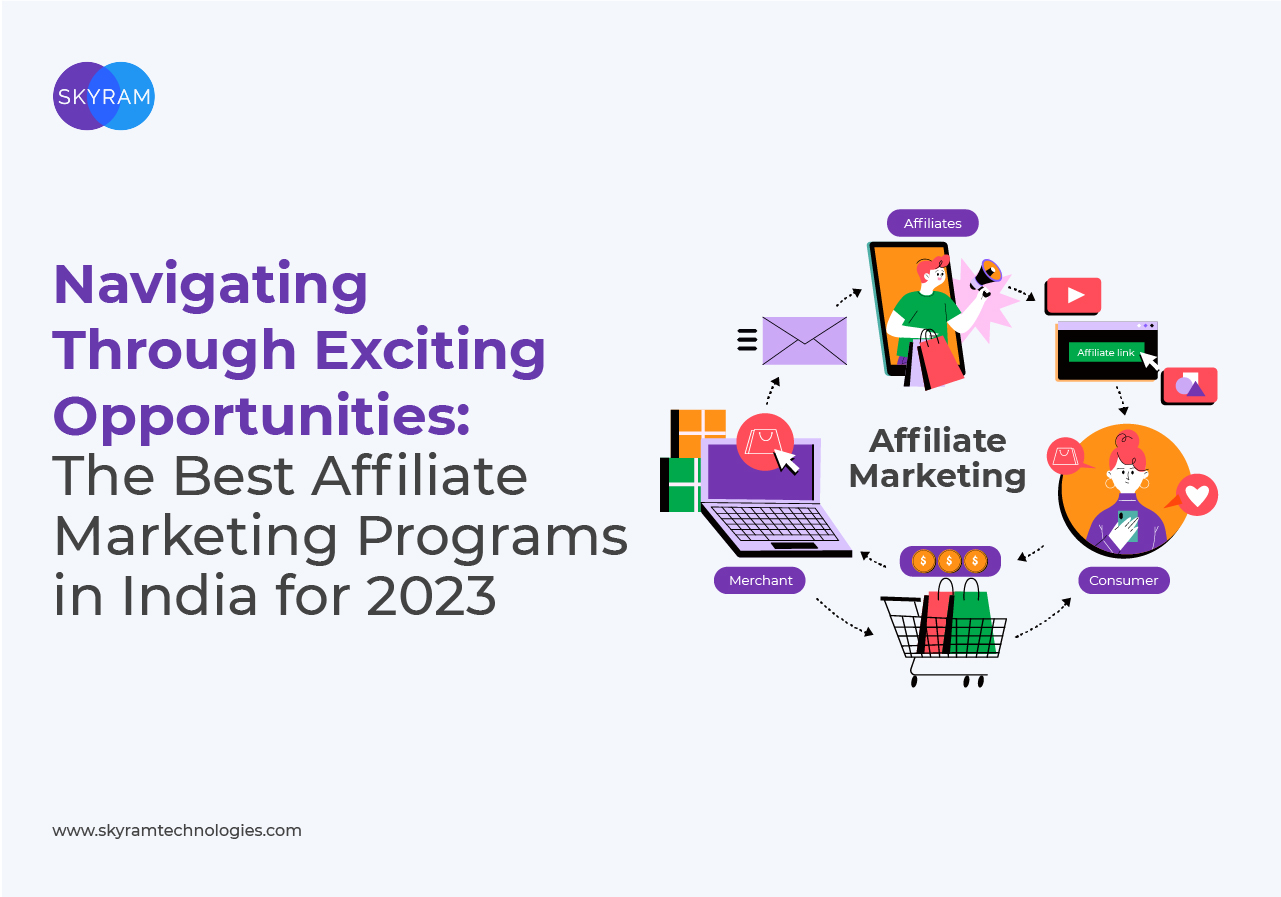
Navigating Through Exciting Opportunities: The Best Affiliate Marketing Programs in India for 2023

An Exciting New Era: The Rise of Affiliate Marketing in India

In the current digital age, the concept of “earning a living” has undergone a radical transformation. Traditional desk jobs are making way for more flexible, creative, and independent career paths. One such emerging field in India is affiliate marketing.

As a country with over 700 million internet users, India is a ripe ground for affiliate marketing to flourish. This form of marketing involves a partnership between an affiliate (you) and a business. You promote the business’s products or services and earn a commission for every sale or lead you generate. It’s a win-win situation where the business gets more customers, and you earn money, often passively.

Affiliate marketing has grown steadily over the past few years in India. The increased internet and smartphone penetration, combined with people’s growing familiarity with online shopping, has contributed significantly to this growth. Moreover, amid the COVID-19 pandemic, when job insecurity looms large, affiliate marketing has come up as a sustainable source of income for many.

Unravelling the Benefits: Why Choose Affiliate Marketing?

Affiliate marketing brings with it several advantages that make it an exciting career choice:

  1. Low Start-up Costs: Unlike most businesses, getting started with affiliate marketing doesn’t require a huge investment. All you need is a functional website or a blog, an internet connection, and a whole lot of creativity.
  2. Work from Anywhere, Anytime: As an affiliate marketer, you’re not bound by the traditional 9 to 5 office hours. You have the freedom to work at your own pace, from any corner of the world.
  3. Passive Income: Once you’ve put the work into setting up your platform and partnerships, affiliate marketing can become a source of passive income. You can earn money while sleeping, on vacation, or working on other projects.
  4. Performance-Based Rewards: In affiliate marketing, your earning potential is largely in your hands. The more effort you put into promoting products and driving sales, the higher your income.
  5. Broaden Your Skill Set: As an affiliate marketer, you’ll likely wear many hats. You’ll be a content creator, marketer, SEO specialist, and salesperson, all rolled into one. This diversity can help broaden your skills and make you more versatile.

Now that you have a fair understanding of what affiliate marketing is and why it’s an exciting field to delve into let’s dive deeper into the top affiliate marketing programs in India for 2023.

1. Amazon Associates: A Giant in the Affiliate Marketing World

Amazon Associates is one of the most popular affiliate programs globally and for a good reason. With millions of products across various categories, you’ll never run out of things to promote. Plus, Amazon is a trusted brand; thus, customers are more likely to make a purchase.

Getting started with Amazon Associates is simple. After signing up and getting approval, you can start promoting any product on your blog, website, or channel. Amazon offers up to 10% advertising fees, and with its vast range of products, the earning opportunities are massive.

When promoting Amazon products, remember to target products that your audience is likely to buy. Also, ensure to use SEO-friendly descriptions and high-quality images to increase click-through rates.

2. Flipkart Affiliate Program: A Local Titan

Flipkart, one of India’s largest online stores, also offers a rewarding affiliate program. Since Flipkart is homegrown, Indian consumers often prefer it over international e-commerce platforms. This preference can be advantageous for affiliates targeting an Indian audience.

Flipkart’s affiliate program works similarly to Amazon Associates. You earn a commission for every sale that originates from your unique affiliate link. The commission rates can go up to 15%, depending on the product category.

To get started with Flipkart’s affiliate program, you need to sign up on their website. Once your application is approved, you can start selecting products that align with your audience’s interests. Use the Flipkart affiliate link generator to create unique links for these products and start promoting them.

As a tip, focus on promoting products during sales or festive seasons when people are more inclined to make purchases. Also, consider writing comprehensive product reviews or creating comparison content to help your audience make informed buying decisions.

3. Commission Junction (CJ): The Global Affiliate Marketing Network

Commission Junction, popularly known as CJ Affiliate, is a global affiliate marketing network that brings together affiliates and advertisers under one roof. With a wide array of brands to choose from, you can find products or services that fit your niche perfectly.

Getting started with CJ Affiliate involves creating a publisher account. Once your account is approved, you can apply for individual affiliate programs within the CJ network. After being accepted into a program, you can grab your unique affiliate links and start promoting.

One notable aspect of CJ Affiliate is its real-time reporting feature. This feature provides you with up-to-date data about link clicks, sales, and commissions, helping you track your progress and make necessary improvements.

Remember, being a part of a global network means you’ll be competing with affiliates worldwide. Hence, focus on creating unique, high-quality content that stands out and adds value to your audience.

4. vCommission: India’s Leading Affiliate Network

vCommission is India’s leading affiliate network featuring several Indian brands. If your audience is primarily based in India, vCommission could be a great platform to find relevant products or services to promote.

To join vCommission, you need to fill out an application form on their website. After your application is accepted, you can browse through their list of advertisers and pick the ones that align with your audience.

The commission structure in vCommission varies depending on the advertiser. Some advertisers offer a commission for leads, while others pay for sales. Choose the ones that align with your content strategy and earning goals.

vCommission provides you with a dedicated account manager to help you with any queries or issues. They also offer timely payouts, which is a big plus for any affiliate marketer.

5. HostGator Affiliate Program: A Lucrative Niche Opportunity

If you’re a tech blogger or your audience is interested in website development or blogging, the HostGator Affiliate Program could be an excellent choice for you. HostGator is a leading web hosting service provider, and its affiliate program is one of the most rewarding in the hosting industry.

Filling out a form on the HostGator website is required to sign up for their affiliate programme. You’ll get access to advertising content including banners and links after you’re accepted. To advertise HostGator’s services, you can use the resources below on your website, blog, or social media platforms.

You can receive up to $125 for each successful referral. However, the amount of sales you can produce in a month will determine the actual commission.

Create articles about website creation, blogging, or digital marketing to promote HostGator’s services. An audience that is more likely to be interested in web hosting services can be attracted by such content.

Conclusion: Embrace the Thrill of Affiliate Marketing

Affiliate marketing is like diving headfirst into a bustling, exciting marketplace. The opportunities are vast, and the rewards can be significant if you’re willing to put in the effort. The affiliate programs listed above are among the best in India for 2023, offering a rich avenue to earn commissions.

Remember, the key to successful affiliate marketing lies in understanding your audience and promoting products or services that provide them with real value. It’s also crucial to maintain transparency and trust with your audience. Always disclose your affiliate relationships and ensure you’re recommending products or services you believe in.

There’s no one-size-fits-all in affiliate marketing. What works for one might not work for another. So, it’s important to keep testing different products, strategies, and types of content to see what brings in the most revenue.

Setting Sail with Skyram Technologies

Entering the thrilling arena of affiliate marketing can sometimes feel like trying to navigate an unknown territory. Feeling overwhelmed and unsure about the best course to chart is natural. This is where Skyram Technologies can provide you with the guidance you need.

Skyram Technologies is a trusted name in digital marketing services, with expertise in helping businesses and individuals maximize their affiliate marketing efforts. Our team of seasoned professionals can provide you with the strategies, tools, and insights you need to navigate the bustling world of affiliate marketing successfully.

Whether you’re just setting sail or you’re looking to optimize your current strategies, we’re here to support you. From helping you choose the right affiliate programs to create high-converting content and optimizing your website for SEO, we offer a comprehensive range of services tailored to your unique needs and goals.

Remember, affiliate marketing is not just about selling. It’s about creating meaningful content that adds value to your audience and builds lasting relationships. And that’s exactly what we aim to help you achieve.

Ready to set sail on the thrilling journey of affiliate marketing? Connect with us at Skyram Technologies today, and let’s navigate these exciting waters together. Click here to begin your adventure with us!

8 Essential Techniques to Pinpoint the Ideal Target Audience for Your Brand

As you embark on your brand’s exciting journey, one factor stands out as crucial in your blueprint for success: identifying the right target audience. The path to a thriving business is paved with comprehensive understanding of your consumers’ needs, preferences, and behaviors. This valuable insight forms the basis of effective marketing strategies, product development, and customer service. But how do you discern who comprises your ideal target audience?

Today, we’ll delve into eight practical techniques to pinpoint the perfect target audience for your brand.

1. Understand Your Product or Service

First and foremost, delve deeply into your product or service. Comprehend every feature, benefit, and potential drawback. Understanding what you’re offering is the first step in recognizing who might need it.

Evaluate your product or service from various perspectives. How does it add value? Who might find it useful? Who could potentially be a return customer? These questions lay the groundwork for identifying your target audience.

Action: Conduct a thorough product/service analysis. Identify its features, benefits, and any potential drawbacks.

2. Analyze Your Competitors

No brand exists in isolation. You’re part of a dynamic market environment teeming with competitors. Analyzing these competitors can provide a wealth of information about your potential target audience.

Study their marketing strategies, customer base, online presence, and pricing tactics. Pay special attention to their customer reviews and feedback. What do their customers love? Where are they falling short? You can use this insight to refine your offerings and appeal to a shared target audience or identify gaps that can help you reach a unique demographic.

Action: Regularly monitor competitor marketing strategies, customer reviews, and their online presence.

3. Segment Your Market

Market segmentation is a time-tested strategy that allows you to categorize potential customers based on common characteristics. These may include demographics (age, gender, location, income), psychographics (lifestyle, interests, values), behavior (buying patterns, product usage), and geographical location.

Once you’ve segmented your market, you can focus on the groups most likely to be interested in your product or service. Not only does this approach make your marketing efforts more efficient, but it also helps you tailor your message to resonate with specific audiences.

Action: Categorize your market based on demographics, psychographics, behavior, and geographical location.

4. Create Customer Personas

Customer personas, also known as buyer personas or marketing personas, are fictional, generalized representations of your ideal customers. They help humanize your target audience, enabling you to visualize them as real individuals with specific needs, desires, and challenges.

A well-crafted customer persona includes demographic details, behavioural traits, interests, motivations, and pain points. You may have multiple personas for different segments of your target audience. Remember, the more detailed your personas, the better you’ll understand your audience.

Action: Develop detailed personas for each segment of your target audience.

5. Conduct Surveys and Interviews

Once you have a basic understanding of your potential audience, it’s time to validate and refine your assumptions. Surveys and interviews are excellent tools for gaining first-hand insights about your audience.

Ask questions about their preferences, buying habits, pain points, and the factors they consider when choosing a product or service. Make sure the questions you ask are neutral, straightforward, and intended to encourage insightful responses.

Action: Conduct polls and interviews frequently. Utilise the information to improve your strategy and audience comprehension.

6. Making Use Of Social Media Analytics

Today in this digital era social media can be considered a gold mine of data regarding the behaviours and preferences of customers. Backed by social media platforms like Facebook, Instagram, Twitter and LinkedIn, one can gain insights about who wants to interact with your brand and why.

It is very much essential to give enough attention to the online behaviours, demographics and preferred type of content of your followers. A detailed observation of their discussion and comments will provide you with enough information about their pain points, interests and opinions about your brand.

Action: Don’t forget to review and analyse the social media metrics on a regular basis. you can utilise this data to gain knowledge about the persons who want to interact with your brand and also the reason behind it.

7. Minutely Examine Website Data And Google Analytics Data

Both Google Analytics and your website will offer you a broad range of data regarding your visitors like their geographical locations, demographics, the way they found your site and the content they interact with. such kind of information will give you a very clear idea about who is genuinely interested in your brand and their online behaviour which is very much important for giving shape to your marketing strategies.

in addition, if you want to track the path of your audience with the help of your website, pointing out which pages they visit, how long they stay and the actions they take, you will get significant help from Google Analytics. this data will be very much helpful to understand the needs and interests of your audience.

Action: You must need to survey the data available on your website along with Google Analytics regularly. with the help of this information, you will be able to tailor your online strategies and improve the user experience of your website.

8. Taking Part In Industry Conferences And Networking Activities

And last, nothing can replace face-to-face communication. Industry gatherings, trade exhibitions, and networking events can provide insightful information about your target audience. These platforms offer chances to communicate with potential clients, learn about their requirements, and get their honest opinions.

Additionally, you get to interact with rivals and other members of the industry, giving you a deeper comprehension of the marketplace and fresh suggestions that could affect your brand strategy.

Action: Participate in industry-related gatherings and networking activities. Use these opportunities to learn more about your audience, meet potential customers, and gather feedback.

Remember, identifying and understanding your target audience is an ongoing process. Keep refining and adjusting your approach as your market evolves to ensure your brand remains relevant and effective.

Final Thoughts

Understanding your target audience requires continual work; it is not a one-time activity. Your understanding of your audience must vary as industry trends, technologies advance, and consumer behaviours alter. By routinely reevaluating your target market, you can keep your brand relevant, your marketing efforts effective, and your business growing.

Choosing the right target market may be challenging, but by using these eight tactics, you may have a better understanding of your potential customers and what they want. This knowledge may be used to create strategies that engage your audience, foster strong bonds, and ultimately support the growth of your company. It is not only desirable but also vital to commit time and resources in this procedure. Knowing your audience is the core of your business, not just a component of it.

Let’s Drive Your Brand Forward Together

Understanding your target audience is the foundation of your brand’s success. But the process can be intricate, time-consuming, and a little overwhelming. That’s where Skyram Technologies steps in. We offer comprehensive digital marketing services, leveraging advanced tools and strategies to help you identify, understand, and engage your target audience effectively.

Are you ready to take the next step in elevating your brand? Skyram Technologies is committed to helping businesses just like yours. From market segmentation and competitor analysis to leveraging data analytics and creating impactful marketing strategies, we’ve got you covered.

So why wait? Let’s embark on a journey to uncover your ideal target audience and unlock unprecedented growth for your brand. Connect with our expert team today, and let’s start crafting a tailored solution to meet your unique needs.

Contact Skyram Technologies Now

How to Generate More Traffic to Your Mobile App Through App SEO Services.

App stores like Google and Apple are not the only place to promote a mobile app. There are other ways to promote your app including various search engines like Google, and Microsoft. Yes, you heard it right, you can promote your app on search engines with the help of SEO. It is a great way to divert traffic to your app along with the ASO strategy. Having a robust SEO strategy for your mobile app will complement your ASO strategy, thereby attracting more traffic to your app. So if you are a mobile app business, now is the time to use app SEO to successfully promote your app across various channels.

Nowadays, developing a robust app is not enough as the mobile app market is highly competitive. Every other new mobile application is launched all around the world. But the mobile app market has great potential if you know the right way to market your product. So to attract relevant traffic and get more downloads, you need a solid marketing strategy i.e. SEO.

In the case of mobile marketing strategy, SEO is equally important as ASO. Most businesses don’t understand the need for SEO in mobile app marketing because it is a common misconception that SEO works only for websites. Indeed websites need SEO to attract more customers but mobile apps too need SEO. Without SEO, mobile app businesses might lose out a large portion of the target audience. We will highlight the importance of SEO in mobile app marketing and provide you with tips to enhance your mobile application SEO strategy.

What is SEO for an app or app SEO?

Now you must be wondering what SEO means for a mobile app, is it different from a regular SEO? The answer is no. The mobile app SEO strategy is the same as regular SEO. It will help you to drive more traffic to your mobile app. It is a way of ranking your website or app rank higher in search engine results to attract more prospects. The main goal of SEO is to optimise a website or app so that bots can crawl better and you get rewarded with a higher ranking.

Now the main question that pops up, is how it can promote a mobile application. According to Google, most users discover new apps through search engines. Many reports state that most users search for apps in search engines rather than app stores. So this is where an SEO strategy can promote an app in search engines.

Do mobile app businesses need SEO?

The answer is yes. Just as websites need SEO to gain visibility in search engine results, mobile applications too need SEO with ASO. With the help of an SEO strategy mobile app businesses can divert more relevant traffic.ASO alone cannot get you the desired results. In order to successfully promote your app business, you need to combine ASO with SEO to get positive results. Otherwise, you can lose a huge chunk of the target audience. The main goal to combine ASO with SEO is to make your app discoverable on various online platforms. That’s why SEO is extremely crucial when it comes to promoting your mobile app.

6 ways how app SEO can promote your mobile app

To successfully sell your mobile app, you need robust app SEO strategies that will complement your ASO strategy. It will increase your app installs, and increase lead conversions. This will give you an edge over your competition. Use these productive SEO tips to get better rankings in SERPs results. They are:

  1. Build a website for your app- Yes, you heard it right, a website for your mobile application. Wondering why? We will tell you the reason. Now you already know SEO strategies help websites get better ranking in SERPs results right? Better ranking means more traffic. This is the reason why you must build a website for your mobile application. With the help of SEO, you can get top ranking in SERPs and thus get more downloads for your app.
  2. Create engaging content for your users- Along with building a stellar website, you must create optimised content for your app’s website. It will improve your SEO for mobile apps ranking in the search engine results. Similarly, if your content is engaging, then the chances of your app downloads increase.
  3. Target relevant keywords- When it comes to increasing SEO rankings, keywords are the most important part. To attract users to your website or app, you need to target keywords that are relevant to your app. To get relevant keywords, perform keyword research and find out the keywords that your target audience uses in their search queries. Based on your research, distribute the keywords naturally in your content to get organic traffic to your website.
  4. Optimise the title and the metadata- It goes without saying that your title should captivate your visitors. Along with that, your metadata should contain all the main information about your mobile application. Most users decide whether to visit a website or not based on the title and metadata. So it is crucial to have an attractive title and meta for your website.
  5. Link Building – Link building is an essential aspect of app SEO ranking. But building credible links takes some time. Link building is a process of letting Google know that your website is legit. So if more relevant external links come to your website, Google understands your website is trustworthy and increases your ranking. Again building credible backlinks will take some time. So approach credible domains that are relevant to your domain to get backlinks.
  6. Optimise the page speed of your website- Another important aspect when it comes to improving SEO ranking is optimising the page loading speed. According to Google, the minimum time for a page load is two seconds or less. If the page loading speed is within two seconds, Google increases the ranking of the website by considering other factors. Similarly, if the page load speed is less the chances of more visitors landing on your websites increase. Otherwise, visitors will leave the page and you will end up losing a portion of your target audience.

These SEO tips will help you to promote your mobile app successfully on search engines. But getting the results of SEO will take some time. So apart from SEO strategy, you can promote your mobile app on different channels to divert more traffic.

How to drive traffic to your app from other online channels

Given below is the list of ways that will help you channel more relevant traffic to your app other than mobile app SEO. They are:

  1. Social Media- Most internet users in current times have a social media presence. So why not use social media platforms for your mobile app too? So have a dedicated page for your mobile app on every leading social media platform. It will create more buzz about your app.
  2. Effective ASO strategy- When it comes to promoting a mobile app, ASO is equally important as SEO. So having a robust ASO strategy will make your app stand out in the app store. This includes optimising app icons, infographics and screenshots, and app size and targeting relevant keywords.
  3. Collaborate with an Influencer- A great alternate way to promote your product is by collaborating with a social media influencer. Since influencers have huge loyal fan followings, collaborating with them will have a huge impact on your app.

Final Takeaway

Mobile app downloads have risen exponentially over the last few years. So it is a great time to venture into the mobile app industry. Remember developing a stellar app is not everything, the ultimate success of your mobile app will depend on the marketing techniques. That’s why you need robust SEO and ASO strategies. Combining app SEO with ASO will give you a steady flow of visitors to your app. It will lead to more downloads, higher ranking and more revenue.

Frequently Asked Questions

  1. What kind of marketing strategies do I need to make my mobile app successful?

Ans: With the help of effective SEO and ASO strategy, you can attract high-quality leads to your app. Along with ASO and SEO, you also need to promote your product on other channels to drive more traffic to your mobile app.

  1. What is the difference between ASO and SEO in mobile app marketing?

Ans: Both ASO and SEO are crucial in mobile app marketing. In a sense, it can be said ASO is a subset of SEO. ASO works to make your app visible on the app store, while SEO works to make apps visible on SERPs results.

The Power of Organic SEO: Unlocking the Benefits and Strategies for Success

Do you know that most website traffic on the internet comes from organic search and most online experiences begin with a search on Google, Yahoo or Bing. It is not surprising, considering the number of internet users in this digital age. So organic SEO services are a clear winner when it comes to search engine optimisation, especially in B2C businesses. In fact organic search accounts for more than half of the website traffic on the internet.
It is a proven fact that search engine optimisation is important for a business’s success, without it, you won’t get higher rankings on Google or Bing search results. Thinking about hiring a digital marketing agency? Wait a minute. With so many marketing agencies promising to deliver the best SEO services, how will you know which one to trust? Good SEO services are hard to come by. So before you go all out and hire a professional, you should at least have an idea of organic SEO and how it is more effective than other strategies.

What are organic SEO services?

Digital marketers provide organic or natural SEO services to increase the visibility of online businesses. It can be local SEO services for a local business, regular SEO services for a national or global business, or enterprise SEO services for large corporations. Basically, they have the right skills to optimise your website so that you get organic traffic with targeted keywords. They can help you to accomplish your business goal with their expertise.

So what is the meaning of natural, organic SEO, or just SEO?

Natural or organic SEO or simply SEO is a campaign to increase your ranking in Google or Bing search results. Although it might take some time, it gives you positive results in the long run. This process involves writing high-quality engaging content for your target audience, including targeted keywords in your content, incorporating meta tags, and generating credible backlinks.

Natural SEO is one of the best ways to promote your business at an affordable rate but it will take some time- at least a few months. Basically, it is a way of making your content more valuable to Google users. The more useful your content becomes to the searcher, the more organic traffic you will drive to your website. But again, it takes time to generate organic traffic. Don’t believe anyone, who promises to deliver the top spots on the search results in less than a month.

Organic SEO V/S Paid results

There are other ways to increase visibility in Google search results like paid search or non-organic SEO services. Paid results or non-organic SEO can guarantee you a higher ranking in SERP results in a short span of time. A paid search will appear in the top ad section of the SERP results but only till you are paying for it. Compared to organic search results, paid search will pinch your pocket.

Apart from the cost, natural search results have other advantages over a paid search. If done in the right way, the rankings of the natural search will not go down easily.

So which is the best? While both organic SEO and paid search have both pros and cons, natural SEO is definitely the clear winner. When you are thing about long-term goals, you should always choose natural search results over a paid search.

Why you need organic SEO for your brand

There is no point in spending money and resource in building and optimising a website if no one is going to see it- whether it is local SEO, global SEO or enterprise SEO services. After all, the main objective of building an optimised website for your business is to generate organic traffic, isn’t it? A good SEO strategy can help bridge the gap between you and your potential customers. Regardless of your business size and industry, you can benefit a lot by implementing the right SEO techniques.

Benefits of organic SEO services for your brand

Trust us, when we say that organic traffic will work wonders for your brand. Yes, it is true that white hat SEO takes time, but it is certainly worth investing in. Go through these benefits of organic search results to get a more detailed idea of organic SEO.

  1. Do not pinch your pocket- Generating organic search traffic for your website won’t pinch your pocket. It is the most obvious advantage of using organic SEO. If you can generate content that users and searchers find helpful, they will automatically come to you. You don’t have to spend loads of money to bring visitors to your website.
  2. Connect with your users- One thing that search engines have managed to do- joining the gap between customers and businesses. This means, by providing helpful content and better user experience you can certainly connect with your audience. It will help your visitors easily locate what they are looking for.
  3. Get a higher ranking on the SERPs- One of the main purposes to use SEO techniques is to get a higher ranking right? So, to get a higher ranking you can use optimise your website with different white hat SEO strategies like placing relevant keywords, building backlinks, and writing engaging content. Overall, white hat SEO will increase your brand awareness in a much better way.
  4. Gives an edge over your competition- Just as already said before, organic search results will garner more traffic to your website. The more effort you put into refining your organic SEO services, the higher ranking you will get on SERP results- pushing your competitors down the lists.
  5. Become a leader in the market- When you deliver reliable and engaging content to searchers on the internet, they will certainly choose you over others. Irrespective of your business size and industry, white hat SEO can help you become a leader in your niche.

How to improve ranking in the SERPs results

Now you know the benefits but how will you improve the rankings naturally? Winning the top spot in the SERPs is difficult but not impossible. Here are some strategies that will make organic search results easier for you.

  1. Research your target audience- Do you remember the saying customers are king, well they literally are. Delivering solutions that searchers want will get you a higher ranking in the SERPs results. For that, you need to look deep into your target audience and understand their needs.

Researching your audience will help you to understand what exactly their looking for, their goals and their pain points. It will also help you to create content that resonates with the search intent, an important factor for ranking. That’s why we suggest you must conduct audience research before creating any content.

  1. Conduct keyword research- It goes without saying, keyword research is the most important aspect of search engine optimisation. Once you know your target audience the next step is to identify the relevant keywords that your target audience uses in their search.

Keywords are mainly words or phrases that searchers use while finding a solution on search engines. They will boost your ranking if placed correctly in the content. Aim for keywords that have lower search volume but are easier to rank and make sure to place your targeted keywords in such a way that it does not disturb the natural flow of the content.

  1. Off SEO- Along with on-page SEO services, you also have to consider off-SEO services. These are actions that are taken off the page to increase the position of rankings. It is also a part of the organic SEO strategy that builds trust and awareness for your website.

Off-page SEO is a strategy to promote your content on third-party sites by various methods including link building, leveraging social media, using Google my business and others.

  1. Creating Content- The first that visitors look at your website is the content. It is the main reason why people come to your website. Content marketing is not just about writing content just for the sake of search engines, it is actually a service that caters to customers. So, your ultimate goal is to help your customers, the rest will follow automatically. When you write relevant and reliable for users they will automatically convert to customers.

You can also improve the UI and UX of your website to make your content more engaging. With millions of blogs publishing every single day, you must deliver your content in such a way that it stands out from the rest. If you can do this, rest assured, you’ll be driving tons of traffic to your website. It is all about what and how you are delivering content to searchers.

Summing it all up

Delivering organic SEO campaigns is certainly not an easy task, but it is not impossible. There are tons of organic SEO services that claim false promises, don’t fall for them. So when it comes to delivering the best SEO campaigns for our clients and understanding their needs, Skyram Technologies is a trusted name in the market. To know more about our work, contact us and we will help you achieve your business goals.

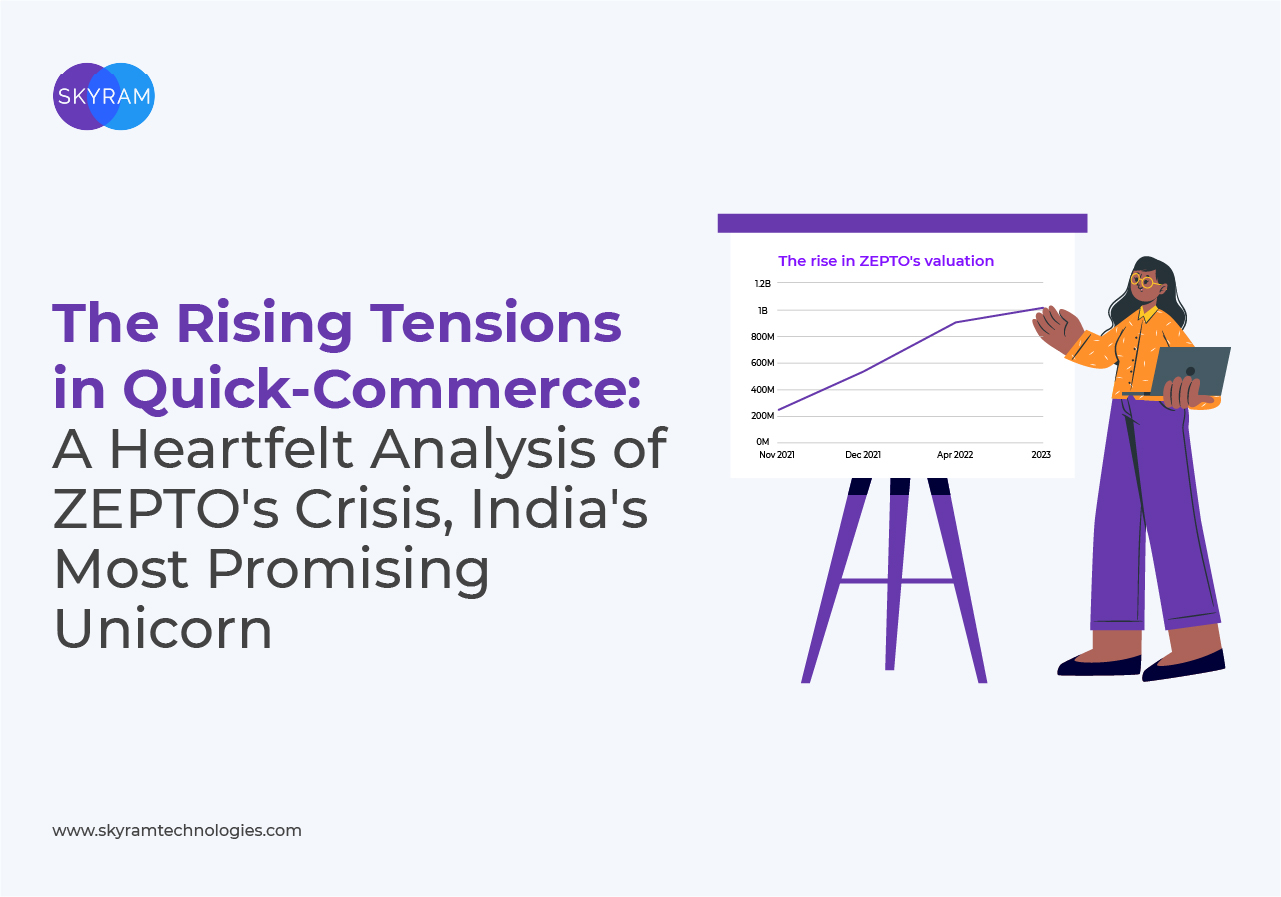
The Rising Tensions in Quick-Commerce: A Heartfelt Analysis of ZEPTO’s Crisis, India’s Most Promising Unicorn

Abstract

The rise and fall of businesses is a common sight in the dynamic world of startups. This article will delve into the situation surrounding the quick-commerce industry, with a particular focus on ZEPTO, once heralded as India’s most promising unicorn, to discern the factors that contributed to its downturn.

Introduction

Quick-commerce, a form of e-commerce, is a business model based on delivering products within very short timeframes, often within 10-15 minutes. This industry, while relatively new, has seen massive growth worldwide, with numerous startups cropping up and attracting significant investor interest. One of the pioneers of this practice in that nation was the quick-commerce company ZEPTO, which is based in India. ZEPTO had long-term good growth but has recently faced significant challenges. This essay’s goal is to investigate the reasons behind this unexpected downturn.

Evolution of Zepto

ZEPTO was established to revolutionise the Indian retail sector by providing incredibly quick deliveries of groceries and other necessities. Thanks to its distinctive value proposition and the fast-expanding Indian e-commerce market, the company swiftly attained a high growth trajectory. The company’s success was further fueled by significant funding rounds, propelling it into the prestigious unicorn club, reserved for startups valued at over $1 billion.

The Downfall: Analyzing the Challenges

Despite the initial success, ZEPTO’s journey hasn’t been smooth. A series of challenges led to its current predicament. Below are the key factors contributing to the struggles of ZEPTO.

1. Operational Complexity and Cost

Quick-commerce demands a unique and complex logistical setup that can enable super-fast deliveries. This involves having numerous micro-fulfilment centres close to consumers and maintaining a vast inventory of products. The operational and maintenance costs for such infrastructure are inherently high. Moreover, the additional cost of quick deliveries often negates the economies of scale, leading to an unsustainable business model.

2. Market Acceptance

Despite the convenience of super-fast deliveries, market acceptance for such a model in India has been lukewarm. Many consumers are more price-sensitive and are willing to wait longer for deliveries if it means lower prices. ZEPTO’s business model, with its high operational costs, inevitably led to higher prices, pushing away a significant segment of potential customers.

3. Regulatory Hurdles

The regulatory environment in India has been challenging for e-commerce companies. Issues related to FDI norms, GST, data privacy, and more have posed difficulties. ZEPTO, too, has had to navigate through these regulatory complexities, leading to additional costs and operational difficulties.

4. Intense Competition

The quick-commerce space in India has seen a surge of competitors, including well-established e-commerce giants venturing into quick deliveries. These competitors, with their deep pockets and vast resources, pose a significant threat to startups like ZEPTO.

Conclusion: Is Quick-Commerce Failing?

The struggles of ZEPTO paint a grim picture for the quick-commerce industry. However, it may be too early to deem the entire sector as failing. While ZEPTO’s model has encountered significant challenges, this doesn’t mean the end for quick commerce. It is a reminder that while innovation can disrupt markets, achieving sustainability and profitability is equally important. With appropriate business model adjustments, operational efficiency, and regulatory navigation, quick commerce can still be a promising sector.

As for ZEPTO, the journey is not over. The company can leverage its learnings from the current crisis to reimagine its business model and bounce back. Failure is not the opposite of success; it is a necessary component of success, as the phrase goes. The difficulties ZEPTO has faced could be a stepping stone to a more resilient and successful business model. The company must prioritise reducing operational expenses, increasing consumer acceptance, and managing regulatory challenges if it wants to remain competitive.

Future of Quick-Commerce

Quick-commerce’s future hinges on solving the present difficulties. A diverse range of delivery choices, such as both urgent and routine deliveries, may be included in a sustainable business plan. This could expand the user base by luring in more price-conscious buyers who require delivery straight away.

The ability of technology innovation to significantly boost operational effectiveness. This might include sophisticated AI for inventory management, predictive analytics for demand forecasting, and automation for speedier and less expensive delivery.

Additionally, working with regulatory organisations to create supporting legislation can help create an atmosphere that is more favourable for the expansion of quick-commerce.

Summary

While the challenges faced by ZEPTO highlight the complexities of the quick-commerce industry, it is important to remember that such hurdles are not uncommon in the lifecycle of disruptive startups. With appropriate measures and strategies, ZEPTO and the quick-commerce industry can still chart a successful path forward.

In conclusion, the struggles faced by ZEPTO do not necessarily imply the failure of the quick-commerce industry. It is a young, dynamic sector that is still finding its footing. With the right adjustments and learnings from the current challenges, the quick-commerce industry holds immense potential for future growth.

Skyram Technologies, a leading digital marketing agency, could be the catalyst that quick-commerce companies need to bolster their growth. With a robust suite of digital marketing services, Skyram Technologies is adept at facilitating businesses to expand their reach, improve customer engagement, and drive higher sales. Their expertise in search engine optimization, social media marketing, content marketing, and email marketing, among other strategies, can help quick-commerce businesses reach their targeted audience effectively and efficiently.

Furthermore, Skyram’s data-driven approach allows for detailed consumer behaviour analysis, enabling quick-commerce companies to better understand their customers’ needs and preferences, ultimately enhancing the user experience and fostering customer loyalty. By leveraging Skyram Technologies’ services, quick-commerce businesses can accelerate their growth trajectory in the digital space, creating a robust online presence and generating greater revenue.

Google Lens Vs Pinterest Lens: The Rising War in the Visual Search Domain

Introduction

The advent of visual search technologies has revolutionized the way we interact with our digital world, with Google Lens and Pinterest Lens leading the charge. This comprehensive comparison of these two trailblazers in the visual search domain will delve deep into their features, pros, cons, and distinct applications. This battle, however, is more than just an intriguing spectacle; it signifies a transformative shift in search engine optimization (SEO) and digital marketing strategies.

Visual Search: A Paradigm Shift in User Experience

Before delving into the heart of the battle, it’s essential to understand the significance of visual search technology. It marks a significant shift from traditional keyword-based searches to a more intuitive and interactive method of finding information online. With visual search, users can snap a picture of an object or upload an image and receive relevant results in seconds. This enhances user experience and opens up new avenues for businesses to reach their target audience.

Google Lens: The Search Giant’s Foray into Visual Search

Google Lens, launched in 2017, epitomizes the tech giant’s innovative approach to search technologies. Building on Google’s vast database and sophisticated artificial intelligence (AI), Google Lens allows users to identify objects, and landmarks, and even extract contact information from business cards. It is deeply integrated with other Google services, which contributes to its effectiveness and versatility.

Features of Google Lens

  1. Object Recognition: Google Lens uses machine learning algorithms to identify various objects ranging from plants to animals and products. This feature comes in handy in everyday situations, such as identifying a breed of dog or finding similar products online.
  2. Text Extraction: Google Lens can digitise and extract text from photos, making it simple to save text from signs, labels, and papers.
  3. Identification of Landmarks and Buildings: The app can recognise landmarks and deliver pertinent historical or touristic information.
  4. Integration with Google Services: Google Lens is integrated with Google Photos and Google Assistant, enhancing its functionality and convenience.

Pros and Cons of Google Lens

Google Lens’s primary advantage is its integration with Google’s ecosystem, including Google Photos, Google Assistant, and the Google search engine. Its AI capabilities are impressive, offering accurate and fast results. However, Google Lens falls short in terms of recognizing specific product brands and styles, which is a crucial aspect of visual search for many users.

Pinterest Lens: The Visual Discovery Pioneer

Pinterest Lens, launched in 2017, puts a unique spin on visual search technology. Unlike Google Lens, which is broad in its applications, Pinterest Lens focuses on lifestyle, fashion, and home décor. It allows users to take a picture of an item or upload an image, then provides similar items or themes present on the Pinterest platform.

Features of Pinterest Lens

  1. Product Discovery: Pinterest Lens excels at identifying specific products and styles, making it an excellent tool for fashion enthusiasts and interior designers.
  2. Idea Generation: Lens can provide users with ideas and inspiration based on an image, such as outfit suggestions or room décor ideas.
  3. Shop the Look: This feature allows users to find and buy products directly from Pins, enhancing the shopping experience on Pinterest.

Pros and Cons of Pinterest Lens

Pinterest Lens shines in the realm of lifestyle, fashion, and décor, providing a wealth of inspiration and shopping opportunities. However, its scope is limited compared to Google Lens. It primarily focuses on products and lacks the broader object recognition capabilities of Google Lens.

The War Begins: Google Lens Vs Pinterest Lens

While both Google Lens and Pinterest Lens are impressive in their unique ways, their competition highlights the growing importance of visual search technology in our digital landscape. For users, the choice between the two may boil down to personal preferences and specific needs. For businesses and digital marketers, understanding and leveraging both platforms is essential for staying ahead in the ever-evolving world of SEO and online marketing.

SEO Implications

SEO tactics must consider the impact of visual search. Users’ reliance on visual search tools makes picture optimisation for search engines essential. Some points are mentioned below which should be considered as they are very much crucial:

  1. Quality of images: High-resolution images with accurate lighting and focus are necessary to accomplish this, Visual search tools can be used.
  2. Alt Text and Descriptions: Adding descriptive alt text and captions to images helps search engines understand their content and context, thus improving image search rankings.
  3. File Names: Using relevant and descriptive file names for images also aids in SEO optimization.
  4. Structured Data: Implementing structured data for product images can help search engines better understand and index them.
  5. Mobile Optimization: As visual search is primarily used on mobile devices, ensuring that websites and images are mobile-friendly is essential.

Marketing Opportunities

Businesses have additional marketing chances thanks to visual search technologies. Brands may use visual search technologies to increase customer engagement and their online visibility. Several possible tactics are as follows:

  1. Visual Search Advertising: Advertising on visual search platforms, like Google Lens and Pinterest Lens, can help businesses reach their target audience more effectively.
  2. Image Optimization: Ensuring that product images are visually appealing, high-quality, and optimized for search engines can enhance a brand’s online visibility.
  3. User-Generated Content: Encouraging users to share images of products on social media and tagging the brand can help improve brand awareness and discoverability.
  4. Influencer Partnerships: Brands can expand their online presence and reach new audiences by working with influencers that use visual search tools.

Final Thoughts

The competition between Pinterest Lens and Google Lens ushers in a new era of visual search. While each platform has its advantages and disadvantages, taken as a whole, they show how important visual search is becoming in our digital lives. Understanding and adjusting to this transition is essential for companies and marketers to succeed in the dynamic world of SEO and digital marketing. We may anticipate increasingly more sophisticated features and capabilities as Google Lens and Pinterest Lens continue to develop.

To stay ahead of the competition, businesses and digital marketers should always stay up to date on the newest advances in visual search and take advantage of the benefits it brings.

Things That We Have Learnt From This Article

The ‘war’ between Google Lens and Pinterest Lens has shown us that the future of search is not merely text-based, but also visual. This new frontier presents both challenges and opportunities.

Here are the key takeaways from our exploration of these two visual search giants:

  1. User Experience Is Paramount: Both Google Lens and Pinterest Lens place a heavy emphasis on improving the user experience. This focus on user needs should be mirrored by businesses and marketers, who must always place the customer at the heart of their strategies.
  2. SEO Is Evolving: As visual search becomes more prevalent, it’s clear that SEO practices must adapt. This involves optimising text-based content and ensuring images are high-quality, relevant, and properly tagged.
  3. Specialization Is Key: The difference in focus between Google Lens and Pinterest Lens highlights the benefits of specialization. Pinterest Lens has carved out a niche for itself in the fashion and lifestyle sector, showing that targeting a specific audience can be a successful strategy.
  4. Integration Matters: The seamless integration of Google Lens with other Google services is a lesson in the power of synergy. Businesses should strive to create integrated experiences for their customers.
  5. Embrace Change and Innovation: The rapid rise of visual search technology underscores the importance of staying on top of digital trends. Marketers and businesses should be receptive to new technologies and prepared to integrate them into their plans.

This analysis shows that the emergence of visual search tools like Google Lens and Pinterest Lens is more than simply an interesting trend; it is a call to action for companies and digital marketers. We must take note of these developments and modify our techniques in order to stay on top of the ever-changing SEO scene. The ‘battle’ in the visual search space ultimately serves as a testament to how quickly digital technology is developing and the almost limitless possibilities it presents.

Embrace the Future with Skyram Technologies

As the digital landscape evolves, so should your SEO strategy. At Skyram Technologies, we’re not just observers of the changing trends; we’re active participants. We specialize in innovative SEO solutions, tailored to the latest developments like visual search. Let us guide you through the fascinating but complicated world of Google Lens, Pinterest Lens, and other emerging technologies. Don’t fall behind in the revolution of visual search. To begin optimising your online presence for a future with more visually appealing content, get in touch with us right away. We’ll work together to make sure that your brand not only keeps up with the times but actually sets the pace. Contact Skyram Technologies right now.

SaaS Content Marketing in 2023: Your Comprehensive Guide to Success

In the high-speed, ever-evolving universe of Software as a Service (SaaS), discovering the most powerful approach to reach and engage your audience is paramount. Among the arsenal of strategies at your disposal, content marketing stands as a formidable tool, gaining substantial prominence over the years.

With 2023 well underway, content marketing for SaaS has emerged not as an option but a necessity. However, to fully unlock its potential and make it work in your favor, it’s vital to understand its nuances and best practices.

This article is designed to be your comprehensive guidebook, steering you through the complexities of SaaS content marketing in 2023.Let’s embark on this enlightening journey.

Deciphering SaaS Content Marketing

SaaS content marketing is an intricate dance of generating and disseminating valuable content that magnetizes, captivates, and fortifies your audience base. It transcends the realm of mere production, evolving into a strategic tool for forging lasting relationships and stimulating customer fidelity, pushing your SaaS brand into the limelight.

Gravity of SaaS Content Marketing

In the abstract world of SaaS, content marketing can be your beacon. It enlightens prospects about your offerings, constructs trust, and transforms your brand into a thought leader. More so, it plays a pivotal role in customer retention and upselling, metamorphosing customers into brand evangelists.

Blueprint of an Effective SaaS Content Marketing Strategy

  1. Decoding Your Audience

Before you tread the path of content creation, it’s crucial to decode your audience. Profile your ideal customers, delve into their challenges, and study their content consumption patterns.

  1. Chiseling Your Brand Voice

Your brand voice embodies your company’s persona. It sets you apart and strikes a chord with your audience. Maintain a consistent brand voice across all content forms and channels to carve brand recognition.

  1. Engineering High-Caliber, Relevant Content

Always choose quality over quantity. Strive to generate high-caliber content that rings true with your audience and addresses their predicaments. Your content should educate, entertain, and motivate.

  1. SEO Optimization

For your content to stand a chance of being found, it must be SEO-optimized. Incorporate pertinent keywords, draft gripping meta descriptions, and establish quality backlinks to augment your content’s visibility on search engines.

  1. Content Propagation

Building content doesn’t guarantee an audience. Propagate your content through social media, email marketing, influencer marketing, and paid ads to cast a wider net.

content marketing agency

SaaS Content Marketing Formats

  • Blogs

Blogs are an enduring staple in SaaS content marketing. They boost SEO, providing a platform to articulate industry insights, announce product developments, and chronicle customer success narratives.

  • Webinars

Webinars facilitate real-time audience engagement. They can be utilized to showcase your product’s utility, host expert panels, or delve into industry topics offering a rich learning experience.

  • Podcasts

The rise of podcasts can be attributed to their convenience and personal touch. They serve as a platform for discussing industry trends, sharing expert perspectives, and hosting conversations with industry pioneers.

  • Social Media

Social media is a potent tool for reaching out and interacting with your audience. Disseminate engaging content, respond to customer inquiries promptly, and foster a vibrant community around your brand.

  • Case Studies

Case studies are testimonials to your product’s effectiveness. By narrating the story of how your product resolved a customer’s issue, they serve as powerful trust-building instruments.

  • E-books and Whitepapers

E-books and whitepapers are extended, detailed pieces of content offering profound insights into industry topics. They help cement your standing as a thought leader and can be effectively used as lead magnets.

  • Email Newsletters

Email newsletters are instrumental in nurturing leads and sustaining relationships with existing customers. Regular dispatch of carefully curated content or product updates keeps your audience engaged and your brand top-of-mind.

content marketing services

The Golden Rules of SaaS Content Marketing

  • Consistency is Key

Consistency is the lifeblood of content marketing. Regular publication of superior content keeps your audience hooked and bolsters your SEO ranking.

  • Capitalizing on User-Generated Content

User-generated content (UGC) lends a touch of authenticity to your brand. Encourage reviews, testimonials, or user-submitted stories to augment trust and stimulate a sense of community.

  • Harness Data-Driven Insights

Leverage analytics to discern which content types and topics strike a chord with your audience. Use these insights to fine-tune your content strategy.

  • Innovate and Experiment

Don’t hesitate to test different content types and strategies. The digital ecosystem is dynamic, and staying flexible helps you adapt and evolve.

Evaluating SaaS Content Marketing Success

Keeping track of your content marketing endeavours is crucial to understand what’s working and what needs improvement. Key performance indicators (KPIs) might be lead generation, conversion rates, website traffic, and social media involvement.

  • Trends in SaaS Content Marketing for the Future

A few new tendencies are important to keep in mind as we navigate the future.

  • Content Creation Powered by AI

Many companies are using the developing AI tools to automate and improve content development.

  • Personalization

Content that is specifically crafted to meet a user’s requirements and preferences is more common. Hyper-personalization is made possible by technologies utilising AI and machine learning.

  • Interactive Content

Quizzes, polls, and interactive movies all offer users a more interesting browsing experience than static content does. Higher conversion rates follow from this.

  • Voice Search Optimization

As smart speakers and voice assistants become more widespread, optimizing content for voice search is gaining increasing importance.

Conclusion

A well-orchestrated content marketing strategy in the mercurial SaaS landscape can help you carve out a niche amidst fierce competition. By understanding your audience, generating high-quality content, and keeping pace with emerging trends, your SaaS business can flourish in 2023 and beyond.

As you navigate your SaaS content marketing journey, bear in mind that it’s a long game, not a quick fix. Consistency, patience, and a spirit of continuous learning are your steadfast allies in this thrilling venture. So, arm yourself with these insights, and brace yourself to conquer the SaaS realm with compelling content.

In the world of SaaS, remember that content isn’t just the king; it’s the kingdom in its entirety! But the only problem is to get some time to write or manage the content. To deal with such challenges, Skyram Technologies is always ready to help you. We are accurately equipped for providing support to market your SaaS product to a large audience. With a clear focus on generating regular revenue for software-as-a-service firms, our highly qualified employees carry out all the typical tasks of a content marketing agency. Skyram can assist you in productive ways if you want your content to help close bigger sales more quickly.

Related Articles:

Storytelling vs. Content Marketing: Exploring the distinctive differences

20 best Content Marketing examples that delivered amazing results