How to check fake news, misinformation amidst Coronavirus fears?

As the whole world is fighting against the global pandemic, thanks to unreliable sources, we have to deal with fake news about Covid19.

From presenting unverified home remedies to fight the virus to floating fake advisories asking people to avoid foods such as ice cream and chicken, Indians’ phones are being flooded with misinformation.

Nowadays, finding a reliable source of information is already a challenging task, now with social media platforms especially people are panicking over rumors making it more difficult to curb the disease.

The Role of WhatsApp

India is the biggest market for the Facebook-owned messaging platform. WhatsApp has over 400 million users in a country which had 468 million smartphones in 2019.

Since the outbreak of coronavirus misinformation, especially through WhatsApp, has risen. According to the company, “Normally, we don’t see such high levels of misinformation around health issues in India. Earlier, we would get two to three messages a week on health issues that we would fact check. Now, we get up to five to six messages every day, much of it on coronavirus.”

Fake News
Fake News

This message was circulating claiming to be a UNICEF message which recommended people to avoid ice creams and other cold foods and recommend frequent washing of clothes. The message was debunked shortly.

How responsible is social media in spreading fake news?

The panic over Covid19 meant that Indians were searching for answers on social media, YouTube which has more than 265 million monthly active users in India.

And oh boy the amount of fake news you get there!

There was a very popular video about the spread of the coronavirus that comes from a small Indian city, 270km from New Delhi.

Another video on Facebook claimed that the virus spreads from seafood!

The video is called This is Where the Coronavirus Came From, viewed 4.7 million times.

Another popular one that claimed that the virus was actually leaked from the Chinese government lab went viral, creating around 765,000 views.

On one hand, the optimistic videos and views on social media prove useful at a time when many of us are otherwise isolated from one another.

Unfortunately, for every expert who is trying to share useful accurate information here are thousands of users spreading rumors, sensationalism, and other forms of disinformation.

Daniel Rogers, an assistant professor at New York University, recently said, “It pulls everyone out of the woodwork,”

Political parties taking advantages of the situation

India is a country with diversified religion and a large portion of it believes in their faith.

Taking advantage of this, many political ‘advisories’ have offered bizarre cures – one said cow urine and cow dung could be cures, while yet another distributed cloves “energized by mantras”!

Boom, a fact-checking website reported the case of a man in southern India who killed himself after he saw numerous videos of coronavirus and ended up believing that he had contracted it.

According to the reports around 3,000 people are under surveillance of producing false news.

How to spot the correct sources for news?

We need to get updates, but looking out for the fake news is extremely essential.

Here are a few ways to keep an eye out in case you encountered a piece of fake news.

Source

Recheck the source of the news. Sources like “Stanford University” or medical experts like “Japanese doctors”. Check out the names and check for hyperlinks. If there is one, there has to be a page for it to recheck the information.

Logo

Look out if the logo is the same as it looks on the website.

The language

Credible journalists will be particular about the English or the language they use. They are less likely to make grammatical errors.

Also, capital letters or containing a lot of exclamation marks should raise your suspicions.

Fake social media accounts

Some of the fake accounts mimic the original ones.

For example, the unofficial Twitter handle @BBCNewsTonight, made an account to look like the legitimate @BBCNews account, sharing a fake story about the actor Daniel Radcliffe testing positive for coronavirus.

For these stories, media houses try to remove them pretty quickly.

Use fact-checking websites

There are websites like Boom to check facts. If you are in a doubt check these websites to get a better insight.

And if you do encounter fake news, do not hesitate to report it immediately!

Also, please do not ignore it as it may cost someone else a major panic attack just by reading false news.

In most social media platforms there are options to report the news and major sites like Facebook, LinkedIn are being very strict with the situation.

Did you come across any fake news? What did you do? Tell us at Skyram Technologies.

And for more such blogs, read here! Also, we hope you are following the WHO protocol for you and your family’s safety.

Stay safe, stay indoors.
5 Ways You Can Use Digital Marketing to Help your business during the downturn

The impact of COVID-19 is causing panic among the business owners, big and small as the economy of the world in balancing on strings.

When all the warning signs of the economy going down is red the next recession is about to hit soon.

And recession, my friend has a habit of destroying the business. In the last one, more than 400,000 small businesses went bankrupt or permanently closed.

Now one thing apparently is that digital marketing will be a necessity even during the recession period.

Why digital marketing is required during a recession?

More money on online sales

Let’s face it. Traditional marketing is much more expensive than digital marketing.

And the recession won’t is kind on any business. According to reports the last recession cut down cost expenditure on ads by 9%.

Simultaneously, online marketing has plumed up to 27% in over two years during the last recession.

Given that online marketing has far more scope now, thanks to the internet, it is only beneficial to spend money on online marketing.

Shifting focus

With tight outbound marketing budgets, companies will shift focus toward increasing revenue from current customers, either through more frequent purchases, or larger ones.

Instead of wasting money on flyers, TV commercials, it is better to target audiences via email.

Online marketing is more flexible

Apart from being effective, online doesn’t require much long-term commitment.

For instance, PPC ads can go up and down on a day to day basis. Even banner ads can be done for just a week. You cannot do that for printed banners, can you?

Retargeting

One of the greatest benefits of online marketing is its ability to retarget its audience.

Look, as many businesses are out of function, for now, you will need your customers to get back to you.

Behavioral targeting mines a person’s Web page visits and search terms to serve relevant ads. With average conversion rates hovering around 2%, this is an ideal way to reach the other 98% that have taken the time to visit your site but haven’t yet converted.

What are the 5 ways to use digital marketing during a market downturn?

Work hard on your existing customers

With so much going on right now, you can’t really blame your customers to be away for a while. So, you need their focus right back, and you need to work hard for that.

Market automation

It is one of the easiest ways to gain the focus back of your customers.

You need to be sending out personalized, contextualized, targeted messages to existing customers who want to hear your news. Now, to do such things, automation is essential for your business.

Invest in social media marketing

LinkedIn, Twitter, Facebook: these are places where your customers are reviewing your products, discussing their purchasing decisions, exchanging views on your business.

People are at home, they are going to use more and more social media. It is not the advertisement, it is to generate conversation and engagement among your audience.

DO NOT cut down your marketing budget randomly

This is a move many business owners are going to make and it is the worst you can do right now.

We will tell you why.

When a recession hits, marketing is typically one of the first places business owners are tempted to cut. However, down turning your marketing budget will only fetch you profit for a very, very short time.

Building a brand that your consumer can recognize is one of the primary reasons for doing business in the first place.

Instead of making deep reactionary cuts, objectively look at where you’re spending money and what kind of return you’re getting on that money objectively.

Focus on driving conversions

One of the most effective marketing techniques in conversion rate optimization. It is effective yet inexpensive.

Revisit how you are using your case studies, recommendations and reviews at every touchpoint in your marketing.

Use AI. AI can be used in the simplest forms of chatbots, voice search which will enhance the user experience thus gaining potential clients.

People change with the world changing around them. So understanding the needs of your target consumers may change with changing situations. So, research and have a deep analysis of that.

This way you can filter out all the unnecessary distractions and only focus on what will work with your audience in the present scenario.

Increase your visibility

You have to build your brand awareness and get more visibility, which means driving visitors to your website to make the sales. You need to get into their head every step of the way.

Update your old content, filter out the unnecessary ones to increase traffic to your site.

Experiment

I know this may sound crazy but digital marketing is no equation that will work a similar way for everybody.

Be creative and experiment with your ways. Make sure they are easy, budget-friendly and quick.

Even if they don’t work, you can move on.

Want some help in increasing your visibility? Or channeling a well-suited internet marketing plan for your business? Contact Us at Skyram Technologies and let us help you!

For more blogs read here! Till then, please follow the WHO guidelines to protect your family and yourself. Stay safe, stay indoors.

Is India going to be the next epicenter of the Covid 19 pandemic?

As the cases of corona positives are increasing, with its huge population, the country is slowly shifting to be the next epicenter of the Covied19 pandemic.

The problem with India is its population density – 3 times that of China and twice that of Italy. This is why quarantine measures such as shutting down the whole country fail without massive testing.

Given the density, the coronavirus will have a worse effect on the Indian population, given the density. Right now India seems to focus on Quarantine measures to slow down the number of cases enough to prevent hospitals from getting overwhelmed.

Covid 19 tests per million

Also, according to data, the rate of cases increasing in the country is alarming. There were 50 cases in the 1st week, followed by 114 cases the next week.

As for the fatality rate, there are around 1192 positive cases with around 24 deaths counting for 2.4% fatality rate.

Covid - 19 Cases in India
Covid – 19 Cases in India

Mike Ryan, WHO emergency program director, said, “India is a hugely populous country. The future of this pandemic will be determined by what happens to densely-populated countries. India must take aggressive action at the public health level, and at the level of society to control, and suppress this disease,”

Italy’s Response to Coronavirus

Well, within a very short period the country has been hit nothing short of a tsunami with so many deaths. It is clearly their biggest crisis since the Second World War

The country’s response was also to be blamed for this major mishap.

The Italian healthcare system is extremely decentralized, so different regions tried different policies.

For example, the two main neighboring regions with similar socioeconomic profiles, Lombardy and Veneto had two different effects.

Lombardy is one of Europe’s wealthiest and productive areas. As of March 26, it held the grim record of nearly 35,000 novel coronavirus cases and 5,000 deaths in a population of 10 million.

Veneto, on the other hand, had 7,000 cases and 287 deaths in a population of 5 million.

These two results of similar socio-economic places say a lot about their approaches.

While Lombardy with its densely populated area lacked the control, Veneto took a more proactive step in eradicating the virus.

Veneto did:

  • Extensive testing on both symptomatic and asymptomatic cases quickly.
  • A strong home diagnosis approach to maintain isolation.
  • Active tracing in positive cases.
  • Health workers were checked regularly and monitored their health.

What form of approach India is taking?

India, surprisingly opted for more harsh lockdown methods following China to fight against the pandemic.

It also makes sense as the country is far more densely populated than Italy.

China, the original epicenter of coronavirus, implemented the harshest form of lockdown in Wuhan after nearly 30 deaths had occurred. And due to this, the country managed to bring down the cases to nearly single digits.

Similar to China, India also approached a full-scale lockdown only after 10 deaths at its much earlier stage.

The time of enforcement of lockdown is extremely crucial in dealing with the pandemic. The sooner the lockdown begins, the lesser the number of deaths, it is that simple.

Financial Times reported that China implemented its lockdown after 30 deaths, Italy after 800 deaths, the UK after 335 deaths, Spain after 200 deaths, and France after 175 deaths. Comparing these with our data, India is trying its best with early measures for sure.

Measures taken by India

Apart from lockdowns borders have been closed along with cancelation of domestic flights and trains have been ensured by the government.

30 states are under lockdown with the harshest curfew imposed in Delhi and Maharashtra. In Punjab and Chandigarh, a curfew has been imposed to ensure people stay indoors.

India Inc. is helping the government during this time. FMCG companies have slashed prices of sanitizers, soaps, and even food.

Market leader Hindustan Unilever (HUL), too, announced a rate reduction of 15% on its Lifebuoy soaps and sanitizers, and Domex floor cleaners.

Godrej has decided to cut down their sanitizer price from Rs75 (less than $1) to Rs25.

Along with this, ITC has reduced the price of a 55 ml pack of Savlon from Rs77 to Rs25.

Even banks have been collaborating to help the country in need.

India’s largest lender, the State Bank of India (SBI) said that it will allocate 0.25% of its annual profit for 2019-20 to fight the coronavirus outbreak in India.

However, there have been a few problems regarding the scarcity of equipment that the government is trying to restock heavily.

What do you think about the efforts put by the country to fight against coronavirus pandemic? Tell us at Skyram Technologies.

And for more such blogs, read here!

Till then, don’t forget to follow the WHO guidelines to protect yourself and your family. Stay indoors, stay safe!

Coronavirus: Impact on the Hospitality Industry

As the effect of coronavirus is rising up cascading its devastating effects on various industries, one of the major sectors to take the hit is tourism and hospitality.

Resorts and hotels that were booked by excited vacationers and corporate conference-goers are receiving calls to postpone plans or cancel entirely. This is hitting them in a big way.

What is the situation in India?

It is estimated that hotel chains are starting at losses over ₹130-155 crore, whereas the alternate accommodation segment is likely to make losses of over ₹420-470 crore.

In India, it is reported the hospitality market is about to hit hard with domestic hotel companies that follow the fiscal year regime, this amounts to a weak Q4 FY20 and a weaker Q1 FY21.

The report further stated, “Unfortunately, business for the second half of March seems to have dropped off a cliff, pretty much across the board,”

Due to the epidemic, all the borders have been closed till April 15th in the country which will affect the country’s business at a massive rate.

It is reported that the business is expected to drop 18-20 percent which is a huge number.

In India itself, the standalone and chain hotel segment has over 1.4 lakh rooms.

So overall loss of around 140,000 branded or organized hotel rooms across the country will be anywhere between ₹130-155 crore.

India contributes around 10% of the GDP from the tourism industry thanks to its vast topography.

What is the situation in the rest of the world?

Well, it is not a pretty picture across the other parts of the globe as well.

The health crisis is costing the U.S. hotel industry a reported $1.4 billion a week in what’s shaping up to be an unprecedented sector hit, as occupancy rates plummet.

Due to this, on March 17, the hospitality industry has asked Trump Administration for $150 billion in aid due to the virus, just as Marriott set plans to furlough thousands of hotel workers.

In New York, simple bar and restaurant workers are scared, expecting to see cuts in operations and expendable operating costs soon.

The east coast area, mostly Seattle, New Jersey, and New York experienced an earlier COVID-19 than most of the U.S, and thus the effects have already started showing.

Numerous smaller restaurants and eateries have already shut down permanently due to this heavy loss.

In New York City, top-tier restaurants like Daniel and Le Bernardin announced they would close indefinitely, as did all 19 of the Union Square Hospital Group’s restaurant.

In France, the country’s daily hotel occupancy plummeted to as low as 3.3% on 17 March.

Hospital Occupancy France 2020

As the country got more and more confirmed cases, occupancy got below 30%.

During the last week of February, reports stated a large decline in Italy, Milan, Greece and other parts of Europe.

Switzerland canceled all meetings and events of 1,000 plus people. That resulted in the Geneva Motor show being canceled and a 12.5% decline in occupancy.

What to do in this situation?

Honestly, the world is in a very critical situation right now. Anything can happen and nothing can be told unless we recover from the situation.

However, for short term resort owners and operators should consider the need for a line of credit to help finance potential inadequate cash flow as a result of the downturn in business.

They also need to prioritize their expenditures at first, cutting down on non-essential costs while trying to jump back through a much collaborative effect with their wholesalers.

Next, strategic cost-effective planning is required to get back their customers. Like offering drive backs to their airports, discount for parking.

Honestly, as the flights and travel routes are changing, many people will be complied with to stay at the resort, thus extending their staying time. Use that time to make a genuinely good impression.

Another very important point to consider is that many travel insurance companies are doing to decline this pandemic as a coverable event, so before making any deals, the hotel staffs should have a detailed communication regarding that.

Honestly speaking, the only way things you ought to think about as a business owner is the need to sustain.

There are many programs already being set up to help out small hotels or restaurants. Take their assistance if needed.

Of course, the situation will remain unstable for a few time but it worked properly you can win the battle. The basic need right now is thinking about short term goals.

Do you have any business ideas for the hospitality sector? Or do you own a business in this sector? We can help you to create a great marketing plan, digitally, which will cost much less than your traditional marketing. Contact Us at Skyram Technologies!

And for more such blogs, read here!

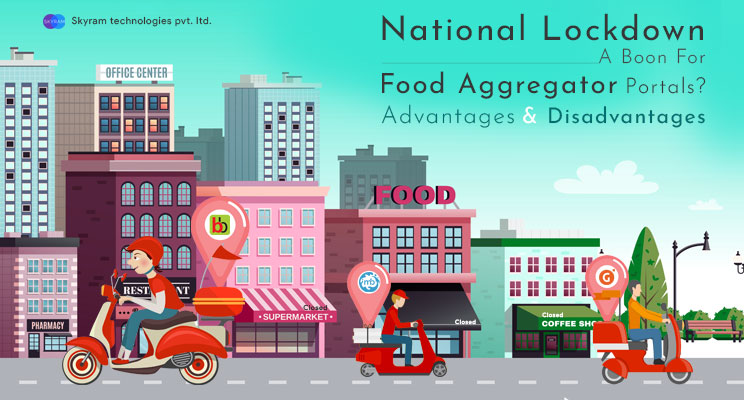
National Lockdown – A Boon For Food Aggregator Portals? Advantages & Disadvantages

While the nation is under serious lockdown due to the extend of which coronavirus have spread across the country, people are relying on food delivery apps for their food.

Although services like Flipkart, Amazon, Grofers, BigBasket, MilkBasket, etc are not so sure. These companies have detained their services despite government rules, cops are beating the delivery agents.

Amazon, one of India’s biggest E-commerce service have said that it will only deliver high-priority products, has requested local authorities to let it deliver products.

The company’s India VP Amit Aggarwal took to Twitter and wrote, “Our top priority has to be to flatten the curve. Thanks to the central govt for recognizing e-commerce is rendering essential service to help citizens remain at home, maintain social distancing. We sincerely appeal to local authorities to enable us to provide sustained service.”

Some Of The Advantages

According to the data by FoodBoss, when compared to Postmates, Uber Eats, Delivery.com, Caviar, and EatStreet in more than 50 cities, it saw an increase in contactless delivery options because of the coronavirus pandemic. This means that the customers want their food to be left at the doorstep without having to contact the delivery agents.

According to their data, from March 12 to March 18, we saw food delivery fees were 16.3% higher compared to the first week of February.

Surprisingly, there has been an increased hiring process across the countries, for more delivery staff.

For instance, Amazon is hiring 100,000 workers and increasing wages from $15 per hour to $17 per hour. Also, Domino’s Pizza wants to hire 10,000 employees to help delivery operations, and Walmart plans to add 150,000 new workers.

A recent report on Economic Times says that restaurants struggling with rising costs had to bear the burden of running promotions and deals even during busy hours.

Some restaurants reported that Zomato is taking advantage of the situation. The Gold membership subscription and some of the newer restaurateurs wanting to enroll had to pay a sign-up fee of Rs 45,000 to give away free food.

The rate shot up to Rs 79,000 if a restaurant that had logged out wanted back in. There are over half a million restaurants in India, excluding the unorganized ones, and the industry is valued at $4 billion.

However, rising rentals amounting to almost 20% of costs, the food at 30% and other expenses like labor and marketing at 20% are hurting the industry.

Some companies are cutting down on delivery charges in this serious time. Uber Eats stopped charging a delivery fee on orders from local restaurants in the United States and Canada. Also, Grubhub is another company that isn’t collecting any commission fees from the restaurants, which it states provides restaurants a relief of $100 million.

Things like these are not only increasing their sales but also making a great impact on their customers.

Some Problems Faced By The Food Aggregators

However, not everything is smooth here in India.

Several online food delivery companies like Swiggy and Zomato have complained of harassment by government officials, including physical abuse.

For these reasons, the Karnataka government on Monday issued a notice stating that e-commerce and home delivery fall under essential services and hence should be exempted from the restrictions imposed on citizens to curb the spread of the coronavirus.

Maharashtra, one of the most affected states of coronavirus in India too, has issued statements saying that food, medicine, etc should not be included under the restrictions imposed to contain the virus infection.

To control the situation, the apps will have to accommodate some extension of reduced fees as demand subsides.

As far as the latest reports, it is reported that Flipkart, BigBasket and Grofers will be resuming their services.

BigBasket even went ahead to share some of the cities it won’t be functioning for some time – Ghaziabad, Gurgaon, Hyderabad, Jaipur, Kolkata, Lucknow, Nagpur, Patna, Vijayawada. However, the company is hoping to resume their services in these cities in a day or two.

But in cities like Chandigarh, Chennai, Delhi, Ludhiana, Pune, Vizag and Kochi, the company is unsure to start their services.

As for Flipkart, they have collaborated with the Bangalore Police to ensure that their delivery boys are not hassled.

For now, the companies are focusing on meeting the growing demands of customers stuck in their homes tired of cooking or struggling to refill their groceries.

Do you have a restaurant or a business related to food, dairy or groceries? How are you planning to execute your business in this pandemic?

Let us know at Skyram Technologies.

And for more blogs read here! Till then, stay safe, stay at your homes and follow the WHO guidelines.

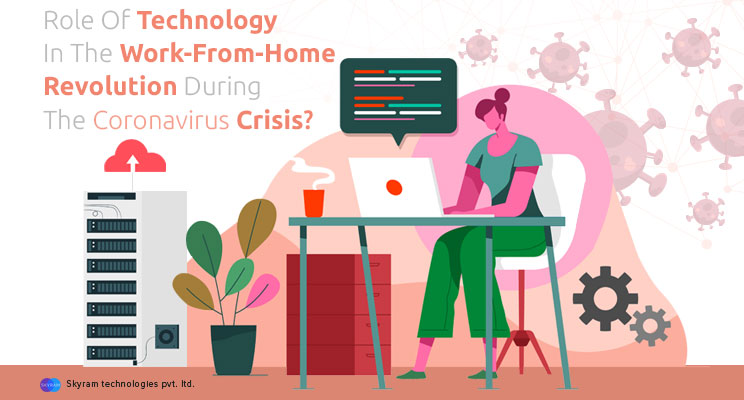
Role of Technology in the Work-From-Home revolution during the Coronavirus Crisis?

As the pandemic is spreading its tentacles in every nook and corner of the world, many employees especially in the software services sector, are forced to work from home due to the Covid-19 pandemic.

In India itself, nearly 3 million workers have already began to work from home. Reports says that if this continues for a few more months, IT companies are likely to conclude that 20-30% of their workforce can operate remotely.

At Cisco Systems Inc, for example, the number of requests for security support to support remote workforces have jumped 10-fold in the last few weeks.

Even those companies who were hesitant towards the work from home culture are left with no choice. Many of them are still struggling to get accustomed to this “new normal”.

According to a Reuters sponsored poll conducted in 2012, about 17% of all workers telecommuted for at least some portion of their workweek. In 2016, some estimates put that number closer to 37%, making it clear that telecommuting is no longer reserved for just management positions.

Why are businesses encouraging work from home culture?

Apart from public health experts who are advising businesses to encourage employees to work from home to prevent the potentially deadly coronavirus from spreading around offices, public transit and elsewhere.

Even bigger firms like Apple, Microsoft, and Google, are following up with the advice.

In America, around 47% of workers from the age of 25 and above works from home.

The IT industry is known for its flexibility and telecommuting opportunities, which makes sense, considering most tech companies are web-based and technology is the greatest resource when working from home.

This ability to create a more accessible work-life balance is becoming an important asset for the companies, allowing them to invest more and more in cloud-based solutions.

With cloud-based solutions, employees are being able to enable a single access point from any location with an internet facility.

So whether you are working from your home or a coffee shop, your user experience will be the same.

How is work from home culture productive?

It is actually reported that work from home culture encourages more productivity among the employees, who are less likely to quit their job and reportedly have better job satisfaction.

A case study performed on this subject actually suggests that employees who worked from home for 9 months were 13.5% more productive than their office counterparts.

Another survey reported in btod.com says that around 91% of the workers who worked from home believed it to have better productivity.

Experts are saying that “flattening the curve” is working for public health but also giving a great benefit to the traffic.

We get traffic jams because we have too many cars trying to use a limited capacity of road space at the same time.

A spokesperson for the Metropolitan Transportation Commission said, “If we increase telecommuting by a comparatively small percentage — let’s say 3 percent — that will create a noticeable difference on our most congested corridors,”

How to find the balance between work and home life?

While technology has indeed made it easier to work from home, it has also blurred the line between work and family life.

For some employees, there is no clock time which means having a more fluid day from beginning to the end. However, this blurring of lines can also create longer working hours.

Also, companies who encourage work from home invokes employees to work even when they are sick. Instead of or calling in or taking the day off to care for a sick child, they continue to be productive.

To find the balance is heavenly crucial.

How can work from home increase the risk of cybersecurity?

One of the major concern of work from home is that the sudden transition makes a lot of room for mistakes more strain on information technology staff, and more opportunity for cybercriminals hoping to trick employees into forking over their passwords.

Criminals are very smart and they can be prepared to take advantage of any given situation!

They can dress up password-stealing messages as coronavirus alerts, warnings, or apps.

In the U.S, researchers have found that some hackers are posing as the U.S. Centers for Disease Control and Prevention in a bid to break into emails or swindle users out of bitcoin.

To prevent this, many companies are moving their employee data from professional setup corporate networks to a more basic home Wi-Fi set up. Some organizations are loosening restrictions to allow employers to access work-critical information from their bedrooms or home offices.

The future of work from home revolution

Companies are certainly trying to get on-board with the new shift in order to protect public health, especially the tech world.

And while jobs like doctors, emergency workers are still working day and night as a community it is essential to do our bit. And for some employees, work-from-home benefits may be the difference between enjoyable and stressful work life.

The point is to be responsible enough and find the right balance. Technically more security by businesses is needed to ensure that data, password, client details do not fall into the wrong hands.

How are you planning to encourage work from home culture?

Also if you are in need to build software for this situation, Contact Us at Skyram Technologies!

And for our other blogs, read here!

Stay at home, stay safe.

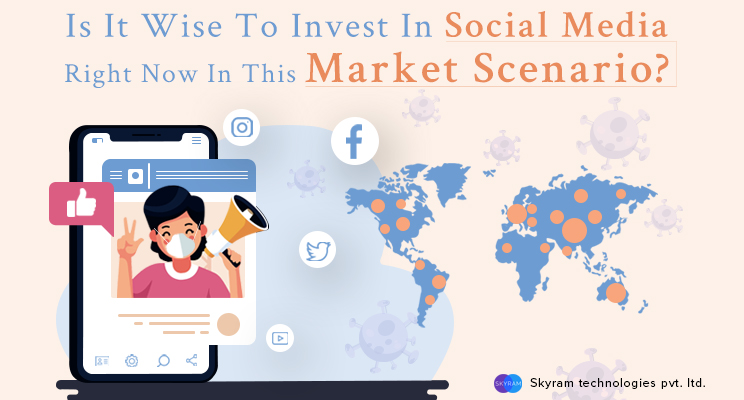
Is it wise to invest in Social Media right now in this Market Scenario?

As 2020 is rolling around, the outbreak of coronavirus has made it difficult to have a smooth start. Each new country the virus spread to fuelled panic and demand for information regarding the disease. The WHO Director-General even stated: “We’re not just fighting an epidemic; we’re fighting an infodemic.”

With each minute as the situation is getting more and more serious, it is evident that the consequences will be high even after the situation gets normal.

Pandemics in the age of social media

Well, this isn’t the first pandemic to hit earth in the age of social media. The H1N1 (swine flu) pandemic, the Ebola epidemic, and the Zika outbreak all had prominent, and widely documented, influence on social media conversations.

Social media is extensively used by the World Health Organization (WHO) to inform the public about any outbreaks, the precautionary measures, and what to do in emergencies.

But as for every good thing, there is a darker side to it. And for social media, it the ‘misinformation’ that circulates a lot on social media.

Even with coronavirus, there are tonnes of conspiracy theories and other rumors that are going on on social media.

Some claim that the virus is a biological weapon, created by either the US (to kill Chinese people) or China (to kill Americans).

How to control the rumors in social media?

To filter out the fake news, strong algorithms are essential.

The creators of WeChat — China’s number one social media platform — are using a popular fact-checking platform to dispel harmful misconceptions.

Even tech giants like Facebook, Instagram and Twitter are using strong filtering to ensure that only correct news is circulated.

For coronavirus information, for example, only authentic news from reputed sources is given priority while amateur claims are being scrutinized and fact-checked.

How to manage your brand’s social media during coronavirus pandemic?

Social media statistics from 2019 show that there are 3.5 billion social media users worldwide, and this number is only growing.

And with reportedly over 6.7 million people mention the same topic in a single day, social media has become a go-to place for anyone interested in the trending topics.

Here are a few ways to use your social media marketing for your brand:

Review your planned and scheduled content

You must have had a plan of social media content or posts that your brand will follow for this quarter.

Review that immediately and update it in regards to the current situation.

Ask questions like, is it the right time to be promoting your products? Does the meme marketing that you thought would go with the situation?

All the major brands like Coca Cola, Amul, Pepsi, Durex are changing there social media marketing, so you must too!

Don’t try to make a profit from the current situation

This pandemic isn’t a marketing opportunity, not a time to capitalize on.

There are brands on social media who are trying to sell products twice as priced on and it is just sad!

You don’t want to be the brand held up as an example of crassness. You don’t want to endanger the trust you have been building with your audience and customers.

Keep the communication intact

Your communication is the key to your brand now.

Just like me or you, your audiences must be spending more time scrolling through their newsfeed, worrying about the situation or laughing in despair at hand sanitizer jokes.

People are looking for content, information, ways to stay safe and ways to spend their time.

If you have credible, useful information you should be sharing it on social media. However, make sure to check the source and double-check the facts.

Stress on customer support

Look, as the panic is growing, people are going to ask a lot of questions.

They would want to know what events are canceled, what products are safe, or the fact that if they are safe to buy your products.

Either you can go ahead and answer all the obvious questions that may arise or you can talk to them directly.

Either way, make sure to be transparent and monitor your social media channels, direct messages, emails to answer any questions that come through. This will show the efficiency and loyalty that you have towards your customers.

Promote your products tastefully

Promoting your business isn’t a sin.

But do it tastefully. Talk about your brand’s mission, people’s safety, including empathy, all within the limits of moderation and consideration.

Go for Live videos

If you want to provide information to your audience, go for Facebook or Instagram live.

The Human connection will build a bond during this social isolation.

You can host an “Ask Me Anything” related to your industry or have another team member jump on Instagram Live with you to discuss your latest blog post and provide additional insights.

What are some of the shifts that are expected in marketing strategy?

  • Although many things are still unknown, here are a few approaches that are already taking place:
  • Budget allocation for short time sales or business outcomes, while keeping brand-building campaigns live
  • The shift in budgets towards more at-home and delivery-based options (i.e., at-home fitness solutions/equipment/apps, grocery delivery, restaurant delivery, etc.)
  • Shifting towards online sales and conversions
  • Geological tracking to understand varying levels of impact of a product.

And additionally, DO NOT forget to wash your hands at regular intervals. Practice good hygiene and social isolation to care for society!

How are you looking to combat the changing marketing scenario? Tell us at Skyram Technologies.

Also, for more such blogs read here.

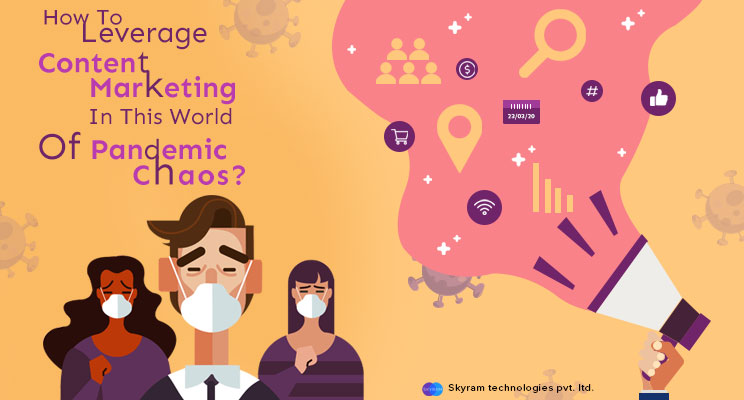
How To Leverage Content Marketing In This World Of Pandemic Chaos?

India has reached Stage 3 of the pandemic, and the situation is growing at an alarming rate.

The case count has reportedly risen to 415, as per The Economic Times and the States are enforcing strict lockdown to control the situation.

In the meantime, the market is declining at a rapid rate, down to 3,200 points.

In simple words, the situation is grave. In the past week alone, for example, notable big-tech conferences like IBM’s Think, SXSW, and Adobe Summit were canceled due to COVID-19 concerns.

Well, it is odd to think about marketing right now, when the world is suffering this much, but without a proper marketing strategy, it would be impossible to recover from all the losses we have been making.

What are some of the challenges for marketers in this pandemic?

With Sensex falling at such an alarming rate within minutes, and the pandemic literally blowing up the trade market, there is an urgency to redistribute the budget quickly.

Averagely, 30-40% of the marketing budget is allocated for trade show sponsorship, travel, expenses, attendance, and collateral.

The options are shutting down. As social isolation is becoming an absolute necessity with events, conferences, even ad shoots are shutting down for good.

The only thing to rely on is content marketing and proper use of it.

Communication with customers, clients as well as audiences has become a requirement and to ensure consistent communication, content is the only way.

What is the importance of content marketing in this situation?

Look, the content has evolved a lot from just blogs, editorials and long posts.

Now, it more of a whole package of emails, social media, ad copy, SEO, videos and lots more to keep the communication intact!

IBM recently canceled its IBM’s Think in San Francisco. They rebooted the whole event as a new ‘digital’ conference scheduled for early May.

Digital events can become a way to be a storyteller for the brand and provide customers with efficient content to increase the brand value of the company.

The goal of the companies should be investing in experimental marketing strategies with content marketing delivered through online platforms.

What are the types of content marketers can experiment with?

Here are the types of content you can experiment as a marketer amidst the outbreak of coronavirus:

Video Content

Video is the “next big thing” in the content marketing norm now.

All the social media platforms, Facebook, Twitter, Instagram even TikTok is investing a huge amount on video capabilities, either by adding new filters, new features, etc.

It is said that 81% of the marketers use video as a marketing tool and it can be of several forms:

  • Product demos
  • Live videos
  • Interviews
  • Webinars
  • Ads
  • Presentations
  • Tutorials

Interactive content

Reports say that around 93% of marketers use interactive content to educate their buyers.

Interactive content which is shareable increases brand awareness automatically.

Hyper Dynamic content

Not just personalization, people need fully customized super personalized content at the right time to generate conversions.

SEO Content

Google search algorithm constantly changes and the smartest thing to do right now is investing in SEO centric content to generate more traffic.

Voice search content

Very new in the game, but extremely important.

According to Google, 20% of the searches are done with a voice search. Creating content keeping in mind the natural language of the search will create a sense of communication within the buyers.

Some techniques you can follow for content marketing in this pandemic:

Businesses will be working carefully within a tight budget for some time now. Maintaining visibility in your market is essential for long term profitability and continued investment.

Content production

Do not stop producing content, even if it is in the form of emails or newsletters. Brands are working hard on producing effective content regarding the pandemic.

Amul Ad
Amul Ad
 NHS Ad
NHS Ad

Update your content

As the whole marketing will be dependent on content, updating the old ones is a necessity.

Revisit your content, update it, give it a spring clean, with the objective of improving your rankings in the search engines.

Make content for social media

Social isolation means people will be spending more and more time on social media. LinkedIn, Twitter, Facebook – these are places where your customers are reviewing your products, discussing their purchasing decisions, exchanging views on your business.

Create content exclusively for social media. These can include some tips, guides, infographics, etc.

Website content

In terms of cost-cutting, do not forget to make a few changes in your website to give a more personalized, updated experience to your customers.

Lastly, as a business organization and more as a part of the society, educate people about the recent situation. Do not mislead them or take advantage. Let’s hope we can all fight together, by staying away from each other!

Did we miss anything? How are you planning your marketing strategy in this pandemic? Contact Skyram Technologies and tell us!

For more blogs, please read here!

COVID – 19 Effects on Digital Marketing

By now, coronavirus COVID – 19 needs no introduction. 219,375 confirmed cases with around 8,970 deaths and the numbers are increasing at an alarming rate!

The sad truth is that it is spreading quickly and will continue to spread for a while.

While many things are uncertain, as sadly many lives, and we don’t have a proper answer on how everything will turn up.

According to Google, “since the first week of February, search interest in coronavirus increased by +260% globally.”

There has also been a surge in traffic for related products and related topics to the pandemic.

Measures taken by Google and Facebook

Google and Facebook have removed any content on their pages, including YouTube to prevent the coronavirus in place of seeking medical treatment, and is also blocking all ads capitalizing on the coronavirus.

Facebook
Facebook

Facebook is blocking anyone running ads to exploit such a sensitive situation.

How will this affect marketers?

Well, as long as you are not trying to sell ad copy claiming to cure, prevent or treat the condition, this won’t affect you at all.

However, there are few things as a marketer you should not be doing at this time.

So while researching for the blog, we have been businesses buying toilet papers, hand sanitizers, masks, baby wipes and what not in bulk, and then selling them for 10-50x the price.

Please do not exploit the situation. Not only it is ethically demeaning, but it also isn’t going to last for long.

How organic traffic is responding to COVID-19?

Traffic and conversions most of the industries are seeing a huge drop in the market.

Traffic
Traffic

Certain industries like in the chart have seen a rise in sectors like news, media, healthcare, etc.

But if you are in the travel industry, then there is a huge drop in the market.

Cheap Flights
Cheap Flights

The virus is expected to lose them 820 billion dollars. Virgin Atlantic just asked their staff to take an 8-week unpaid leave.

The U.S. currently has banned travel to high-risk countries, and other nations have instituted similar bans on non-essential travel. However, search for “cheap flights right now” has grown by 90% over the last 30 days, and “cheap flights due to coronavirus” has increased by 2,450%.

What is the condition of businesses all over the world?

In China, retails shops have seen a drop of 20.5% and the unemployment rate has jumped to 6.2 % in February.

Major companies like Apple, Facebook have stopped which means, less income and less profit.

It is estimated that COVID-19 will cost the global economy around 2.7 trillion dollars.

The way the market is going down, many of them will struggle to pay off the debts, exploded to $75 trillion.

How will businesses combat coronavirus through business strategies?

When billionaires like Carl Ichan saying that the market has more room to go down and we should expect the sell-off has longer to go. Already the first round of layoffs has started, and it is estimated to only go down from there.

Lesser competition

It may seem very insensitive to say, but whenever there is a recession period coming up, it is best to buy other companies.

Neil Patel bought the KISSmetrics website from $500,000, they had over 1,260,681 million unique visitors a month. He then skillfully merged the company to NeilPatel.com site, increasing its lead up to 19%!

Data says that whenever the market goes down by 20% or more it takes around 536 days to recover from the situation. And to be honest, with the way things are right now, it is really difficult to determine where the bottom would be.

Mini-auditing for your contents

If you haven’t kept an inventory for your content assets, we would prefer you to get started on that.

A fully comprehended audit will take a huge amount of time and expertise, but you can perform a mini-auditing to keep a tab of everything.

The main aim is to repurpose your already existing content.

Carefully evaluate with a critical eye:

  • Which ones get the most traffic on-site?
  • Which content can be re-purposeful for other channels?
  • Which content got the maximum amount of social media shares or engagement?

Communicate the changes

Are you operating on special hours?

Have you been taking precautions against COVID-19?

GMB
GMB

Update everything on your GMB profile page.

Update your new policies, share posts, offers, and contact information on the Google page in case people are trying to reach you.

Consider a different approach

Considering to reach your customers during a pandemic might depend on the type of your business. However, letting the relationship totally drop off is not a good idea.

Do not advertise your brand with tacky headlines.

A lot of changes might sound stressful but marketers can have a clear, concise choice of accurate messaging to your customers.

You can try for various guides on the pandemic, a few safety measures, helpline numbers to try and keep the relationship intact.

Lastly, we can only hope that this disaster passes soon with a minimal impact on our lives.

Try not to attend events or conferences in this situation.

As for the marketers remember to keep calm and do what Warren Buffett does… be greedy when other people are fearful!

Stay safe, stay healthy and be aware.

Have you seen any other effects of coronavirus on digital marketing? Let us know below!

And for more information on coronavirus read here!

Here are some of the data for the latest information: Click Here

Battle Of The Brands -BigBasket Vs Grofers

Groceries are one such product that has a daily necessity in households. Be it a nuclear family or a family of 25 members, you need a set of food & groceries every month/ week.

Tapping this market are few of the popular online grocery stores like BigBasket & Grofers– two strong runners with having unique selling points.

Welcome to season two of our series – Battle of the Brands.

For those of you who are new to this blog, in this series, we pitch two different brands of the same genre & study their marketing strategy!

Earlier we have done this with quite a few brands like Manyavar Vs Raymonds, Lux Vs Dove, Imperial Blue Vs Royal Stag, etc.

For this season it’s the battle between the two leading online food & grocery store – BigBasket Vs Grofers!

Let’s get started.

Backstory

BigBasket – rising from the failures

BigBasket is known to be one of India’s largest online food & grocery store with more than 18000+ products and 1000+ brands listed on their catalog.

Their range of products starts from rice, cereals, lentils, spices, cleaning products, oral hygiene, dairy products Packaged products, Beverages, Personal care products, Meats, and others.

BigBasket launched early around 2011 by Hari Menon along with five of his friends- VS Sudhakar, Vipul Parekh, Abhinay Choudhari and V S Ramesh.

They already had their online retail website called “Fabmart” which they sold later.

When BigBasket launched in 2011, it failed to grab on to the masses. The brick & mortar stores were still popular, the idea was way ahead of its time.

Finally, they received their first round of funding of $10 million from ChrysCapital co-founder Raj Kondur and Ascent Capital to get the boost.

Later in 2014, they got 15 rounds of funding; a worth of more than $100 million!

Grofers – an attempt to solve daily problems

With the sole motive of making grocery shopping convenient for people, Grofers started in 2013 in Gurugram.

The co-founders of Grofers Saurabh Kumar and Albinder Dhindsa, got the idea by pointing out the hassles of daily grocery shopping- to look around for items from a shopping list, to stand in line to pay for said items, to lug them back to the car, etc.

Grofers has a wide range of; Fruits and Vegetables, Grocery & Staples, Beverages, Home & Kitchen, Household needs, Personal Care, Breakfast and dairy, Noodles pasta and instant food, Sauces, Jams and Condiments, Baby and Kids products, Organic and Gourmet, Pet-care and Meats and Seafood.

Just like its competition, Grofers also gets funding from money like SoftBank and Alibaba.

Marketing Strokes

BigBasket

One of the ways most retail stores use is social media marketing. And BigBasket uses this well!

#GharLeAoBigBasket on Facebook is a popular social media campaign by the company, where brand posts creatives with captions that would make their followers see in which situations exactly BigBasket could be of benefit to them.

BigBasket designs different campaigns for different social media platforms.

For Instagram, they started #DetoxWithBB.

Here they post health tips in the form of pictures of detoxifying foods and helping their followers achieve a better diet.

For instance, a picture of an apple that says, Its fiber pectin aids in getting rid of piled up metals and food additives.

They have an extremely creative Instagram account where they post regularly engaging with customers through contests, videos.

Here is their Holi post.

BigBasket Holi Post
BigBasket Holi Post

In 2015, they roped Shah Rukh Khan as their brand ambassador to gain maximum followers. They released a series of TV ads as well as YouTube ads with him.

The recent one has Ratna Pathak with him!

This was a big move for Hari Menon who said, “Shah Rukh Khan’s endorsement has helped massively. We were conscious that it was going to give us visibility. Today, we are very visible. Now, we got to convert. He (Shah Rukh Khan) can’t make people buy. We have to do it. That’s our focus, that’s what analytics will do.”

BigBasket does a lot of influencer marketing. They collaborated with Beer Biceps, a male bodybuilding influencer with millions of followers.

Also, they collaborated with Being Momma, a middle-aged female influencer with a following of 57k, who gave BigBasket’s reference when talking about health and baby products.

Grofers

The main difference between Grofers & BigBasket is how they approach their marketing strategy. Unlike BB, Grofers doesn’t have a brand ambassador.

It relies on showing normal people’s narration of their day to day life.

Their social media campaign #GrofersSeMangao, a campaign in which they encourage people to order from Grofers rather than actually buy the product.

For instance, there is a creative which says,

Mom: Can you grind this wheat, please?

Me: Mom, please mujhe mehnat mat karwao, Grofers she mangao.

Grofers also uses content marketing in the form of blogs or recipe videos.

There are blogs on recipes. Like in the month of corn, Cheese won’t make you fat—learn the Italian way, Corn in a burger! We’ll tell you how—the American way, 3 Step recipe—Indian recipe.

They even use a lot of email marketing with captions like, “Sneha, did you get your offer yet?” or “100% cashback on your first order!”

This makes their remarketing game really strong!

Growth & Revenues

BigBasket

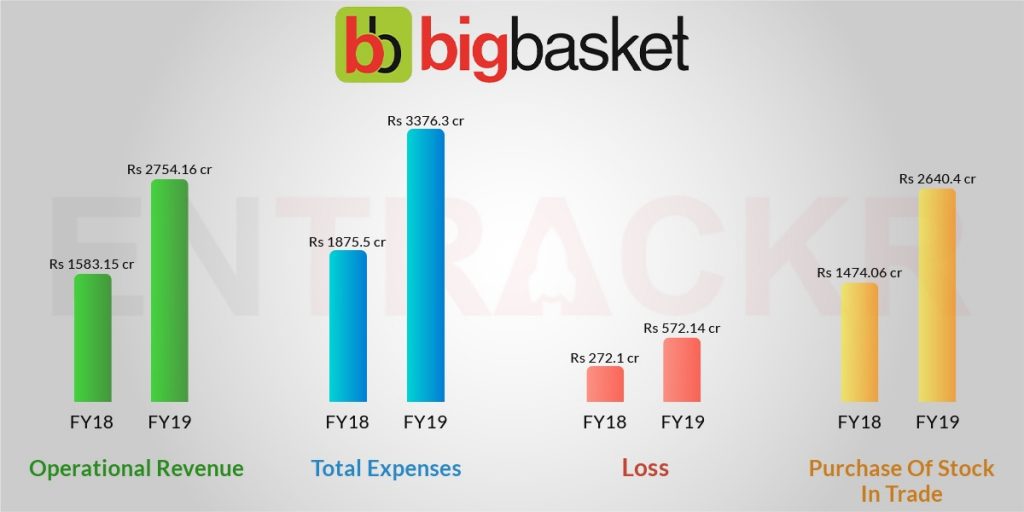
BigBasket with its massive backing saw its revenue grow by 35% to Rs 1,606 crore in the financial year 2017-18.

According to the company, its share of the total e-commerce grocery business in the country of $1.20 billion.

BigBasket Growth
BigBasket Growth

The total online grocery business is expected to touch $2.50 billion by 2020.

According to recent reports, BigBasket sells over 22,000 products and 3000 brands and expects to increase its revenue from private labels to 40% from the current 34%.

This acquisition has helped BigBasket in its Express Delivery model, to deliver groceries in one hour.

Presently it has over 418,000+ followers on Facebook, 25k+ followers on Instagram. BigBasket also has the best engagement rate, of 7%.

Grofers

For a company that started just a few years ago, Grofers has shown phenomenal growth in terms of revenues. The firm gathered 700 crores in sales in FY18, up from 250 crores the year before and is on track to exit FY19 with 2,500-3,000 crore in sales.

Recently, Saurabh Kumar, cofounder, Grofers said, “We are aggressively growing our business and aiming to clock $1 Bn in revenue by the end of 2019 with a significant focus on our in-house brands in 2019. Our G-brands contribute 40% to our current revenue, and we plan to increase it to 60% in the coming years.”

They have over 18k followers on Instagram & around
242,732 followers on Facebook.

What do you think about these two marketing strategies? Let us know below!

Also, for more such blogs, read here!