

According to a 2024 HubSpot survey, 63% of US marketing leaders say their inability to update website content quickly directly hurts pipeline generation. The culprit, more often than not, is a poorly built CMS, or no CMS at all. If your team is stuck routing every copy change through a developer, or your current platform can’t keep up with your personalization and SEO goals, it’s time to bring in the right partner.
Choosing a CMS website development company in the USA isn’t just a technical decision. It’s a business decision that will affect how fast your marketing team can ship campaigns, how your site performs in Google, and how much flexibility you have as your company scales. The wrong agency can lock you into a rigid, hard-to-maintain platform. The right one builds a content engine that works for you for years.
This guide, put together by the team at Skyram Technologies, walks you through exactly what to look for, what questions to ask, and how to evaluate competing vendors before you sign a contract.
1. What Is CMS Website Development?
CMS website development is defined as the process of designing, building, and configuring a content management system-powered website so that non-technical users can create, edit, publish, and manage digital content without writing code. Unlike static websites, a CMS-built site separates content from design, meaning your marketing team can update a landing page, publish a blog post, or launch a campaign without opening a text editor.
Modern CMS website development includes more than just installing WordPress and picking a theme. A professional CMS development engagement typically covers:
- Platform selection and architecture planning (WordPress, Drupal, Contentful, Webflow, etc.)
- Custom theme and template development
- Plugin or module integration (CRM, marketing automation, eCommerce, analytics)
- Content migration from legacy systems
- ADA / WCAG accessibility compliance
- Performance optimization and Core Web Vitals tuning
- Ongoing support, training, and iteration
A CMS website development company in the USA specializes in delivering these outcomes, ideally with experience in your industry, familiarity with US compliance requirements (HIPAA, ADA, SOC 2), and a team structure that matches your timeline and budget.
| Key Takeaway: CMS development is not a commodity service. The platform is just a tool, what you’re really buying is the agency’s judgment about how to configure it for your specific business model, audience, and growth goals. |
2. Why the Right CMS Company Matters More Than the CMS Itself
Here’s something most RFPs get wrong: companies spend 80% of their evaluation energy comparing WordPress vs. Drupal vs. Contentful, and about 20% evaluating the actual agency. That’s backwards.
The CMS platform matters. But a mediocre agency will underdeliver on even the best platform, while a great one will extract tremendous value from a mid-tier tool. What you’re actually buying when you hire a CMS web development services firm is:
Strategic guidance on platform fit
An experienced agency will tell you when WordPress isn’t the right answer, and offer something better. That kind of honest counsel is only possible when the agency has real breadth across platforms and isn’t just selling its preferred stack.
Development quality that holds up long-term
Shortcuts taken during initial development (hardcoded content, unoptimized images, no staging environment) will cost your team time and money later. The best US-based CMS agencies follow engineering standards that make your site easier to update, debug, and scale.
Training that actually transfers knowledge
Your marketing team will eventually need to own the CMS. The right partner builds training and documentation into the engagement, not as an afterthought.
| Key Takeaway: US enterprises typically look for an agency that has worked with companies at a comparable stage of growth, not just portfolio names, but genuine familiarity with the constraints and goals of businesses like yours. |
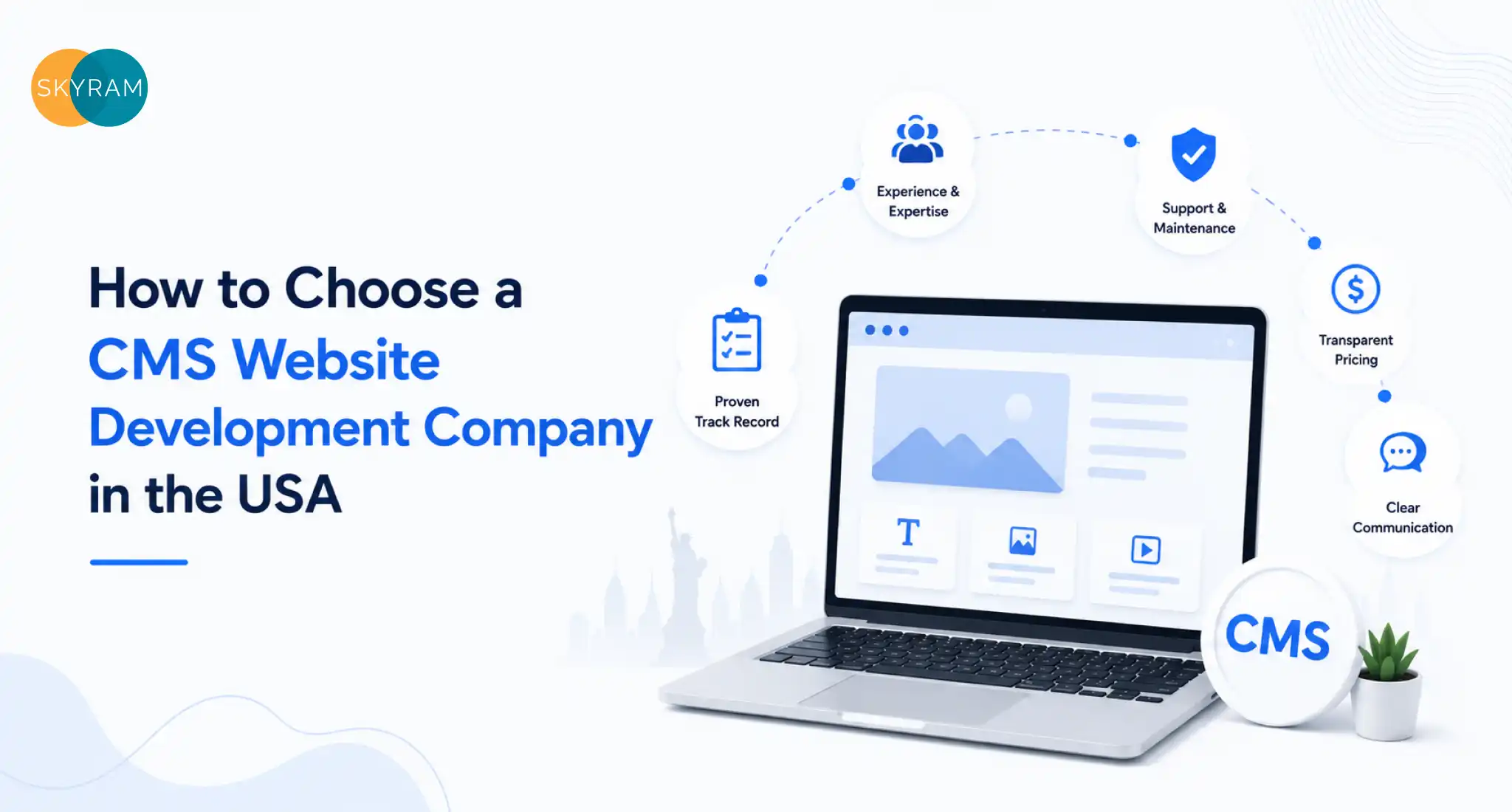
3. The 6 Must-Have Capabilities of a Top CMS Development Partner
Not all agencies that offer CMS web development services are built alike. Here’s a framework for separating the ones worth calling from the ones you’ll regret working with.
1. Multi-Platform Expertise
The best agencies aren’t married to a single CMS. They have real experience across traditional monolithic platforms (WordPress, Drupal, Joomla) and modern headless architectures (Contentful, Sanity, Strapi). Why does this matter? Because the right platform for a B2B SaaS company is very different from what a healthcare provider or an eCommerce brand needs. If the agency only builds on WordPress, they’ll sell you WordPress, even when it’s not the best fit.
2. Proven SEO and Performance Integration
Your CMS should be built for Google from day one. That means clean URL structures, schema markup, server-side rendering or static generation for fast load times, and a content architecture that supports topical authority. Ask candidates to show you Google Search Console or Core Web Vitals data for sites they’ve built.
3. US Compliance Awareness
Depending on your industry, your CMS may need to support HIPAA-compliant forms (healthcare), ADA/WCAG 2.1 accessibility (all public-facing US websites), CCPA compliance (California consumer privacy), or SOC 2 data handling standards. An agency unfamiliar with these requirements can expose you to significant legal risk.
4. Headless CMS Development Capability
Headless CMS development, where the content layer is decoupled from the presentation layer, is the direction enterprise web architecture is heading. If your roadmap includes personalization at scale, multi-channel content delivery (web, app, digital signage), or tight integration with a composable DXP stack, you need an agency that builds headless systems in production, not just on paper.
5. Transparent Project Management
CMS builds fail most often not because of technology but because of communication breakdowns. Look for agencies that use a defined delivery methodology (agile sprints, milestone-based waterfall, or hybrid), give you access to project management tools, and maintain a clear change-order process.
6. Post-Launch Support and Iteration
Your CMS website is not done on launch day. CMS platforms need security patches, plugin updates, performance tuning, and feature additions over time. Ask prospective partners what their support retainer model looks like and whether they staff US-based support engineers.
| Key Takeaway: Best practice dictates that you evaluate at least 3 agencies with portfolios in your specific industry before shortlisting. Breadth of portfolio is good, but depth in your vertical is better. |
4. Popular CMS Platforms: A Comparison for US Businesses
One of the first conversations you’ll have with any CMS development agency is platform selection. Here’s a practical comparison of the most widely used options in the US market:
| Feature / Criteria | WordPress | Drupal | Contentful (Headless) | Webflow |
|---|---|---|---|---|
| Best For | SMB to mid-market, blogs, marketing sites | Large enterprises, complex permissions | Multi-channel, developer-led orgs | Design-heavy marketing sites |
| Ease of Editing | High – Gutenberg editor | Moderate – structured content | Moderate – JSON-based API | High – visual no-code editor |
| Developer Flexibility | High (PHP, REST API) | Very High (PHP, REST, GraphQL) | Very High (API-first) | Moderate (Webflow logic) |
| eCommerce Ready | Yes (WooCommerce) | Yes (Drupal Commerce) | Via integrations | Yes (Webflow Commerce) |
| ADA/Accessibility | Theme-dependent | Strong built-in support | Frontend-dependent | Good baseline |
| Typical US Build Cost | $15K – $80K | $50K – $250K+ | $40K – $200K+ | $10K – $60K |
| Hosting Model | Self-hosted or managed WP | Self-hosted or Acquia/Pantheon | SaaS (CDN-delivered) | Webflow cloud |
| Enterprise CMS Fit | Moderate | Strong | Very Strong | Limited |
Note: Build costs above reflect typical US agency rates for custom implementations with integrations, content migration, and training. Simple template-based builds will fall at the lower end.
| Key Takeaway: There’s no universally ‘best’ CMS. The right platform depends on your team’s technical maturity, content volume, personalization requirements, and integration ecosystem. A qualified CMS website development company in the USA will help you make this call based on data, not personal preference. |
5. How Much Does CMS Website Development Cost in the USA?
Pricing is one of the most opaque parts of buying agency services, so here’s a straightforward breakdown of what US companies actually pay.
Pricing Tiers by Project Scope
- Starter builds ($8,000 – $25,000): Template-based CMS setup, basic content migration, standard integrations (HubSpot, Google Analytics). Common for small businesses and startups.
- Mid-market builds ($25,000 – $80,000): Custom design, advanced integrations (Salesforce, Marketo, custom APIs), multi-author permissions, multilingual support, ADA compliance audit.
- Enterprise builds ($80,000 – $300,000+): Headless CMS architecture, full content migration, complex workflow automation, personalization engines, dedicated QA and project management.
Ongoing Costs to Budget For
- Monthly CMS support retainer: $1,500 – $8,000/month (depends on scope and SLA)
- Platform licensing: $0 (WordPress/Drupal open source) to $35,000+/year (Contentful Enterprise)
- Hosting: $100 – $3,000+/month depending on traffic and infrastructure requirements
- Security and plugin maintenance: Often included in retainers, or $500 – $2,000/month standalone
A word of caution: agencies bidding significantly below market rate often achieve that price by using offshore junior developers without proper US oversight, skipping discovery, or delivering template-based work dressed up as custom development. When you see a quote for a complex build at a fraction of typical cost, dig into how they’re staffed and what’s actually in scope.
| Key Takeaway: US enterprises typically budget 15–20% of initial build cost annually for ongoing platform support and iteration. Factor this into your total cost of ownership before signing a contract. |
6. Red Flags to Watch for When Vetting CMS Companies
You can learn as much from what an agency doesn’t say as from what it does. Here are the warning signs that should give you pause:
- No discovery process: Reputable agencies start with a discovery or requirements phase before quoting. If you get a price on your first call, the work will be scoped on assumptions, and you’ll pay for it in change orders.
- Portfolio without case studies: A list of logos is not a portfolio. You want to see what problem was solved, how, and what results the client achieved.
- No mention of performance or SEO: If an agency talks exclusively about design and never mentions Core Web Vitals, page speed, or content architecture, they’re building you a brochure, not a growth engine.
- Locked-in proprietary systems: Some agencies build on custom platforms you can’t take elsewhere. This creates vendor lock-in. Always confirm you’ll own the codebase and hosting relationship.
- Vague post-launch support terms: ‘We’ll handle any issues that come up’ is not a support agreement. Get SLA commitments, response times, and escalation paths in writing.
- No references willing to talk: A strong agency will put you in direct contact with two or three past clients. If that offer never comes or keeps getting delayed, take note.
| Key Takeaway: Hiring the wrong CMS development company costs more than just the project fee, it can mean months of lost productivity, a site you can’t easily update, and a rebuild sooner than you planned. Due diligence now saves you significantly later. |
7. Seven Questions to Ask Before Hiring a CMS Development Company
Use these questions in your vendor evaluation process. The answers, and how they’re delivered, will tell you a lot about who you’re dealing with.
- “Which CMS would you recommend for our use case, and why not the others?” The right agency will give you a platform recommendation with reasoning, not just validate whatever you came in asking for.
- “Can you walk me through a project where the original CMS plan changed mid-engagement? What happened?” This surfaces how they handle ambiguity, client communication, and technical pivots.
- “What does your QA process look like across devices, browsers, and assistive technologies?” ADA/WCAG compliance is not optional for US businesses. This question filters agencies that actually test accessibility vs. those that assume their theme handles it.
- “What does our team own after launch, code, hosting account, domain, content?” Ownership should be 100% yours. Confirm this explicitly.
- “How do you handle CMS security vulnerabilities after launch?” Unpatched WordPress plugins are responsible for a large portion of US website breaches. A mature agency has a documented process for monitoring and patching.
- “Who will actually be working on our project day-to-day?” Many agencies pitch senior talent and staff junior developers. Get the names and experience levels of the actual team members.
- “Can we speak with a client who had a project similar in scope to ours?” Peer reference calls are the most reliable signal in any vendor evaluation. Make them non-negotiable.
| Key Takeaway: According to industry data, companies that conduct structured vendor evaluations, with standardized questions across all finalists, are 2x more likely to report satisfaction with their CMS implementation 12 months post-launch. |
Frequently Asked Questions
Q: How do I find a CMS website development company in the USA?
Start by identifying 5–8 candidates through referrals, industry directories (Clutch, G2, Upwork Enterprise), and LinkedIn. Narrow the list to 3–4 firms that have verifiable experience in your industry and on your preferred platform. Request proposals from each, conduct structured evaluation calls using consistent questions, and always ask for 2–3 client references before making a final decision. Domestic US firms often provide better alignment on time zones, compliance requirements, and communication norms than offshore alternatives.
Q: What is the difference between a WordPress development company and an enterprise CMS platform provider?
A WordPress development company specializes in building sites on the WordPress CMS, which powers over 43% of all websites globally and is well-suited for marketing sites, blogs, and mid-market applications. An enterprise CMS platform, such as Drupal, Sitecore, or Contentful, is designed for organizations with high content volumes, complex editorial workflows, multi-site management, and deep system integrations. The choice between them depends less on company size and more on content complexity, personalization requirements, and the technical maturity of your internal team.
Q: What does headless CMS development mean, and do I need it?
Headless CMS development refers to an architecture where the content management system (the ‘body’) is decoupled from the frontend presentation layer (the ‘head’). Content is stored as structured data and delivered via APIs to any surface, web, mobile app, digital signage, or voice interfaces. You likely need headless CMS if your organization publishes content across multiple channels, requires heavy personalization, or is building a composable digital experience platform. For straightforward marketing websites with a single-channel presence, a traditional coupled CMS will typically be faster and less expensive to implement.
Q: How long does it take to build a CMS website in the USA?
Timeline varies significantly by scope. A straightforward marketing site on WordPress with a custom theme and standard integrations typically takes 6–12 weeks from kickoff to launch. Mid-market builds with custom design, content migration, and multiple integrations run 12–20 weeks. Enterprise implementations, especially those involving headless architectures, large content libraries, or complex approval workflows, can run 6–12 months. Adding ADA compliance audits, multilingual support, or eCommerce functionality extends timelines further. Build timeline estimates from any serious agency will be based on a discovery phase, not a first-call assumption.
Q: Should I choose a CMS agency that specializes in my industry?
Industry specialization significantly reduces risk on CMS projects. An agency with genuine healthcare, financial services, or B2B SaaS experience understands your compliance requirements, your content workflows, your buyer journey, and the integration ecosystem specific to your vertical. This translates directly into better architecture decisions and fewer costly surprises. That said, the most important factor is still the quality of their technical team, their track record of successful deliveries, and their willingness to be honest about project constraints.
Q: What is the average cost of hiring a CMS website development company in the USA?
US-based CMS development agencies typically charge between $8,000 and $300,000+ depending on project scope, platform complexity, and the level of custom development required. For a well-scoped mid-market marketing site with custom design and CRM integration, most US companies budget $30,000 – $75,000 for initial development, with ongoing support retainers running $2,000 – $5,000 per month. Enterprise-grade implementations involving headless CMS architectures, large content migrations, and personalization infrastructure are priced significantly higher.
Conclusion
Choosing the right CMS website development company in the USA comes down to three things: platform fit, agency quality, and long-term partnership potential. No single CMS is universally best, the right choice depends on your content complexity, technical environment, and growth roadmap. The agency’s judgment and delivery track record matter more than the platform name on their website. And the relationship doesn’t end at launch, the best CMS partners stay engaged through ongoing support, iteration, and content strategy.
Take your time during evaluation. Build a shortlist of 3–5 vendors, use a structured set of questions, and always speak with references. A CMS build is a multi-year investment in your digital infrastructure, getting it right from the start pays dividends in marketing velocity, SEO performance, and team productivity for years to come. Our team at Skyram Technologies is here to help you make that call with confidence.
| Ready to Build a CMS That Actually Works for Your Team?
At Skyram Technologies, we help US marketing and IT teams select, build, and scale CMS platforms that match their business goals, not just their immediate brief. Whether you’re migrating off a legacy system, going headless for the first time, or rebuilding from scratch, our team brings hands-on experience across WordPress, Drupal, Contentful, and modern composable architectures. Start Your Journey, Inquiry TodayVisit Skyram Technologies or schedule a free consultation today. |